Ten years ago I created a very simplistic documentary film that I called “Identity Crisis: Where does soccer fit in the United States?” The goal was two-fold: enter a film in the Kicking and Screening Film Festival and answer my own question about where soccer was at the time. The film itself is a “no budget” first attempt that lacks polish and movie making chops. Despite all of its shortcomings, it does one thing relatively well. It represents the fact that at the time, soccer had a form of an identity crisis. This post is going to focus on the men’s side of the game because the women have well established world dominance already and I am looking to flashback to past struggles then flash-forward to the men’s world dominance. That’s right! I said it!

The following perspective on the past is my own and is not intended to be a 100% historical record of soccer’s last few decades in the US. Soccer could have been listed as deceased in many ways during the 1980’s. After the failure of the NASL, soccer had very little relevance at the professional level. The indoor and other professional leagues had their pockets of influence but largely it was the youth that had the greatest impact on keeping soccer in the national consciousness (very slightly). During the 1990’s, qualification for and then hosting the World Cup brought the “kids” game to the attention of the nation. The spectacle of the event and our strong performance in the competition brought a certain amount of pride and hope to the sport. With the introduction of Major League Soccer, it would seem that soccer was back in the US. The league did have a perception problem at the beginning. It felt slightly contrived as teams like Metrostars had no history and their names/logos seemed like they were developed by an ad agency rather than soccer people. Regardless, we had a professional league. Then in 1998, the hope and optimism were dashed by a dead last finish in the France World Cup.

The turn of the century did not bring an immediate turn of fate. MLS had to contract down to 10 teams and there was talk that it might not survive. At the 2002 World Cup, the USMNT did surprisingly well. The shock win against Portugal was an amazing start and the controversial loss to Germany was a gut-wrenching finish. A resurgence in MLS saw the league add teams and soccer specific stadiums. The 2006 World Cup was another disappointment with the US finishing at the bottom of their group. New MLS rules brought notable names to the league from abroad. Domestic stars were also being developed in Bradenton and elsewhere such as Landon Donovan and Freddy Adu. Expectations for these players and the sport overall was probably higher than either could withstand. As the decade finished, the USMNT confused its American fan base by beating Spain in the Confederations Cup in 2009. Then at the World Cup, they luckily advanced to the knockout round only to lose to Ghana.
My film “Identity Crisis” was documenting of where three groups of people thought that soccer were at the time. Sports talk radio hosts, professional players from abroad and an MLS executive were all asked for their thoughts on where soccer was and was going. The sports talk hosts generally regarded it as irrelevant in the sports landscape. Conversely, the international players were complimentary of the state of the sport at the moment. Dan Courtemanche, the MLS executive, was optimistic but reserved in his assessment of the state of soccer in the country. My personal conclusion was that soccer’s fate in the US was based largely on people like myself. Our desire to continue supporting, playing, coaching, etc. was a crucial component to where the sport would go. Although I used it as a catch title, “Identity Crisis” was truly what the general perception of soccer was at that moment. Depending on how someone evaluated the state of soccer at that moment, there could have been a variety of different opinions. Progressing because MLS was expanding. Stalled because the National Team hadn’t performed well in the World Cup. Irrelevant because it wasn’t a top 4 sport. Any one of these evaluations could have been right.
That’s where I’m going to stop the retrospective and go in another direction by describing how soccer has a BOLD future. In their amazing book, BOLD, Peter Diamandis and Steven Kotler focus on how to leverage technology to create massive change. While I don’t believe they had soccer in mind when they wrote the book, I’m going to shoehorn some of the concepts in here because I truly believe that soccer is boldly moving forward here in the US. The authors discuss the “6 D’s of Exponential Organizations.” While soccer is not one organization and measuring the relative success of a sport using any one metric is extremely difficult, I am going to make my argument and leave it up to you the reader to decide for yourself. After that we need to watch and wait.
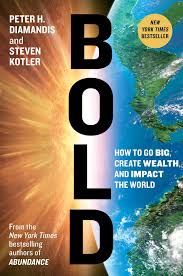
Digitized – While the sport itself has not become digitized, the access and consumption of the sport has largely been placed in the pockets of fans around the world. The World’s most popular sport used to available on a very limited basis here in the US. Now it as pervasive as any other sport, if not more so! The internationality of soccer gives the opportunity for a fan to be engaged 12 months per year by multiple leagues. The World Cup, UEFA Cup, Champions League and several other tournaments also mean that there is another big event on the horizon. The capability to take it all in has been DIGITIZED.
Deceptive – Soccer has been growing in a variety of ways that have gone largely unnoticed by people outside the game. The increase in the professional foothold within many regions of the country is happening more rapidly than many would recognize. The “kids” game has grown up and the adults who used to play it are now watching in greater numbers than in the past. The NFL, NBA and MLB may still boast big numbers but the gap is closing.
Disruptive – Although I’m following the Diamandis and Kotler model, the disruptive nature of exponential technologies is not the same as the disruption that I’m talking about. Soccer is not directly disrupting the more traditional sports in an overt way. However as the legacy of those sports have their own disruptions such as major concussion concern, the opportunity to break new ground exists. Also the cultural stigma of soccer being a “lesser” sport is all but gone. Nothing attracts a crowd, like a crowd.
Demonetized – Depending on the angle of view, this could be the hurdle that soccer is in the process of clearing. Soccer has been made expensive for participants. So the demonetization of soccer will take some work. HOWEVER, the pandemic has given many kids time to practice as an individual. The game has moved from the field to the basement, garage or backyard. In addition to that maneuver, kids have a phone and a social media account. Sharing their individual skills doesn’t cost them anything extra. Therefore the game is permeating parts of life that it didn’t before, sans cost. As we catch up to the rest of the world in our professional club infrastructure, more high level players are going to be training for free at academies while the general population will not pay high prices for recreation. Too many mothers and fathers will have experience with the game to keep ratchet of high priced trainers going.
Dematerialized – Although the physical game is not going anywhere, the way that it is consumed and engaged with will. The viewing experience is going to continue to improve as more leagues and teams will find ways to make their content available. Also the virtual reality space is going to give players and fans a different experience of the beautiful game. That might be a video game type experience or panoramic simulcasts of professional games where viewers at home can have the VR experience of being at the game.
Democratized – Even though it is the last step in this progression, it is actually the major advantage that most quality “footballing” nations have had over us. The game is one of the people. Almost anyone can play it because it is everyone and not expensive. In the US this last piece will be more of a perception and cultural progression. People will begin to view the sport as truly American rather than something that we need to have an inferiority complex about. Soccer can belong to anyone that wants it. It’s not just for the tall, the strong, or fast. Nor is it only for the people who grew up playing it. It can truly be for anyone.
After that long explanation of where we’ve been and the implications of the 6 D’s on the game, my suggestion is that soccer is about to explode. An exponential growth curve is not something that I can truly quantify. However I believe that all of the ingredients have been accumulating over the past decade or so. Perhaps the only metric that would convince people would be winning a World Cup. My assertion is still that 2026 will be our year. However I think that it is more likely to come in wave of realization. When the conversation about who the best player in the world is like happens with Messi vs. Ronaldo now, that at least one of those players will be in MLS. This and other milestones may get overlooked as they pass by but eventually will be seen as significant.

I’m sure many will disagree with what I’ve written here and that’s great! It’s one of the amazing things about this sport. The subjective nature of much of the action allows for many interpretations. Mine just happens to be that the US is going to dominate world soccer/football in the not so distant future.
“Life moves pretty fast! If you don’t stop and look around, you could miss it!” – Ferris Bueller
Pete
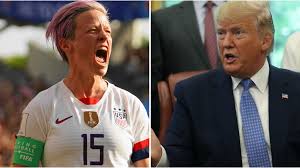
 The Women’s World Cup has been a roller coaster ride from the beginning. Although I support the US Women’s National Team, I am much more interested in the women’s game growing and being accepted in its own right worldwide. Most of the results have been in line with expectation. However the results are not all that matters. Even though there are more games to be played, this World Cup is sending messages. Some of them need to be heard and emulated, others need to be learned from then possibly forgotten. Regardless, I thought it was worth the time to recap some of the biggest beats so far.
 Our next stop was Paris. There was of course the visit to the US Embassy in Paris to get a new passport which took longer than we would have liked. After getting it we had to rush to pick up our tickets to the five games that we were going to attend. Our first match was Germany vs USA. Despite both being American we were following Germany through the group stage. The most memorable thing from following Germany for me was the warm-up. Watching Jurgen Klinsmann get crossed balls for him to side volley from head height was amazing. He was obviously a world class player honing his craft and I loved seeing it up close. In addition to that match, we saw the Louvre in less than 2 hours. Art lovers we are not! Next was Germany vs Yugoslavia which was in Lens, a much smaller venue and not much around.
 In “The Junk Mail” episode of Seinfeld, we are introduced to Frankie Merman. He is Jerry’s childhood friend who has many quirks including digging holes to sit in when he is upset. Despite his eccentricities, George is slightly jealous of Frankie because Frankie and Jerry attended camp together. George ruefully refers to Frankie as the “Summer Me”. He even goes so far as to lie to Jerry about an imaginary summer friend of his own. All of this ridiculousness is par for the course in the world of Seinfeld. As far fetched as it all may be, it got me thinking about the soccer world in which American fans live.
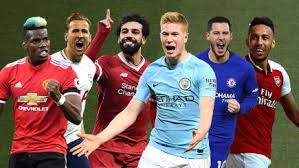 Next weekend marks the end of the Premier League. For those who religiously follow teams from England on Saturday and Sunday mornings, there is hole to be filled. Recognizing this fact, it might just be time to embrace Major League Soccer as your “Summer League”. I can hear the protests now, “MLS sucks!” “There’s no promotion or relegation!” “It’s a retirement league!” I’m well aware of this and all of the other vitriol that comes out whenever someone suggests that our domestic league should be watched by our domestic fans. I understand the thought process. My son and I just took a trip to England to see two matches. The allure of European soccer is not lost on me. The only question is do we want it to be this way? Do we truly want to be thousands of miles away from the best soccer in the world? Americans account for the largest number of ticket buyers at the World Cup, other than the host nation. Which means that we travel to far off lands at great expense to see the best in the world compete. In 2026 when the World Cup is here, will Americans not attend the games because they are here? That would be a ludicrous thought! We want the best games with the best players to be in our backyards. BUT we’re impatient, entitled and shortsighted. Let’s take a look at each.
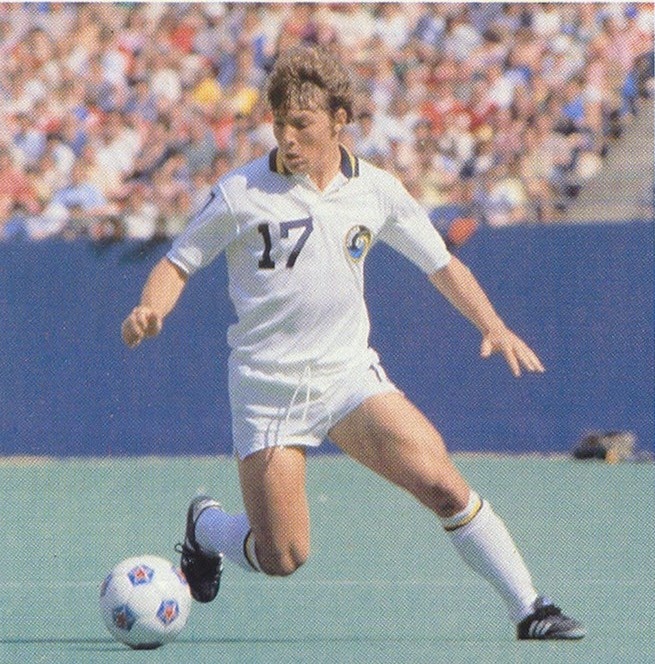 We’re impatient. Major League Soccer is barely 20 years old. Even the re-branded version of the English first division is older by around 4 years. Comparing MLS to any of the historic first divisions from Europe is at best an apples to oranges comparison. At worst, it ignores all common sense. Teams and leagues are made up by players and their endeavors are supported by fans. European fans have supported their clubs for generations. MLS clubs have not existed for a generation yet. Love for a team or club is not built overnight. It is a slow process and we’re in the thick of both the development of love for clubs and a talent pool. If the desire is that MLS should just buy the best talent in the world, do some research on the Cosmos.
 We’re entitled. Other than MLS, the other major sports leagues based in the US are arguably the best in the world. NFL, no competition. MLB, takes whatever talent is produced in other leagues. NBA, second tier talent from the US go to play in the other leagues. NHL, brings in talent from all over the world. Is it really that disheartening to have one league of the top five major sport that is not
  It was many years ago but I’ve still not encountered a better example. I was the field marshal at a youth tournament in Pennsylvania. The players were under twelve years old and engaged in a very back and forth game. One team was extremely adept at the offside trap. Late in the game, there was a corner kick. The cross was cleared out of the penalty box and the defense pushed up. The ball fell to the foot of a offensive player about 30 yards from goal. He shot. The ball rocketed toward the goal and hit the post. The rebound fell to a forward who was slow getting back onside and he scored. The referee instantly called offside and awarded a free kick to the defense. The coach of the team that had the goal disallowed went ballistic. He screamed about how “ridiculous” the call was and asked about the referees sight, etc. As the field marshal I felt that it was my job to diffuse the situation in order to avoid it interfering with the game. I said, “Coach, if you’d like, I can explain to you why that was the right call.” He responded, “I know it was the right call! I’m just blowing off some steam.”
 The 90s had many memorable events and people. Kurt Cobain, the OJ Simpson trial, Monica Lewinsky and Bill Clinton were all extremely noteworthy. Both for their own unique reasons and the media circus that followed them. It was not just that something happened but that it was perpetuated daily for probably longer than needed. One of the most ridiculous stories of the decade was the ice skating scandal involving rivals Nancy Kerrigan and Tonya Harding. For those too young to remember, the major event was an attack on Kerrigan’s knee orchestrated at least partially by Harding’s ex-husband. There was a movie released last year called “I, Tonya” that chronicles the entire episode.
 So I implore you. Yep! I’m talking directly to you because as I said last week,
  It means action by the many. In some ways this endeavor is truly in line with American culture (of the past at least). It is almost inherently American to identify a challenge and conquer it. For most of our country’s history, that was almost common place. We (the people) took on monumental tasks as a collective. Unfortunately we seem to be at a point in history where we expect other people to do it for us. We can outsource it or it’s the government, corporation or system’s fault that things aren’t going right. The problem lies with someone else or it’s just too hard and I can’t be bothered. FUCK THAT!!! We need to step up for the next eight years! Not in some grandiose, out of reach way but in simple ways that can have a cumulative effect. The main thing that will be required is a long term view. So here are some of my suggestions based on a variety of perspectives. It’s by no means a complete list but it’s a start. Add your own thoughts in the comments.
 The role of a captain can be very important on a soccer team. I say “can be” because on some teams, the captain does nothing more than the coin toss. My perspective is that the captain has a great deal of responsibility and should have certain characteristics that help her to lead.
 Huryk Unlimited