Blogpost, self-reliance

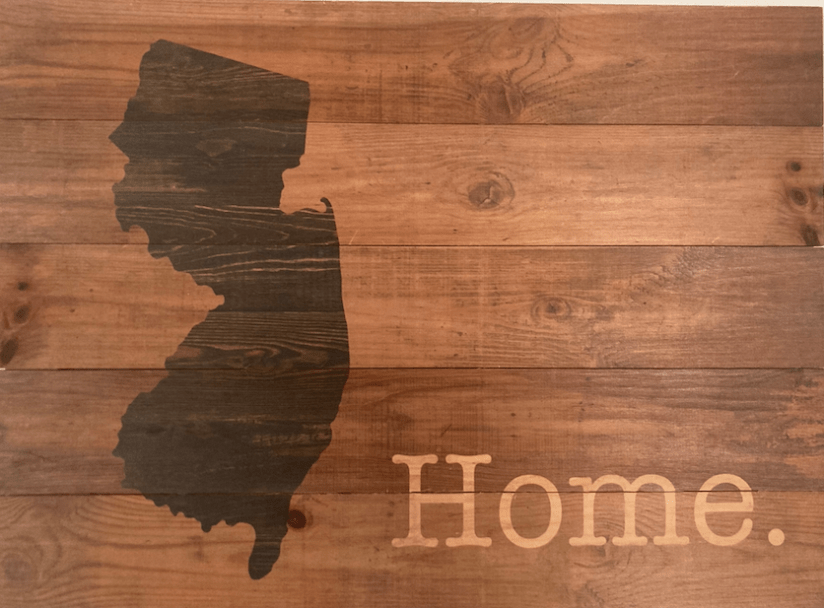
Being from New Jersey is a Superpower!

Anyone who is not from New Jersey just thought, “Makes sense, lots of superheroes get their powers from toxic waste!” I can appreciate the humor about my home state, which I learned in my late teens is sometimes referred to as the “Armpit of America.” If you’re not from New Jersey, poking fun at us is easy, and I’ll get to the other forty-nine states in just a moment. For now, I’m going to point out some of the better aspects of being from the “Garden State.”

1. New Jersey is small.

Not Delaware small, but small enough that being from NJ means something. Sure, the North Jersey/South Jersey thing exists (does Central Jersey exist?), but overall, being from New Jersey is an identity. Put two people from New Jersey in a room anywhere in the country and there’s a pretty good chance they’ll start trying to figure out where the other one is from, what high school they went to, and whether they know the same people.

That’s not necessarily a bad thing.

2. New York City is right next door.

Living in the almost literal shadow of probably the most important city in the world puts a bit of a chip on one’s shoulder. People from New York State can associate themselves with the City easily. Much to my chagrin, we even have multiple professional sports teams that take the City name but play in NJ. The owners either want the cachet or are embarrassed by their location. Either way, it breeds a little-brother mentality that can serve our residents well.

We’re constantly reminded that we’re almost New York, but not quite.

Eventually, you learn to be comfortable being underestimated.

3. The Turnpike, Newark Airport, the Parkway and Jersey Shore are usually the first things that pop into people’s minds about NJ.

While they are all eyesores in their own right, they do a pretty good job of embodying the Jersey persona: “You don’t know me until you know me.”

People discount an entire state based on the worst of what we have to offer, and that’s generally okay with us. Most of the people that I know from NJ are extremely tight with “their people” and a bit suspicious of outsiders. It’s not that we’re unfriendly. It’s more that you need to put in the time to get to know us.

We have it all, but we’re pretty easy to dismiss if you can’t be bothered to look.

And honestly, there’s something useful about that.

4. Pork Roll or Taylor Ham?

Not only do we have a meat that is pretty unique to our area, we also fight amongst ourselves about what it’s called. In all honesty, it’s a tissue-vs.-Kleenex thing, but I’ll move on.

Being unique comes in all kinds of packages, even a little bag of meat. But that uniqueness probably comes with a bit of heritage. A tip of the cap to the people that came before us, because even though we’re not always nice, respect seems to be a big deal.

If you’ll notice, none of these is particularly positive on its own. They’re generalizations that are presented with a positive slant.

Is being from New Jersey truly a superpower?

Not really.

But that’s actually the point.

Each person needs to decide how to look at the ingredients of who they are and choose to see those component pieces as positive or negative. Being overlooked can destroy someone, unless it doesn’t. Unless they use it to make themselves stronger.

That’s true no matter where you’re from.

Maybe you’re too loud. Maybe you’re too quiet. Maybe you’re stubborn, impatient, intense, awkward or just a little different. Maybe you’ve been told that one of those things is a weakness.

So what?

Who you are is an advantage if you figure out how to make it one.

There’s nothing particularly special about being from anywhere. Nothing in the water is going to make you awesome. It might give you cancer, but that’s a different blogpost.

You have to tell yourself a story about your greatness.

Then you have to go out and tell the rest of the world.

Being from New Jersey is not enough.

But it’s not a bad start.

And if you’re wondering whether being a little rude is part of that superpower, I prefer to think of it this way:

I’m not rude.

I’m from New Jersey. There’s a difference.

What exit? Exit 19 off of Route 80!

Pete

Blogpost, self-reliance, SoccerLifeBalance

World Cup: USMNT Can? Will? and Will

For about ten years, I’ve been saying that the United States would win the World Cup in 2026. At first, it was simply a bet on home-field advantage. Then it became more of a mathematical equation: a talented young core that would all be entering their prime in 2026 (for most soccer players, that’s around ages 26–28). Then came the investment in the coaching staff. Over the past few weeks, the final piece has fallen into place—the fans.

The table is set for the “Miracle on Grass” to replace the “Miracle on Ice.”

I’ve happily shared this prediction with anyone willing to listen, but now we’ve reached the point where the rubber meets the road. Over the past few weeks, people have asked me whether the USMNT can win the World Cup.

The answer is, of course, yes. Any team that hasn’t been eliminated can win the World Cup.

The more interesting question is whether they will.

I’m no clairvoyant octopus, but I’m sticking to my prediction: yes, they will. Of course, that’s worth about as much as my answer when students ask if we’ll have school tomorrow because snow is in the forecast. It’s just a prediction. The results will speak for themselves.

What I can say with confidence is that, based on what I’ve seen—from the USMNT’s performances, to the reception the American people have given the world, to the excitement coming from people who normally couldn’t care less about soccer—I believe we finally have the will to win it.

That distinction may sound like semantics, but I don’t think it is.

The United States has long been known for its drive to accomplish big things. That spirit has produced incredible achievements, and at times it has also led us down less admirable paths. Either way, that drive has always been part of our national character. In recent years, though, it has felt dormant. We’ve become comfortable—perhaps even victims of our own success.

Much like Manchester City (still hate them), who spent so long at the top that they seem to have lost some of their hunger, we’ve lacked that same edge.

Hosting the World Cup has changed something. The incredible mix of fans and cultures arriving on our shores has created a tipping point. Soccer in the United States no longer feels like a sport waiting for its moment. It feels like a nation expecting one.

That’s why I believe we’ve moved beyond simply being a team that can win the World Cup. We’ve become a country that believes it must.

I’m sticking with my prediction: this is our year.

And if it isn’t, I still think something has changed permanently. We now have the will to win. Whether it’s this tournament or the next, I believe that mindset is here to stay.

GO USA!

Pete

Blogpost, self-reliance

On The Move… Again

I haven’t counted the actual number in a while, but since leaving home after high school, I’ve moved more than twenty times. Some of those are front-loaded because I lived in around eight different places during my college years — dorm rooms, apartments, roommates that didn’t work out, and all the rest.

This move feels different though.

This time, I’m moving in with my fiancée, who already has a fully furnished house. So a lot of my stuff simply “isn’t making the trip.” In the past, moving meant a truck, boxes, and a Herculean amount of lifting. This time it’s more of a sifting process — deciding what stays, what goes, and what was only being carried around because I never stopped to question it.

Honestly, that feels like a pretty fitting metaphor for this moment in life.

There’s always this belief that a move is going to change something. A new town, new surroundings, new people, a fresh start. Sometimes we convince ourselves that the scenery is the problem. Sometimes we think another person is the problem. Sometimes we quietly hope geography alone can fix things internally.

But one thing always makes the trip with you.

You.

No matter where you go, you still bring your habits, your perspective, your baggage, your fears, your routines, and your unresolved stuff along for the ride. Some of that is good. Some of it probably needs to be left on the curb.

As I’ve been sorting through possessions, I’ve also been trying to pay attention to the things inside myself that probably shouldn’t make this move either. Old frustrations. Relationships that only drain energy. Bad habits that should have been discarded years ago. Thought patterns that have overstayed their welcome.

The hard part is that change sounds a lot easier than it feels.

Even when we know something needs to change, actually doing it usually comes with discomfort. Sometimes it means taking an honest look at parts of yourself that you’ve spent years avoiding. Sometimes it means admitting that some of the weight you’re carrying isn’t circumstance at all — it’s familiarity. Even unhealthy things can become comfortable if you’ve carried them long enough.

At the same time, there’s something hopeful about that realization too.

You already know what the status quo feels like. You already know where your current habits, patterns, and choices lead. Maybe most of it is working great and only needs a few small adjustments. That’s a good thing. But if deeper change is needed, eventually you have to decide whether carrying the same version of yourself forward is easier than finally letting some things go.

Boxes, furniture, regrets, grudges, excuses — eventually you realize not everything needs to make the trip.

See you down the road.

Pete

Blogpost, self-reliance

Ready Player One

It’s not one of my favorite movies, but Ready Player One has stuck with me—less because of the film itself and more because of how I first watched it.

In the backyard of my son’s friend, his parents had set up an outdoor movie theater. For a child of the ’80s, it hit two notes at once: nostalgia and a glimpse into a future that suddenly didn’t feel so far away. Virtual worlds, constant connection, the pull of the screen—it all feels a little closer now than it did then.

Which makes the title linger: Ready Player One.

What if that’s not a question, but a directive?

As I’ve written before, the first person in your life is you. You don’t get to step outside that perspective. You move through the world the same way a player moves through a game—eyes forward, reacting, adjusting, making choices in real time.

But here’s the difference: in a game, you’re given tools. You can see your health. You have a map. You can pause.

In real life, you don’t.

We move forward without a clear read on ourselves. No meter telling us when we’re close to burnout. No notification that we’re running low on patience, focus, or energy. And no pause button when things start speeding up.

So “ready” can’t just be a question—something we hope to answer when the moment arrives. It has to be a verb. Something we practice.

Because the world isn’t slowing down. If anything, it’s becoming more chaotic, more demanding, more immersive. And while technology gives us access to almost everything, it also tempts us to disappear into it. The “Oasis” isn’t science fiction anymore—it’s just… life.

And yet, the ending of the movie still holds up. At some point, you have to log off.

Not completely. Not forever. But intentionally.

Because no matter how advanced things become, we’re still human. Connection still matters. Friends, family, love—those don’t scale the way technology does. They take time. Presence. Attention.

And those are exactly the things that get stretched thin.

So part of “readying yourself” is knowing your limits. Knowing when to step away. Knowing how much you can carry before it starts to carry you.

Anxiety is up. The pace is relentless. It would be nice if life came with guardrails—something soft to keep us from hitting too hard. But that’s never really been the deal.

Instead, we prepare. Not perfectly, but intentionally.

Boy Scouts of America got it right in a simple way: Be prepared.

I’m a long way from merit badges and handkerchiefs, but the idea still holds.

Not “Are you ready?”

Ready yourself.

The game is already in motion.

Let’s play.

Blogpost, self-reliance

Barbers and Mechanics

When I moved to Virginia from New Jersey, one of the most upsetting things was leaving my barber behind. Mand’s Barbershop in Hackettstown was the best find the year prior to my move. The owner, Amanda Sunshine, cut my hair perfectly, is a great conversationalist, remembers exactly what I want done, plays good music, and is just all-around awesome. For the first few years, I delayed haircuts just to travel back to New Jersey — literally for a haircut. I’ve found people who’ve done a passable job since, but no one has replaced Mand’s. Finding a barber takes time because it comes down to trust.

In a few months, I’ll be moving again. The search for a barber continues, but this time I’m leaving behind a good mechanic — Ed’s Automotive in Lynchburg. That may be an even bigger trust factor. With modern cars, the possibility of being “taken for a ride” always exists. I was glad to find Ed’s. They fixed a problem another mechanic may have created. But once again, I have to leave that trust behind for a new zip code. Even with all of today’s technology, you can’t take everything with you.

The essence of trust is consistency, not perfection. No one delivers perfect results — not barbers, not mechanics, not spouses, not colleagues. Trust is built in the ordinary repetitions. Showing up. Doing the work. Owning the mistake. Doing it again tomorrow.

Most of the world measures everything in dollars. But money isn’t the only currency we trade in. Trust is harder to calculate, but far more valuable. You can’t Venmo it. You can’t download it. And when you move, you can’t pack it in a box and take it with you.

I can’t take my barber or my mechanic with me. But wherever I go, I’ll be there. And at that point, it’s on me.

It’s my job to build trust. Not just look for it.

Day by day. Moment by moment.

You have to build it again.

Maybe that’s the point.

Pete

Blogpost, self-reliance

Looking Past the Headlights

Driving at night is a pretty dicey affair when you think about it. You’re moving forward at speed with not much more than thirty yards of vision and a yellow or white line to guide you. At the same time, complete strangers are coming at you in the opposite direction with their own ton or more of metal and plastic. It’s a scenario full of real danger. And yet, we look past the oncoming headlights and fix our eyes on the destination. More often than not, we get where we meant to go. The limited sight distance and the doom three feet away don’t stop us.

Take us out of that context—away from paved roads and traffic signals—and we freeze. Paralyzed. All we see are the headlights of doom as we chart a course toward a dream. The distance feels too far. The next steps too uncertain. Our foot is surgically attached to the brake pedal. Forward motion seems reckless. Better to stay here, in the known.

The problem with standing still is that you can’t. The world is moving whether you notice it or not. Time, relationships, money—pick your metric. Opportunities are coming, and if you’re not ready to meet them, they’ll pass you by. So put your foot on the accelerator and look past the headlights in front of you. The danger you’ve built up in your head around chasing that dream is far less treacherous than driving at night.

Get in gear and go.

Pete

Blogpost, posh, SoccerLifeBalance

How’s It Going to Be? (Post Ferguson Era)

It’s one of those places in time I can return to with absolute clarity. I was sitting on an airplane flying back from Europe in the summer of 1998. My best friend and I had spent almost a month roaming through England, Spain, Germany, and France, with the World Cup as our backdrop. We went to five matches. Traveled hundreds of miles by train and metro. Had my friend’s passport stolen. Filed a police report in Spanish. Befriended two Australian backpackers. Got nudged by one riot cop. And, for the first time in my life, popped a soccer ball. We were exhausted, sunburned, and broke—but happy to be heading home. Mostly.

Somewhere over the Atlantic, with my CD Walkman resting on my knee, I listened to “How’s It Going to Be?” by Third Eye Blind. The song framed what I already knew was coming: the beginning of the end of a years-long, on-again-off-again relationship. During that month in Europe we’d managed to speak only once, and our pattern was familiar—every six months, a breakup, followed by the realization that life felt better together than apart. But on that plane ride, something in me knew this time was different. And when I got home, I was right. No reunion. Just an ending. And the long quiet question of how things would be moving forward.

At that point in my life, I had no idea who Peterborough United were. In one pub, a fellow patron ranted to my friend and me for twenty minutes about the villainy of Millwall, but beyond that my knowledge of lower-league football was almost nonexistent.

Fast forward nearly three decades and a lot has changed, but I find myself processing another separation from an on-again-off-again figure in my life. Darren Ferguson is gone again, and this time—strictly in the managerial sense—I believe it’s the last time. As much as I wanted him to stay, it feels like, for one reason or another, it had to happen. Just as it did with that old relationship, something in the way things worked together simply stopped working.

As I’ve written before, Ferguson was more than the manager. His brand of football set the tone for who Peterborough United have become in the modern era: forward-thinking, fearless, often outscoring everyone in sight. Darragh in the owner’s box and Darren on the touchline became the intermittent winning formula. A rhythm. A cycle. Something dependable even when it wasn’t permanent.

Now that it’s over, I’m left with reverence—and sadness—because of how it ended. My gut tells me Darren will manage again and lift another club to promotion. If that happens, I’ll find myself wondering whether things could have gone differently here. It’s possible that the only road to success—for both the POSH and for Ferguson—was a diverging one.

For now, all I can do is hope that Luke Williams can pull off what no one at Manchester United has managed yet: replacing a club legend.

Up the POSH!

Pete

Blogpost, self-reliance

Believe In The Nothing

For many people, it’s a problem. Especially now. Our world is full of quick routes to small prizes. A short video gives us a hit of superiority because someone somewhere fell flat on their face. A quick drive to the coffee shop delivers our non-prescription drug of choice and a sense of handcrafted individuality (see: You’ve Got Mail). Everything is laid out in front of us like a merchant at the feelings flea market. The action and the result sit so close together that we almost forget to ask whether the juice is worth the squeeze. And since it’s all pre-squeezed, we don’t get any of the fiber anyway.

So my humble reader, I’m asking you—along with myself—to believe in the nothing.

The really important things in this world almost never show up instantly. When you go to the gym or eat a healthy meal or choose the right thing instead of the easy thing, there’s usually nothing. You’re not suddenly fitter or glowing with virtue. The city isn’t handing you a key that probably doesn’t open anything anyway. It’s like brushing your teeth: minty feeling aside, nothing looks different after one brush. The key is the consistency. Believing that if you keep walking the path of “nothing,” you eventually arrive somewhere that changes everything.

It’s a tall order, because the world is engineered to short-circuit your brain at every turn. Grubby mitts are always reaching for your time, your attention, and all the other currencies you carry—because yes, money isn’t the only one. That’s why I’m begging you to believe in the nothing. Do the things that will absolutely work if you’ll simply see them through. Trust the quiet, the unremarkable, the days where it feels like nothing is happening.

Because nothing is exactly where the good stuff begins.

There’s nothing to it.

Pete

Blogpost, self-reliance, SoccerLifeBalance

Back from the Sideline, Soccer Dads Need to Become Playmakers

In soccer, the best players don’t control every moment. They create space. They anticipate. They make the people around them better. The playmaker isn’t the loudest or always the flashiest, he’s the one who sees the whole field and moves the game forward with intention. That’s what great dads do. They watch, they guide, and when the moment is right, they can change everything.

For a while now, though, a lot of dads have been stuck on the sideline. Watching, waiting, wondering how to re-enter the game. The world has shifted under their feet. The old playbook doesn’t quite fit anymore. In the wake of cultural reckonings; from #MeToo to questions about toxic masculinity. Many men have gone quiet. Some out of guilt, others out of confusion. What does it mean to lead without dominating? To protect without controlling? To care without losing yourself?

It’s not an easy set of questions. But maybe that’s the point. This generation of dads has a chance to model a new kind of strength: one that trades authority for empathy, volume for vision, and reaction for responsibility. The game hasn’t changed as much as the way we need to play it.

Fatherhood has always been part construction site, part classroom. We build, we teach, we fix. Sometimes we do it well, sometimes clumsily. The past few years have reminded us that brute force and certainty aren’t the same as wisdom. A lot of men have been told to sit down, listen, and reassess. Honestly, in some cases that was necessary. But now it’s time to take what was learned on the bench and put it into play.

Because the world doesn’t need quieter men. It needs better communicators. Not withdrawn spectators, but intentional playmakers. Men who understand when to press, when to pass, and when to let someone else take the shot.

Soccer dads know that feeling all too well. The helplessness of watching from the sidelines as their kid struggles through a tough game. The urge to fix everything is powerful. But the real lesson isn’t about control; it’s about trust. About giving space to grow while staying close enough to catch them if they fall. That balance between patience and presence might just be what our culture is missing most.

We don’t need men who dominate. We need men who direct. Men who don’t mistake power for purpose or silence for humility. We need dads who understand that their example off the field matters far more than their commentary from the sideline.

So yes, maybe Soccer Dads can help redirect the world, not through lectures or louder voices, but through consistent, grounded leadership. Through showing up. Through making the right pass at the right time.

Because the truth is, the world doesn’t just need to be saved, it needs to be played well.
And it’s time for the dads to get back in the game.

“I love you guys so very much, on three!”

Pete

Blogpost, self-reliance, SoccerLifeBalance

The Utility Man (We’ll Miss Him)

Today I received some sad news: a former player passed away. It’s always tough to hear when these things happen. As a coach and teacher, my hope has always been to help propel young people toward better lives. It hurts deeply when one of those lives is cut short.

This young man was what we often call a “utility player.” He wasn’t a regular starter. Most of the time he filled in at center back, but he was athletic enough to step into almost any position and hold his own. Soccer wasn’t even his first sport, yet he embraced his role and carried it with pride. He was the teammate every coach needs: willing, reliable, and unselfish.

His passing has me reflecting on the idea of utility. Not just in sports, but in life, especially for young men today. In many ways, being useful runs deep in the male identity. Yet in our current culture, it sometimes feels like that desire to be of service gets overlooked, or worse, dismissed. Between the labels of “toxic masculinity” and caricatures of outdated strength, many men are left wondering where they fit. Sweeping generalizations about half the population rarely capture the truth and often cause harm. I know plenty of men who simply want to contribute: to their families, their friends, the women in their lives, and society as a whole.

That’s why this loss hits hard. The “utility man” embodies something essential. For generations, men have stepped into roles of protection, labor, and sacrifice. Often trading their own well-being for the good of others. While the world has changed and those old trades may not be demanded in the same way, the core desire to be useful has not disappeared.

Men are useful. And most of them want to be useful (of utility). The utility man isn’t just a placeholder; he’s the glue that holds a team or a community, together. My hope is that more men are seen for the value they bring before they’re gone.

Today, I’ll remember not just the utility man on the pitch, but as a reminder of the dignity and worth in being willing to step in wherever needed. We will miss him.

Be useful today!

Pete