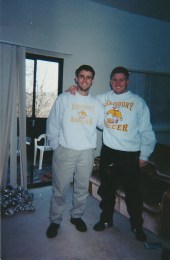
In 1998 I spent almost a month in Europe with my best friend, Schaef, attending the World Cup. When you think of life experiences, it really doesn’t get much better than that. Spending a month engrossed in the thing that you love the most with one of the people that you love the most. It truly was an amazing trip but when it was over he and I didn’t speak for almost two months. The experience of that trip has helped me in a variety of ways, one of which I’ll share here.
The trip was planned extremely well by my friend. He was the planner and I played the role of translator because I spoke both Spanish and French. We flew into London and saw the sites there briefly. Our main focus was the games. So site seeing was kind of a fast paced game. We tried to see as much as possible in the smallest amount of time possible. Buckingham Palace, Big Ben, etc. were all done in a day and at a quick clip.
Then we took trains down to Barcelona where we spent a few days touring and watching games in the afternoon. Again, the Olympic Village, La Sagrada Familia, Gaudi’s buildings and all were seen but not studied as we had to block out times for the matches which were almost social events along Las Ramblas. Unfortunately Schaef lost his passport on our second to last day there. For that story, CLICK HERE.
 Our next stop was Paris. There was of course the visit to the US Embassy in Paris to get a new passport which took longer than we would have liked. After getting it we had to rush to pick up our tickets to the five games that we were going to attend. Our first match was Germany vs USA. Despite both being American we were following Germany through the group stage. The most memorable thing from following Germany for me was the warm-up. Watching Jurgen Klinsmann get crossed balls for him to side volley from head height was amazing. He was obviously a world class player honing his craft and I loved seeing it up close. In addition to that match, we saw the Louvre in less than 2 hours. Art lovers we are not! Next was Germany vs Yugoslavia which was in Lens, a much smaller venue and not much around.
We fit in a quick trip to Munich Germany to experience Schaef’s heritage. This was the first time that I felt like we needed some space. I didn’t speak German but I felt there was an expectation that I was still on translation duty. I learned quickly how to say “Zwei biere, zwei pretz” (two beers and two pretzels) which was about all we needed to survive. That feeling of unnecessary expectation faded quickly because we were back on the road to Montpelier to see our final group stage match, Germany vs Iran, which ended with Germany winning the Group. Montpelier was also the first place that we were able to kick a soccer ball around. We met a girl from Chicago who got her brother to lend us a ball. Her father’s only directions were “don’t pop it”. Now I’ve never popped a soccer ball before in my life. But sure enough, the very last kick of the ball took a weird bounce hit this tree with spikes on it and POP! We felt so bad for the kid, I think we gave him around $140 in Francs to replace it. At this point, the togetherness was getting difficult. I even started smoking cigars on a daily basis just to get away for a bit.
Our final day of matches was filled with drama both on and off the field. We went to the knockout stage match in Lens between France and Paraguay which Les Bleus won in overtime. This was inconvenient for us because we had another match to attend in Paris that night and OT almost made us late. On top of that we had to navigate around riot police due to an altercation that happened during the match outside the stadium. Despite the difficult circumstances we got onto a fully packed train back to Paris. Denmark beat Nigeria handily that night.
We traveled back to England in order to catch our flight home. At this point, we have not had one argument or negative word said but we don’t speak much on the flight. The next day we part ways and don’t talk for about two months. Eventually we pick right back up in a good spot but we obviously needed some time apart.
This experience taught me so many things about relationships but the two main ones were: most upsets come from a mismatch of expectations and no matter how much you love someone, space is necessary at times. These both came into play in the best possible circumstances.
On a daily basis, we are not dealing with the best possible circumstances but we are cultivating our most important relationship. Each and every day we are in the closest possible contact with our key associate: the self. Although it may seem odd to apply the same concepts to an internal relation as an external but they can be used to good effect.
First the mismatch of expectations with who you think that you are or should be is a common cause of upset. We have a narrative about who we are inside of our head. Some of it is conscious and other parts unconscious but when our external environment fails to meet our expectations of who we are, it creates issues. Those issues can manifest in a variety of ways but the underlying problem is that our life does not match our expectations. One way to combat this is actually create a definitive description of who you expect yourself to be on a daily basis. Not the “best case scenario” or “ideal self” but rather standard operating procedure or bare minimums description. This way you are setting yourself up for success. Exceeding these expectations will be a gold star to shoot for but at least you have a definition of who you will accept going out into the world each day.
The second is slightly more complicated because getting distance from yourself can seem difficult. I’m obviously not talking about physical distance but rather psychological distance. The daily opportunity that we have for this space is sleep. I truly believe that people who do not sleep well have a more complicated internal life because they are caught up too directly in their own story. The inability to take a break from being puts additional stress onto the relationship with the self. Other forms of psychological space from the self are meditation and exercise. These can both be extremely effective provided that they can be done without intense focus on “results”. Using these tools to take a mental vacation will have great effects provided that the vacation is not turned into a business trip.
So recognize that you’re on a lifelong trip, living out of a purse sized “bag”, with the same person that you cannot get rid of. It would make sense for you to make them a friend, possibly your best friend. In order to make it work though, you’re going to need to set expectations and give each other space. Otherwise you could end up hating the person inside your head and that seems like a bad way to spend this great trip that you’re on.
Travel well!
Pete
 It is graduation season! Whether high school or college or even pre-school, millions of students will be walking forward to receive their diplomas. This tradition has carried on for centuries and will probably continue into the foreseeable future. The act of public recognition of achievement is extremely important. It releases a cascade of chemicals into our systems that act as a reward/marker for the accomplishment. Our feelings are what drive us to do almost everything in our lives. So the event is important but what about the paper? What does it say or not say about us as individuals?
 You are the ancestor of survivors! Cavemen and women who braved the bitter cold, extreme heat and dangerous predators just to continue the species. Their successors improved hunting and developed farming in order to make survival more probable. Eventually they were succeeded by people who developed technological advances that gave us every advantage and the ability to bend many of the laws of nature to our will. This is your lineage!
 This is your one and only opportunity at TODAY! Yes tomorrow is right around the corner but there is no guarantee that the same situations, circumstances or people will be available. Whether you are truly in a once in a lifetime situation or simply building the inertia that will be necessary to get you over the mountain that your climbing; TODAY CANNOT BE DISCOUNTED! So give it the attention and forethought that an opportunity like this deserves. If you treat today like every other day, then that is exactly what it will be. However if you treat it like the unique opportunity that it is, you’re more likely squeeze all of the juice out of it. So ask yourself the following questions:
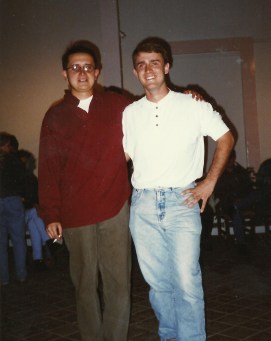 In my junior year of college, I traveled to Ecuador as part of a winter semester program. I lived with a local family and took a class on literature. It was a life altering experience on a variety of levels. Although I went there to improve my Spanish abilities, I can link many of my fundamental beliefs back to that trip. I changed as a person during my time there. One of the simple ways that I changed was that I became the “King of Introductions”. There was no official coronation! It’s an unofficial title that I developed for myself but it was a key component to many later successes.
 In about a month and a half, I’ll be moving to Virginia. It’s an exciting time! Filled with all kinds of possibilities. While we’re looking forward to that future, we must first deal with the daunting task of moving all (or most or some) of our stuff. The process of packing is a necessary evil where you must decide what is going with you and what things just need to go! Some people have trouble letting go of the things that they’ve accumulated over the years. For better or worse, we get attached to things from the past and have trouble letting go.
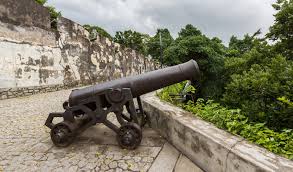 I just wept in front of a room of teenagers. It wasn’t part of the lesson plan but every once in a while, you just have to go with it. Whenever I talk about a particular former student, it is bound to happen. It has almost gotten to the point where the waterworks start before I even tell the story. That’s because I’ve let it happen. The memory does not have to be painful. It is a combination of factors that make it so and they’re all within my control.
 The spring season brings rejuvenation and tryouts. Soccer tryouts, hockey tryouts and I’m sure many others. The constant evaluation of players is now a cultural norm. While it may seem like a necessary evil, it is our job as the adults or forward thinkers to ensure that it doesn’t become pure evil in the mind of a young player. The constant question can go swirling through their head “Am I good?” While it may be a common question, it is probably the wrong question.
 At certain point in history, in particular parts of the world, the wealthiest people such as kings lived in castles. I’m sure many people have fantasized about living in a castle. The fantasy probably does not mirror the reality of what it was like hundreds of years ago. By comparison, the comforts of most of our modern day houses outshines castle living. Castles were made of cold stone without heat or air conditioning. Although they served as protection from the elements in some ways, there was no escaping the fact that survival was the order of the day and not comfort.
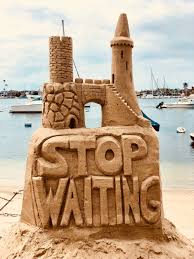 Geometry was probably one of the easiest classes for me in high school. Despite its relative ease, I had trouble staying engaged with it. I found it tedious to give all of the reasons why something was true. It was usually pretty obvious whether a problem was going to withstand the scrutiny of the different theorems that we were learning at the time. So it seemed like a relative waste to my teenage self to write out all of the steps in proving or disproving a problem. Especially when the answers (to the odd problems usually) were in the back of the book.
