I’m not really certain what it was written for, but I remember the big letters on a slip of paper: IOU.
Maybe I’d borrowed a few dollars from a friend. Maybe a teacher had loaned me a pencil and wanted it back. My memory is pretty good, but it’s not perfect. Clearly my spelling and grammar still needed some work too. But the idea itself was clear enough. An IOU. An I owe you.
That simple concept is the building block on which our entire monetary system is built: debt.
That idea came roaring back recently during a conversation with my son about Scott Galloway’s notion of men creating “surplus value.” I haven’t read the book, but I’ve listened to enough interviews to understand the point. Give more than you take. Produce more than you consume. Contribute something of value that didn’t exist before you showed up.
In monetary terms, creating surplus value means that someone owes you something. That “something” is what money was meant to represent in the first place.
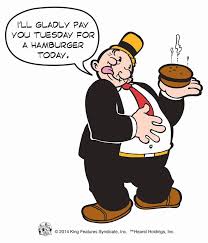
Pulling in the opposite direction is J. Wellington Wimpy from Popeye the Sailor Man. His immortal line was that he would “gladly pay you Tuesday for a hamburger today.” Wimpy isn’t interested in surplus value. He’s interested in the now. He wants the benefit immediately and pushes the obligation off into the future. That’s credit. Getting before you’ve given. Consumption untethered from contribution.
Between those two simple ideas—IOU and Wimpy—there’s a lot to be learned about what money actually is, and how far we’ve drifted from its original purpose.
Money was meant to be a systemic IOU. A marker that you had already provided goods or services to someone else. You could then pass that IOU along to another person in exchange for what you needed. If you consistently created surplus value in the world, you accumulated surplus money. If you didn’t have enough in the moment, you could borrow—paying a premium in interest for the privilege of consuming before contributing.
On a small scale, the logic is intuitive and fair. You mow a lawn. You teach a class. You fix a car. Value is created. An IOU is issued. Trust is maintained.
As the scale expands, things get murkier. Someone like Howard Schultz, for example, has created surplus value that touches millions of lives every day. Jobs, products, routines, communities. Quantifying that impact is difficult, but few would argue that it exists. The system is supposed to reward that kind of value creation proportionally.
Where the tension really shows up is at the national level.
Our government has repeatedly devalued our collective IOUs while playing Wimpy on the international stage. Promising Tuesday. Borrowing endlessly. Printing claims on value that hasn’t yet been created—and may never be. When that happens, the IOUs held by ordinary people quietly lose meaning. The surplus value they worked to create gets diluted, siphoned off, and often frittered away.
It becomes harder and harder for the average person to get ahead, not because they aren’t producing value, but because the measuring stick keeps shrinking. You can do everything “right” and still feel like you’re running uphill on loose gravel.
Money, at its core, is a story we agree to believe. An IOU that says, I have contributed, and I will be able to draw from that contribution later. When that story breaks down—when IOUs are issued faster than value is created—the trust erodes. And without trust, the paper is just paper.
Maybe that’s why that old slip with “IOU” written on it sticks with me. It wasn’t just about owing someone a pencil. It was a lesson, early and imperfect, about responsibility, reciprocity, and keeping your word.
Tuesday eventually comes. The question is whether the hamburger ever gets paid for.
Be valuable today!
Pete
 Soccer in the United States is gaining undeniable momentum in American culture. While the progress of the sport in this country has been slow, its impact is becoming more widespread. Through the various parts of this “Manifesto”, I will plead a case for the reasons for the proliferation of the sport and the impacts on the country at large. Physical, social, psychological and philosophical outcomes can be reaped through the more widespread acceptance of soccer as a national force. It may be a difficult argument to the general public because as Tom Weir of USA Today wrote in 1993, “Hating soccer is more American that apple pie.” While this sentiment may be changing, a deep dive into the facets of a transition is in order.
 As we progress even further into a new century and millennium, several of the rigid systems of the past are crumbling under the pressure of technology and the democratization of information. The old systems are being replaced for the very same reasons that they thrived a century ago. Cheap/efficient labor, mechanization, standardization and a consumer culture brought forth prosperity to the US. Now, cheap labor is found elsewhere or replaced entirely by machines. Standardizing of products has made many of them generic where cost and convenience become the most sought features rather than quality and craftsmanship. The model of consumerism has left many bankrupt financially, depressed emotionally and weighed down physically. The mantra “that’s the way we’ve always done it!” is the calling card of those primed for a fall to irrelevance or extinction.
 The traditional American sports do not fit as effectively into this new economic paradigm. The industrial model of tracking productivity in order to become more efficient in the name of progress does not hold. The measure of a good worker in the new economy is not a mindless cog that produces more than the other cogs. It requires a mixture of technical ability mixed with the emotional intelligence to make decisions based on varying factors. In the traditional American sports, these decisions were made solely by the coach, quarterback or point guard. Most other players were doing their assigned job as a part of an orchestrated unit. Divergence from the rules of the system was not desirable. The new economy needs more decision makers rather than rule followers.
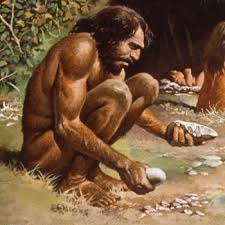 We live in a modern world but humans are prehistoric creatures. Obviously we have acquired skills and knowledge that our ancestors did not have. So I am not suggesting that we are on their level in that respect but I do want to point out that we are using the same hardware. The same brain structure that caused us to run from saber-toothed tigers is now tasked with managing a world that moves faster than we were intended to go. We’re overwhelmed and stressed because we created an environment that stresses and overwhelms our prehistoric brains. This is not a blog to suggest that we go back to living in caves. Rather it is intended to point out the fact that there are limits on our bandwidth, therefore we must manage ourselves so the prehistoric brain does not go into overload.
 Most of the time soccer is a noun but today I’m going to use it as a verb. Of course when you are creating a new word, it’s important to define it. Here is my explanation of the term.
 The 20th Century of the United States was largely dominated by an industrial economy. The US rode the wave of the industrial revolution into prominence on the world stage. Factories flourished thanks to interchangeable parts and largely interchangeable people. Most workers in the 20th Century were able to earn a substantial living by doing simple repetitive tasks under the orders of their bosses.
 Stories are an integral part of our society and have been for thousands of years. Whether the Odyssey, the Bible, Star Wars or Romeo & Juliet, the stories of the present and past have almost all been intended to tell us something. Not particularly something about the past although many are historical in nature. More often than not, stories are trying to tell us something about the human condition. Although a form of entertainment, they can also be instructive.
 The ability to see past the obvious and simple solution is not one that everyone possesses. Judging books by their covers or even first chapters is not always the best strategy. Not everything in the world is completely formulaic. Even some chemical formulas require a catalyst to increase the rate of their reaction. Despite these facts, there is a solid majority of people that believe the obvious answer is the only possible answer. One of the main reasons is that it is comfortable. Comfort is probably the ethos of our age. So the reason that I asked you not to read this blog is that I want you act on it.
 My last name has a silent “H” in it. Despite the spelling of Huryk, it is pronounced “Yer-ick”. I’ve grown accustomed to correcting mispronunciations (or not). It can be a great separator of the people who know versus those who don’t. The letter has no function but it has importance. Running through a box of memories that I have, it became obvious that there were several events and people that have gone silent through the years. They are the silent letters of life.
 With summer almost here, it almost time cotton candy, hot dogs, games and fun. Unfortunately fair’s not coming to town. The trucks, the rides and treats might all show up for a few days but there will be kids and adults alike expecting fair. Johnny whose cotton candy is smaller than his sister’s cries about fair. The father who remembers when the ticket for a ride was a quarter, not a dollar will complain about fair. The Scrambler operator will hear about the pay that his friends get at their jobs and wish for fair. Fair is not coming to town because it’s usually a one sided proposition.
 Huryk Unlimited