The season has not gone to plan. Results define clubs, managers, and players, and right now the results simply haven’t been good enough. Huddersfield come to town this Saturday, one of the so-called “big clubs” in League One. POSH have already fallen to Cardiff and Luton—teams tipped to be near the top of the table—and the margin for error is shrinking. But beyond the fixture list and all the hoopla about who’s a heavyweight this season, Peterborough have three opponents more dangerous than any other side they’ll face.
The first opponent: TIME
Time is undefeated. Once you fall behind it, there’s no catching up. Fixtures pile up, injuries take longer to heal, and before you know it the table has moved on without you. The best you can do is stay even with it—by using it wisely, refusing to waste it, and squeezing every ounce from the moments you have. POSH don’t need to panic, but they can’t afford to drift either.
The second opponent: BELIEF

Lately, belief has been in short supply. A couple of late concessions, a missed chance here, a poor call there, and suddenly doubt creeps in. Unlike time, belief can be rebuilt—but it requires intent. A big goal, a clean sheet, even a gritty draw can flip the script. The new signings may provide a spark, but belief has to run deeper than fresh faces. It has to settle into the squad and spread through the stands until both players and fans expect results rather than hope for them.
The final opponent: FOCUS
Focus should be the easiest win, but it’s the one most under attack. Missed referee calls, restless supporters, the lure of bigger contracts elsewhere, the endless chatter online—it’s all noise. Lose focus for five minutes and a match slips away. Win the moments, though, and the matches will take care of themselves. Success will come not from chasing the grand statement but from doing the smallest things well, over and over, until they add up.
As the season wears on, I still believe Darren Ferguson is the right man to guide this side. He’s faced these invisible opponents before and knows how to rally a squad when belief wavers. His track record at POSH—multiple promotions, a knack for rebuilding squads on the fly—proves he understands the climb. With time managed wisely, belief restored, and focus sharpened, I think it’s only a matter of time before things come good.
Up the POSH!
Pete



 I remember playing soccer as a kid pretty vividly. There’s a smattering of games, practices, camps, travel and associated activities swimming around inside my head. Perhaps I’ve forgotten but there was only one time that I ever considered “quitting” soccer and that was near my transition to high school. However that was because I was considering going out for football. So other than that, I truly don’t have a recollection of not wanting to play anymore. Perhaps I’m wired differently because I also ran track through high school and into college. Basketball got left behind as a sophomore in high school. That was more of a “talent” and interest thing than burnout. When you’re getting the token minutes as a freshman, the writing is on the wall. I needed to get a lot better in order to be successful at the sport that was not my priority.
 Every weekend the players line up on the field, the referee blows the whistle and the microscopes come out. I’m speaking figuratively of course. Although a fusion between youth sports and science would be great, I’m talking about the tunnel vision of the fans on the sidelines. It’s actually not their fault. It is in our nature to pay attention to the things that we care most about. So a parent’s focus on their child at a time of high emotion is both normal and expected. Our youth sports culture has definitely swung toward the extreme with cost, intensity and behavior. The thing that we often lack as we go through life is perspective. We tend to think that the way we perceive the world is the way that the world is. It is only our version. There are billions of others and none of them is completely correct either. So it may be valuable to gain a different perspective.
 I’ve not watch a NFL game for about four years. I used to love it but now I can’t
  In “The Junk Mail” episode of Seinfeld, we are introduced to Frankie Merman. He is Jerry’s childhood friend who has many quirks including digging holes to sit in when he is upset. Despite his eccentricities, George is slightly jealous of Frankie because Frankie and Jerry attended camp together. George ruefully refers to Frankie as the “Summer Me”. He even goes so far as to lie to Jerry about an imaginary summer friend of his own. All of this ridiculousness is par for the course in the world of Seinfeld. As far fetched as it all may be, it got me thinking about the soccer world in which American fans live.
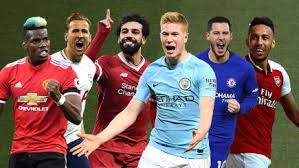 Next weekend marks the end of the Premier League. For those who religiously follow teams from England on Saturday and Sunday mornings, there is hole to be filled. Recognizing this fact, it might just be time to embrace Major League Soccer as your “Summer League”. I can hear the protests now, “MLS sucks!” “There’s no promotion or relegation!” “It’s a retirement league!” I’m well aware of this and all of the other vitriol that comes out whenever someone suggests that our domestic league should be watched by our domestic fans. I understand the thought process. My son and I just took a trip to England to see two matches. The allure of European soccer is not lost on me. The only question is do we want it to be this way? Do we truly want to be thousands of miles away from the best soccer in the world? Americans account for the largest number of ticket buyers at the World Cup, other than the host nation. Which means that we travel to far off lands at great expense to see the best in the world compete. In 2026 when the World Cup is here, will Americans not attend the games because they are here? That would be a ludicrous thought! We want the best games with the best players to be in our backyards. BUT we’re impatient, entitled and shortsighted. Let’s take a look at each.
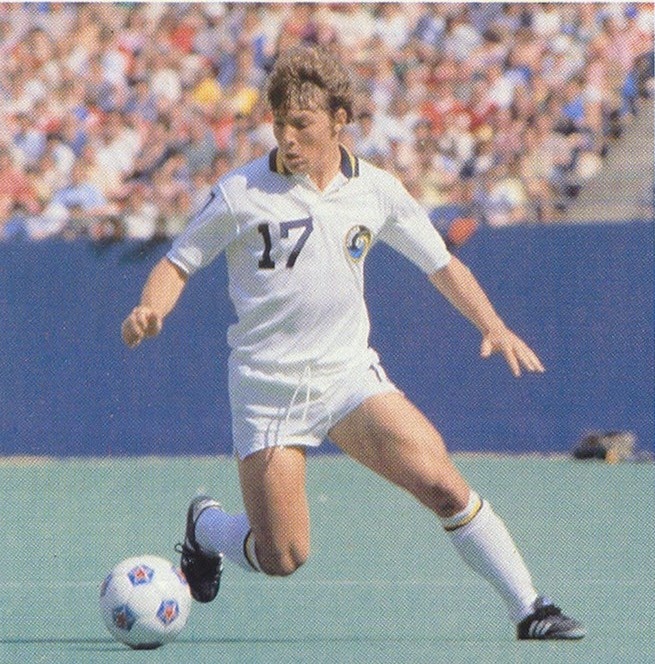 We’re impatient. Major League Soccer is barely 20 years old. Even the re-branded version of the English first division is older by around 4 years. Comparing MLS to any of the historic first divisions from Europe is at best an apples to oranges comparison. At worst, it ignores all common sense. Teams and leagues are made up by players and their endeavors are supported by fans. European fans have supported their clubs for generations. MLS clubs have not existed for a generation yet. Love for a team or club is not built overnight. It is a slow process and we’re in the thick of both the development of love for clubs and a talent pool. If the desire is that MLS should just buy the best talent in the world, do some research on the Cosmos.
 We’re entitled. Other than MLS, the other major sports leagues based in the US are arguably the best in the world. NFL, no competition. MLB, takes whatever talent is produced in other leagues. NBA, second tier talent from the US go to play in the other leagues. NHL, brings in talent from all over the world. Is it really that disheartening to have one league of the top five major sport that is not
  Huryk Unlimited