Having grown up in the relative infancy of soccer in the US, the information that I had about the game came directly from my coaches. Soccer was not readily available on TV like it is today. Therefore the switch from a 2-3-5 to a 4-4-2 seemed less like a change in tactics and more like a change in coaches or seasons. As the game has progressed over the past few decades, there are more formations available than ever. Players and coaches have their preferences on how to organize their teams. The function of a formation is not to directly solve problems. It is to provide a structure of standard operating procedures for a team. Therefore players can recognize patterns and hopefully create openings within their opponents defense. While this is a completely necessary portion of a team’s strategy, it does not solve all problems nor does it always represent the best use of talent.
While none of us is running a “4-4-2 life,” it is important to have some form of organization to the way that you attack your day. Leaving things up to chance is a great way to end up getting nothing meaningful done. Coaches will generally have two or possibly three formations that they will use in order to attack a particular opponent’s weaknesses. This is probably a helpful guiding principle for organizing your days. In general you want to have in mind whether you are attacking the day or defending in order to counter. If you look at each activity that you do as a player, then how have you aligned yourself. Are you completely defensive? Only doing the things that protect the status quo that you’ve set up for yourself. Or are you mainly offensive? Using all of your time to move yourself forward in some way: financially, socially, mentally, spiritually or in your career. The way that you allot your time is going to tell you something about intentions. Are you actually playing the game that you want to be? Are you trying to win it or hoping not to lose? Is your formation completely dependent upon your “opponent”?

Just like in the game, formations are necessary for organization and strategy but what happens in transition is usually the difference between winning and losing. The way that a team deals with things when their plans fall apart is crucial to their overall success. Those moments in between all of the planned activities. How are they spent? If you’ve invested time and effort into working out but then undercut that forward motion by snacking in transition, your formation becomes almost meaningless. While some people might use this as an excuse for more organization and formation, my preference is toward principles and defining goals.
In a game of soccer, the goal is always the same. However in life, our goals can cover a wide range of possibilities. At any given moment, I would try to limit yourself to three unless you have more that can truly coexist without interfering with one another. Build your principles around the goals that you have for yourself. If your major goal revolves around health and fitness, then set up principles that align with your desired outcome. Decide what you are going to do in chaotic situations before they come up. By developing principles ahead of time, it is less likely that a chaotic moment will devolve into negative consequences. Life is a game that you can win with the right formation and principles about how to deal with transition. Set yourself up and then ATTACK! Or defend, it’s really up to you!
Make a great day!
Pete
Many people refer to soccer as a “religion” and while I see where they are coming from, I use it as a metaphor for life. It can be used in a variety of ways to bring clarity to a world that can be difficult to traverse. My co-author and I are working on a book that uses soccer to explain person finance. If you’re interested in getting details as the project develops, sign up below.
Send me updates!
https://sendfox.com/js/form.js Today my son’s game had an extremely good referee group. The center referee and his two linesmen called the game very well. Despite the fact that they did a great job and got the majority of the calls right (even the ones that went against my son’s team), there were still complaints from parents. Which made me wonder if people really have any idea what makes for a good referee or if they just want calls to go in their team’s favor? Here are some thoughts to consider.
 In “The Junk Mail” episode of Seinfeld, we are introduced to Frankie Merman. He is Jerry’s childhood friend who has many quirks including digging holes to sit in when he is upset. Despite his eccentricities, George is slightly jealous of Frankie because Frankie and Jerry attended camp together. George ruefully refers to Frankie as the “Summer Me”. He even goes so far as to lie to Jerry about an imaginary summer friend of his own. All of this ridiculousness is par for the course in the world of Seinfeld. As far fetched as it all may be, it got me thinking about the soccer world in which American fans live.
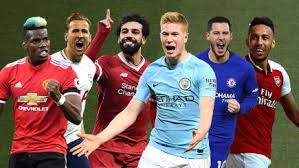 Next weekend marks the end of the Premier League. For those who religiously follow teams from England on Saturday and Sunday mornings, there is hole to be filled. Recognizing this fact, it might just be time to embrace Major League Soccer as your “Summer League”. I can hear the protests now, “MLS sucks!” “There’s no promotion or relegation!” “It’s a retirement league!” I’m well aware of this and all of the other vitriol that comes out whenever someone suggests that our domestic league should be watched by our domestic fans. I understand the thought process. My son and I just took a trip to England to see two matches. The allure of European soccer is not lost on me. The only question is do we want it to be this way? Do we truly want to be thousands of miles away from the best soccer in the world? Americans account for the largest number of ticket buyers at the World Cup, other than the host nation. Which means that we travel to far off lands at great expense to see the best in the world compete. In 2026 when the World Cup is here, will Americans not attend the games because they are here? That would be a ludicrous thought! We want the best games with the best players to be in our backyards. BUT we’re impatient, entitled and shortsighted. Let’s take a look at each.
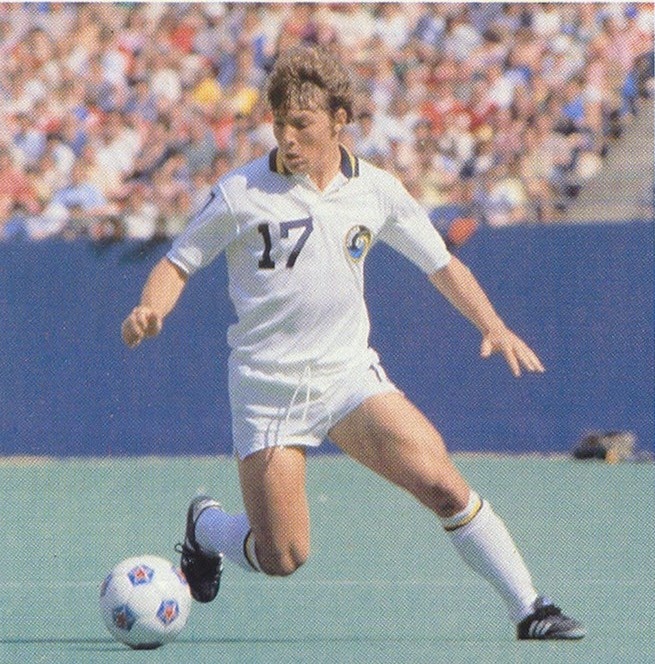 We’re impatient. Major League Soccer is barely 20 years old. Even the re-branded version of the English first division is older by around 4 years. Comparing MLS to any of the historic first divisions from Europe is at best an apples to oranges comparison. At worst, it ignores all common sense. Teams and leagues are made up by players and their endeavors are supported by fans. European fans have supported their clubs for generations. MLS clubs have not existed for a generation yet. Love for a team or club is not built overnight. It is a slow process and we’re in the thick of both the development of love for clubs and a talent pool. If the desire is that MLS should just buy the best talent in the world, do some research on the Cosmos.
 We’re entitled. Other than MLS, the other major sports leagues based in the US are arguably the best in the world. NFL, no competition. MLB, takes whatever talent is produced in other leagues. NBA, second tier talent from the US go to play in the other leagues. NHL, brings in talent from all over the world. Is it really that disheartening to have one league of the top five major sport that is not
  In this episode, Peter Loge and I have a wide-ranging conversation on soccer’s many uses as a metaphor. Peter is the author of “Soccer Thinking for Management Success.” Throughout the book, he discusses several different ways that soccer overlaps with management concepts. Check out his work at
  Donna Fishter is a Leadership Coach and Team Architect who works with athletes and coaches in order to make their teams better. In this conversation we cover some of the ingredients of good leadership, red flags and remedies for poor team chemistry as well as an assortment of other topics. You can find Big D at
  Brian White was the first draft pick taken by the New York Red Bulls in the 2018 MLS Draft. In this conversation we talk about some of the things that set him apart as an athlete and the transition to life as a professional athlete.
 This episode I got the chance to talk to Brad Nein, Coach and Blogger who works with kids and coaches in order to make a better experience of soccer. We discuss his beginnings, his dissertation and many other topics. To find out more about Brad and what he does, go to
  It’s far off in the future but it will be here in a developmental instant. Although the World Cup of 2026 is almost a decade away, the present is the only place where we can impact the future. Recognizing that Christian Pulisic and Tyler Adams may be the “veterans” of that team gives the extremely realistic picture that while our future could be bright, it is in our best interest to make it brighter. The loftier heights of the sport world are not reached by the individual but rather by a cultural movement that serves as a base to raise the many. So the US soccer world needs to realize that it’s chess, not kick ball.
 It was many years ago but I’ve still not encountered a better example. I was the field marshal at a youth tournament in Pennsylvania. The players were under twelve years old and engaged in a very back and forth game. One team was extremely adept at the offside trap. Late in the game, there was a corner kick. The cross was cleared out of the penalty box and the defense pushed up. The ball fell to the foot of a offensive player about 30 yards from goal. He shot. The ball rocketed toward the goal and hit the post. The rebound fell to a forward who was slow getting back onside and he scored. The referee instantly called offside and awarded a free kick to the defense. The coach of the team that had the goal disallowed went ballistic. He screamed about how “ridiculous” the call was and asked about the referees sight, etc. As the field marshal I felt that it was my job to diffuse the situation in order to avoid it interfering with the game. I said, “Coach, if you’d like, I can explain to you why that was the right call.” He responded, “I know it was the right call! I’m just blowing off some steam.”
 The 90s had many memorable events and people. Kurt Cobain, the OJ Simpson trial, Monica Lewinsky and Bill Clinton were all extremely noteworthy. Both for their own unique reasons and the media circus that followed them. It was not just that something happened but that it was perpetuated daily for probably longer than needed. One of the most ridiculous stories of the decade was the ice skating scandal involving rivals Nancy Kerrigan and Tonya Harding. For those too young to remember, the major event was an attack on Kerrigan’s knee orchestrated at least partially by Harding’s ex-husband. There was a movie released last year called “I, Tonya” that chronicles the entire episode.
 Huryk Unlimited