 Most of the time soccer is a noun but today I’m going to use it as a verb. Of course when you are creating a new word, it’s important to define it. Here is my explanation of the term.
The action of “soccering” is not the act of playing soccer. We already know how to say and do that. And NO! It doesn’t mean acting like you’re injured when no one did anything to you. The action of soccering is the real life application of the virtues that are possessed within the game. In soccer, players must make real time decisions about what to do, based on the stimuli that they take in from both teammates and opponents in order to achieve the outcomes of simultaneously reaching a goal while defending their own. The soccer paradigm puts the impetus of decision onto eleven individuals acting as a collective rather than following the pre-scripted orders of an overseer. Although positioning and style of play may be directed, principles and judgment are the main directors of decisions.
America needs to soccer! It needs to take back the very impetus that this country was founded upon. Regular people doing things as a collective that move us all forward and protect us against failing. We need regular citizens who want to be self-determining within the existing system and help to influence that system. At the moment we seem to be overwhelmingly passive and extremely willing to look for someone else to be accountable rather than looking to be responsible ourselves.
We can soccer by trying to improve our lives and the lives of those around us. We can soccer by changing our perspective from a “they” to “we” mentality. We can soccer by doing the right thing even if we know that no one else will notice but us. We can soccer by deciding to take a chance on something that might not work, rather than doing it “the way we’ve always done it.” There are so many ways to soccer but the thing about soccering is that it has to start with you. You can’t tell someone else to soccer. You can only show them how by doing it first and being an example.
Below is a long description of the historical paradigms where this thought came from. If you are inspired to do something right now, then don’t read the bottom, act now, read later.
Why do I believe that America needs to soccer? The historical successes of the United States have in large part been attributed to a football paradigm. Land acquisition and forward progress are the hallmarks of the All-American sport. In the past, both politically and economically, we have pushed forward in the name of progress and it has served us well. Manifest Destiny is the perfect example. Presidents and other decision-makers laid out a playbook for the American people to score a touchdown on the Pacific coast. Americans led the charge across the continent through wars and promised economic success, the way football players might listen to a play called from the sidelines. The Space Race, the Arms Race, the Cold War and Industrial Revolution were all perfectly suited to the football paradigm. So why change?
The reason for change is that the football paradigm is fundamentally flawed in a few different areas. The idea of neverending progress is unrealistic. At some point stock prices level off, profits decline and progress slows and stops. In a paradigm that preaches forward motion as the truest indicator of success, it is not surprising that we have: insider trading, big CEO bonuses for bailed out companies and strategic layoffs to protect profits. Individuals, companies and the government have all pushed toward their given marker of success whether it be money, land, power or prestige. These success markers are not inherently evil or negative but their acquisition without thought to the human equation has created an imbalance in our perspective on success.
There are also the separations in the football paradigm. The coach is the one who calls the plays. The offense scores the points and the defense stops the other team. Although all are members of the same team, it is easy to point the finger at another individual or group when things go wrong. In the Industrial Revolution this system was completely acceptable. Henry Ford brought forth the assembly line. He took men who were making fifty cents per day and paid them five dollars per day because of his efficiency. People were more than willing to be a cog in that machine because it was a better life than what they expected. They were linemen but were happy to be that. Now with modern technology and globalization that deal doesn’t work anymore. That deal is being shipped overseas and no one wants to be a lineman anymore. Everyone thinks they’re a quarterback and expects to be paid like one.
America needs to soccer because you’re part of the problem and part of the solution. You’re on the field. The decisions that you make on a daily basis matter. The President, the senator, the governor, your boss, your wife, your children, your friends, your teachers are part of it all but so are you. So before you point the finger, point the thumb. What can you do today to SOCCER?
Thanks!
Pete
 I inadvertently ruined Santa Claus for my son this morning. Late last night I typed up a letter to a former professor and friend. This morning my son asked to use my laptop to look up something for school. I had completely forgotten to close out the document where I had talked about our holiday season and our kids still believing in Santa. Ultimately it could have been a lot worse because he is old enough to move on from that belief.
 In this extremely fast paced world, it’s easy to get distracted from that which is important in favor of that which seems important. It is the reason why we make shopping lists and set reminders for ourselves. Getting caught up in the moment is not only normal, it seems to be a way of life. Despite all of the technological and societal distractions, it would seem as though we might have accidentally thrown out all of our babies in order to make room for more bathwater. Perhaps it is time to decide what is truly important and focus on it.
 There are plenty of commercials from my childhood that stick out. Growing up at the beginning of the Super Bowl Commercial craze gave us plenty of memorable advertisements. “Where’s the beef?” from Wendy’s. Bird vs Jordan shooting contest. This is your brain on drugs. These all caught my attention because they were either clever or memorable for positive reasons.
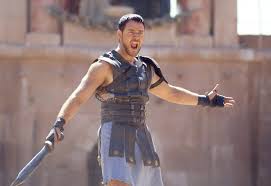 It wasn’t a 100% binary equation. Gladiators could win, lose or “tie”. Not even all of the defeated were condemned to death. Despite these extenuating circumstances, one thing is most definitely certain, bad gladiators died. I have no desire to bring back gladiatorial games or anything of the sort but in some ways our pendulum has swung too far in the other direction.
 I would not have been surprised if I annoyed the hell out of my former teammates. It’s not that I’m a bad player, I’m actually OK (or was). The annoying factor would come from two things in particular. First, I never shut up. I talk incessantly. Almost as if I were the unofficial play by play announcer for our team. The other would be my tendency to blame everything that went wrong on myself. Regardless of how small of an influence I had on a situation, I tended to focus on my little component rather than anyone else’s. If a goal was scored, it was almost always followed by an admission of guilt. As an intelligent human being and player, I realize that not everything that went wrong was my fault. It’s just not true. However I always wanted to exhaust the thumb before I went to the finger.
 Imagine it. A soldier walking through a jungle in a foreign land just as the rain stops. In the distance there is a rainbow. All of the sudden there is an attack from the enemy. The attack is repelled and the soldier marches on. The next day the rain stops, rainbow, surprise attack. This pattern continues for a week. On the eighth day, the soldier comes upon a beautiful waterfall. With the water plummeting from a height of over fifty feet, a mist above the surface of the water forms a miniature rainbow and soldier discharges his weapon several times into the falling water. There is no attack, so the soldier is sure that the enemy is dead. It is ridiculous, isn’t it? The soldier believing that the rainbow somehow caused or could help the prediction of the attacks. The truth is that we all do it at one point or another.
 The ability to see past the obvious and simple solution is not one that everyone possesses. Judging books by their covers or even first chapters is not always the best strategy. Not everything in the world is completely formulaic. Even some chemical formulas require a catalyst to increase the rate of their reaction. Despite these facts, there is a solid majority of people that believe the obvious answer is the only possible answer. One of the main reasons is that it is comfortable. Comfort is probably the ethos of our age. So the reason that I asked you not to read this blog is that I want you act on it.
 Despite being a 41 year old man, I really like the Harry Potter movies and watch them regularly. My wife would say that it’s because of Emma Watson but that’s not quite the truth. The story itself is what draws me in. It’s a pretty classic story of good vs. evil with enough twists and turns to make it unique. I’m also very interested in young people and how they learn to find their way through the world. Obviously completely fictitious but in parallel to the real world, one major failing of Hogwarts is to maintain a consistent Defence Against the Dark Arts teacher. In that world, the imminent danger of Voldemort made that post important. In our much less magical world, the danger does not come from a completely evil dark lord but rather other young people trying to find their way in the world.
 In the real world, young people are increasingly living their lives in a virtual world where the perceived becomes as important or more important than the real. So they are fighting in a world of perception when they are still learning how to perceive themselves. If you know of someone who is struggling to manage the world, here are some starting points:
 The thought of school being like prison is not a new one. I’m sure that most students have thought it or said it at one point. It’s an easy enough correlation to make: brick walls, questionable food, time to be served and other ne’er do wells in the same boat. Although I’ve visited a prison before, most of my frame of reference comes from books and movies. The most prevalent being The Shawshank Redemption. While this book/movie is completely fictitious, conceived in the mind of Stephen King, there is value in the exercise of comparing the fiction to the reality.
 The one outlier in Shawshank Prison is Andy Dufresne. A former banker that does not endure his time in the prison but uses it. Although his sentence is life, he always has an idea of what he’ll do with his life when he gets out. Slowly and methodically he uses time as his ally to dig his way out of prison and to his desired future. While this makes for a good movie, it is just fiction, isn’t it? A quick read of the story of a young Bill Gates shows a great example of art imitating life imitating art.
 Huryk Unlimited