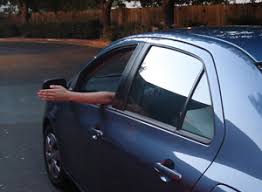
 I’m fully willing to admit that I’m a relatively passive driver. It’s almost to a fault. Most of the driving routes that I take for local trips are based on their lack of difficult left turns. It’s not that I’m incapable of making the turns nor do I lack the patience to wait for openings. My overarching thought process is that I don’t engage with unknown chaos if I don’t need to. Overall I’m happy with the strategy. However recently I’ve been forcing myself to do more left turn heavy routes. Just to demonstrate to myself that my passivity is a strategy that I want and not character flaw born out of fear.
In many areas of our lives, we tend to become accustomed to things. There is almost an autopilot type of function that we employ to the regular and presupposed. This is not a problem until it is. Often the need for comfort keeps us anchored to the known. Most of the time the known is a positive but eventually you may end up driving in circles. “Big Ben, Parliament!”
People have an ingrained need to feel safe and comfortable. Unfortunately those emotions do not usually help you move forward in the most direct route. The road to your ideal life is not lined with rose petals, rainbows and unicorns. It is going to require grit, determination, unwavering faith in that unseen and YES! Hard left turns through major traffic! This realization is necessary to reach new destinations. If you’re happy going where you’ve always gone with path of least resistance, then by all means keep going that way. If not, then it’s time to recognize the power of the left turn and accept that they are going to be integral to you reaching your destination.
For my international reader who may drive on the left hand side of the road, just reverse all that I just said! :p
Go get there!
Pete
 I would not have been surprised if I annoyed the hell out of my former teammates. It’s not that I’m a bad player, I’m actually OK (or was). The annoying factor would come from two things in particular. First, I never shut up. I talk incessantly. Almost as if I were the unofficial play by play announcer for our team. The other would be my tendency to blame everything that went wrong on myself. Regardless of how small of an influence I had on a situation, I tended to focus on my little component rather than anyone else’s. If a goal was scored, it was almost always followed by an admission of guilt. As an intelligent human being and player, I realize that not everything that went wrong was my fault. It’s just not true. However I always wanted to exhaust the thumb before I went to the finger.
 Although the 1980’s were memorable for many reasons, the crazy hair is probably one of the most prevalent. Big hair was all the rage at the time. Many of the 80’s rock bands invested a lot of time and money on their hair. Image was almost more important than the music. I’ve even heard interviews with bands who tried to gain information on the hair products of more successful bands in order to copy their formula. It’s a silly image isn’t it? Grown men hanging their hopes of musical success on the type of hairspray that they use. There is a disconnect that should have been obvious to all involved but sometimes people are too close to the situation to see their own ridiculousness.
 Imagine it. A soldier walking through a jungle in a foreign land just as the rain stops. In the distance there is a rainbow. All of the sudden there is an attack from the enemy. The attack is repelled and the soldier marches on. The next day the rain stops, rainbow, surprise attack. This pattern continues for a week. On the eighth day, the soldier comes upon a beautiful waterfall. With the water plummeting from a height of over fifty feet, a mist above the surface of the water forms a miniature rainbow and soldier discharges his weapon several times into the falling water. There is no attack, so the soldier is sure that the enemy is dead. It is ridiculous, isn’t it? The soldier believing that the rainbow somehow caused or could help the prediction of the attacks. The truth is that we all do it at one point or another.
 The ability to see past the obvious and simple solution is not one that everyone possesses. Judging books by their covers or even first chapters is not always the best strategy. Not everything in the world is completely formulaic. Even some chemical formulas require a catalyst to increase the rate of their reaction. Despite these facts, there is a solid majority of people that believe the obvious answer is the only possible answer. One of the main reasons is that it is comfortable. Comfort is probably the ethos of our age. So the reason that I asked you not to read this blog is that I want you act on it.
 It is one of my favorite exchanges from the classic movie, Tombstone.
 My fear is not that the word will only mean “people that you relate with mainly online” but rather that the word is becoming devalued. It is common for people to have hundreds of “friends” online and this is great. Keeping relations with people from great distance and from other life periods is an amazing advancement. The concern is that all of these tiny and relatively “easy” relationships will make true, closer and more “difficult” relationships seem like too much work. It’s easy to become intoxicated in the numbers game of friends. Having more of something, does not particularly make life richer. Perhaps even, the collection of a maximum number of “friends” might just mean that the collector doesn’t truly have any. The word starts to lose all meaning when it is applied to basically everyone.
 For me, I’d rather go the route of Doc Holliday. Going all in on the people who truly matter. Having those few but special people in life that you’re willing to go into war with (figuratively or literally). Those types of bonds make us stronger people and better humans. So have a social network by all means! But never lose sight of the difference between your
  Have you ever woken up from a night of intense dreaming and not been able to remember much of anything about the dream? Well that’s not what I’m talking about at all! I’m talking about your dreams forgetting you! Those things that you want to have in your life: a goal, a person, an item or anything else you can imagine. It started as an image in your head. Then you took some form of action to make it a reality. You might have even got close. But then it was gone. Sorry to say, your dreams have amnesia!
 Despite being a 41 year old man, I really like the Harry Potter movies and watch them regularly. My wife would say that it’s because of Emma Watson but that’s not quite the truth. The story itself is what draws me in. It’s a pretty classic story of good vs. evil with enough twists and turns to make it unique. I’m also very interested in young people and how they learn to find their way through the world. Obviously completely fictitious but in parallel to the real world, one major failing of Hogwarts is to maintain a consistent Defence Against the Dark Arts teacher. In that world, the imminent danger of Voldemort made that post important. In our much less magical world, the danger does not come from a completely evil dark lord but rather other young people trying to find their way in the world.
 In the real world, young people are increasingly living their lives in a virtual world where the perceived becomes as important or more important than the real. So they are fighting in a world of perception when they are still learning how to perceive themselves. If you know of someone who is struggling to manage the world, here are some starting points:
 The discussion of the GOAT is always tough because it brings apples against oranges and people’s personal perspective weighs heavily on their arguments. The comparison of Messi vs Ronaldo could be a more objective conversation but adding Pele into the mix makes things much more difficult. Considering different eras and playing landscapes muddies the waters to the point where the argument says more about what the fan values rather than what the player meant in their own time. With all of those points well established from the outset, I am not at all bashful about nominating my mom as the Youth Soccer Fan GOAT! This is not a son’s love for his mother taken to the extreme. In fact, I thought my mother was one of the worst fans at the time but given years to evaluate and compare, she truly was the best.
 I have often wondered what history lessons are like in Germany about the period between 1900-1950. From an outside perspective it is easy to characterize Germany as the villain of that epoch. Is it viewed as a period of shame? Or glossed over as unfortunate past events? Often people and nations have a hard time seeing themselves as others would see them. When looking at others, it is easier to make judgment that we believe is right. We can see their faults, shortcomings, idiosyncrasies and failures. Or we laud their beauty, strength, courage or “perfection”. Self-reflection is usually skewed in either a positive or negative direction. People, just like nations, have a history that they must reconcile in order to move forward. Recently upon thinking of Germany’s past and looking in the mirror, I reflected on what nation I represent.
