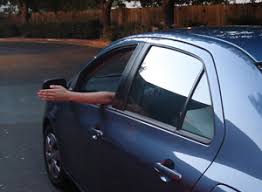
 I’m fully willing to admit that I’m a relatively passive driver. It’s almost to a fault. Most of the driving routes that I take for local trips are based on their lack of difficult left turns. It’s not that I’m incapable of making the turns nor do I lack the patience to wait for openings. My overarching thought process is that I don’t engage with unknown chaos if I don’t need to. Overall I’m happy with the strategy. However recently I’ve been forcing myself to do more left turn heavy routes. Just to demonstrate to myself that my passivity is a strategy that I want and not character flaw born out of fear.
In many areas of our lives, we tend to become accustomed to things. There is almost an autopilot type of function that we employ to the regular and presupposed. This is not a problem until it is. Often the need for comfort keeps us anchored to the known. Most of the time the known is a positive but eventually you may end up driving in circles. “Big Ben, Parliament!”
People have an ingrained need to feel safe and comfortable. Unfortunately those emotions do not usually help you move forward in the most direct route. The road to your ideal life is not lined with rose petals, rainbows and unicorns. It is going to require grit, determination, unwavering faith in that unseen and YES! Hard left turns through major traffic! This realization is necessary to reach new destinations. If you’re happy going where you’ve always gone with path of least resistance, then by all means keep going that way. If not, then it’s time to recognize the power of the left turn and accept that they are going to be integral to you reaching your destination.
For my international reader who may drive on the left hand side of the road, just reverse all that I just said! :p
Go get there!
Pete
 Sometimes the hardest things to see are those that are right in front of you. Your nose is always front and center but most of us don’t pay it any mind. The reason why we tend to forget about it is because it is always there. Our brains tend to discard or ignore those things that can be taken for granted. Air, light, food, water, friends, opportunity, etc. are just a beginning to the list of things that we take for granted each day. This is not to say that we should be spending major amounts of time contemplating air in a recreational effort. It is simply to point out that your brain is working at all times to determine what is worth your attention and what is not. This ability to ignore the inconsequential is wonderful until it isn’t. As they say, the dose makes the poison.
 About a year ago, I took my daughter to a Devils game. To be honest, she didn’t seem overly interested in the game. It appeared that she was more excited by the cotton candy and Devil horns. I was extremely surprised when she said at the end of the game “I want to play hockey.” At that point we had only taken her ice skating a handful of times. I told her that I fully supported the idea of her playing hockey but that there were some steps she needed to go through first. She needed to spend this winter improving her skating and starting to learn how to play the game. This past weekend she had her first hockey tournament.
 So as you go out into the world today and do whatever it is that makes you feel alive, do it with the joy of a 9 year old girl. One who had such a big smile on her face most of the weekend that no one would have ever known her team lost by large margins. I do not believe that you should want to fail. I just believe that you should be willing to RISK IT!
 I would not have been surprised if I annoyed the hell out of my former teammates. It’s not that I’m a bad player, I’m actually OK (or was). The annoying factor would come from two things in particular. First, I never shut up. I talk incessantly. Almost as if I were the unofficial play by play announcer for our team. The other would be my tendency to blame everything that went wrong on myself. Regardless of how small of an influence I had on a situation, I tended to focus on my little component rather than anyone else’s. If a goal was scored, it was almost always followed by an admission of guilt. As an intelligent human being and player, I realize that not everything that went wrong was my fault. It’s just not true. However I always wanted to exhaust the thumb before I went to the finger.
 Lately I’ve been thinking a lot about the old school gods and their importance in the lives of our ancestors. Although we have so many technological and societal advantages, there are some aspects to their belief structure that could be helpful if implemented. I’ve joked several times that I may start worshiping Zeus and the other Greek gods because of their idiosyncrasies. You’re less likely to beat yourself up over work snafu when your god is regularly cheating on his wife. Despite the possible comedy arising from this, I don’t know that there’s much to it. The main area that most of the ancient religions have in common is the concept of “sacrifice”. I will be focusing on the non-human variety.
 To my toilet, I’m either a dick or asshole. To my shower, I’m varying degrees of dirty. To my mirror, I’m vain or self-obsessed. And you can just imagine what the toilet paper thinks of me. All of these perspectives are completely accurate but taken from a narrow view
 Imagine it. A soldier walking through a jungle in a foreign land just as the rain stops. In the distance there is a rainbow. All of the sudden there is an attack from the enemy. The attack is repelled and the soldier marches on. The next day the rain stops, rainbow, surprise attack. This pattern continues for a week. On the eighth day, the soldier comes upon a beautiful waterfall. With the water plummeting from a height of over fifty feet, a mist above the surface of the water forms a miniature rainbow and soldier discharges his weapon several times into the falling water. There is no attack, so the soldier is sure that the enemy is dead. It is ridiculous, isn’t it? The soldier believing that the rainbow somehow caused or could help the prediction of the attacks. The truth is that we all do it at one point or another.
 Talent is coveted, scouted, poached and revered in this country. It often comes with an extremely high price tag. That price is monetary in the professional ranks. However at the lower levels, the price of talent is far too often the possibility of teamwork. At times this comes from jealousy of teammates. Unfortunately it is more frequently a result of trading team ethos for star power. It may get results but are they the right ones and for how long?
 Many sports teams are in the middle of their preseason sessions at the moment. I’m sure that many players are working hard. It is almost a prerequisite for any level of success in the sports world. The reason that I hedge is that there is a higher level of effort that is more in line with the actual effort. That level of effort is called labor.
 The ability to see past the obvious and simple solution is not one that everyone possesses. Judging books by their covers or even first chapters is not always the best strategy. Not everything in the world is completely formulaic. Even some chemical formulas require a catalyst to increase the rate of their reaction. Despite these facts, there is a solid majority of people that believe the obvious answer is the only possible answer. One of the main reasons is that it is comfortable. Comfort is probably the ethos of our age. So the reason that I asked you not to read this blog is that I want you act on it.
