 The sport of skiing is one that I did not acquire until I was well into my twenties. My wife took me for the first time while we were engaged. I enjoy it but because I learned to ski later in life, I feel a certain amount of hesitance about pushing my limits. Skiing is an activity that allows for a good amount of self-policing. Generally speaking, there are no official representatives of the mountain telling you what trails to take. You need to have enough self-awareness to know if you’re a green circle, a blue square or a black diamond. Incorrectly gauging your level could have disastrous consequences. Despite this possible peril, most people make it down the mountain unscathed because they accurately police themselves.
It is amazing to me that in certain areas, the idea of self-awareness is ingrained and almost automatic. While in other places people are seemingly unable to see themselves at all. Perhaps it is the number of variables in the given situation. Or it is the perceived risk of bodily, emotional or social harm. Whether it is in sports, dating, business, school or any other area, we all know someone who does not know their own level. Either they think they’re an expert when they’re truly a novice. Or they think they should be on the bunny hill when they could truly handle or deserve so much more of an experience. Regardless of the situation, there are rewards to reaped from self-awareness.
So where do you belong in a particular area that means something to you? Are you a green, a blue or a black diamond? Take a real look inward and decide where you think you belong? Then take your self-assessment and bring it to people that you trust. Depending on the area, it may be worth it to take it to the streets and see what the common person thinks. Regardless of the outcome, the exercise is valuable because a map of Chicago is worthless if you’re lost in New York. Having a knowledge of where you are is a key component to getting where you want to go. Denial is not a strategy for progress.
So go out there and hit the slopes!
Pete
 In the English subway system, there are both visual and auditory reminders to “Mind the Gap”. This is a call for attention to the space between the platform and the train. It is a helpful reminder but probably almost unnoticed by most local people. However for the American tourist this is an out of the ordinary bit of speech. “Mind” is rarely used as a verb in American English and “the gap” is a store or possibly brings thoughts of Michael Strahan. Due to its unique wording and situational use, it tends to have sticking power with tourists. It is helpful to “Mind the Gap”. While it is a everyday practicality in the UK, it seems as though there is a gap issue in the USA.
 This morning on my run I had a glitch with my headphones. Only part of the sound was coming through. The guitars, bass and backing vocals all came through crystal clear while the drums and lead vocals were inaudible. Occasionally the vocals could be heard but only as a kind of echo. Each song that played was a muted version of what it normally is and those echoes were the only reminders of the lyrics of the normal song. The only song that came through relatively clearly was “Jane Says” by Jane’s Addiction because it was from live recording rather than a chopped studio version.
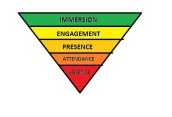 Distraction is a way of life in the country at the moment. Not only is completing tasks without getting distracted difficult but the fear of missing out (FOMO) seems to be an almost pervasive issue. People have divided their focus between too many activities and are simultaneously getting distracted from them. It’s a recipe for disaster no matter how you slice it. No one can be everywhere for everyone every time. Distraction always comes with a price tag and it is not you who is profiting. The losses are felt by you, your family, your friends, your colleagues and classmates. The people who are actually in your life are the ones who are missing out on a key component of their experience and that is you. All of you, not the partial you that has a technological device in hand “JUST IN CASE!” The cyborg version of you that cannot let go of the phone, tablet or computer has a distinct weakness, it is never fully present.
 Directing a youth sport organization has the opportunity to be a rewarding experience in which your thoughts, processes, and philosophies are introduced to enrich the lives of the athletes, families, coaches, and all other followers connected to the group. The privilege granted to be a resource to many while controlling the final decision on significant organizational matters is a desirable leadership position.
 Each of us has a potential amount of fire power in a given year. If you think of your energy to finish projects as gunpowder, some of us have a barrel full and others could barely fill one of those Chinese novelty snap pellets. While knowing how much powder you have is helpful, it is also important to divvy it up intelligently. Even the barrel-full may not be sufficient if divided a thousand times and put into the wrong weapons. By contrast, an intelligently used pinch could be life-changing. So how much firepower do you really have and where are you going to use it?
 At the end of this year will you be basking in the glory of your successful hunt? Or will you be left standing with your Red Ryder Carbine in denial that you’re full of hot (but compressed) air? That’s completely up to you and it starts right now. Pick out your targets, if you haven’t already. Write them down and decide how you will take them down. Although truly ‘How’ is very rarely the problem. It is usually getting the focus and commitment to the target that people fail to do. So write them down now!
 Once you have your targets, then you can plan out how to systematically deal with each one. It’s a simple enough process once you commit to it. What you need to do is “fall back on superior firepower and superior intelligence. And that’s all she wrote!”
 It’s a throwaway line from Star Wars: A New Hope. The purists will point out that the actual line is “This R2 Unit has a bad motivator!” but either way it is enough to stop the red droid in his tracks. At that point, it’s back in the sand crawler with the Jawas. There is something all too familiar about this situation. At times motivation seems like an illusive force that some people have the power to wield while others struggle to find it. There is nothing supernatural about it. The reason to do or not do something (don’t get me started on trying) is a mixture of chemicals that are released in our brains and the story that we tell ourselves. So if you’re not doing something that you want to (or know that you should), it’s because you’ve got a bad motivator.
 It’s January 9th and the gyms are getting less crowded by the day. The “Gymcensus” is almost over. With the holiday season having just ended, the story behind Christmas should be in mind but I’ll recap just in case. The story of Christmas starts with Joseph bringing Mary, his betrothed, to Bethlehem to be counted for the census. Due to the large influx of people, Joseph and a very pregnant Mary were forced to stay in a stable because there was no room at the inn. In that stable Jesus was born. Then he and his family had to flee in order escape the wrath of King Herod who intended to kill the child. Now we have created the modern equivalent.
 At one point in my educational career, transparencies were the height of technology. By today’s standards they are obsolete but at the time they were extremely helpful. The ability to manipulate and project for a group to see was used daily. My most vivid memories of them were from history class. A territory could be shown with a variety of borders and other influencers. Depending on the transparency that was placed onto the territory, a force like the Roman Empire could be all encompassing or completely inconsequential. The territory was always the same but the translucent lines of borders and boundaries changed. Even though the transparency projectors have all but disappeared, the influence of invisible and imaginary lines has not.
 Physically, mentally and emotionally; what do you believe about yourself, people and the world? Write it down in your notebook, iPhone, laptop or anything else that works for you. Then pick through it to see what you’re keeping, tweaking or tossing. It’s up to you to clean up whatever mess you might have. If you’re honest in your assessment, you’ll be able to see through the person that you need to read better than anyone else: yourself.
 For the past six months or so, I’ve been learning Polish using a program called Duolingo. It is a completely free online language learning tool. I started using it to prove the point to my students that you can learn a foreign language by using such a tool. When summer hit, I took a Polish hiatus but now I’m back on the train. The funny thing is that I’m not sure that I’ll ever get to Poland. It is the homeland of my ancestors and I love to travel but it is not a huge priority. So then why bother to learn the language? There is no foreseeable return on my daily investment of time and energy into this language.
 Huryk Unlimited