 The Shawshank Redemption is one of my all time favorite movies. Based on how often it is shown on TV, I’m not the only one. SPOILER ALERT! If somehow you’ve not seen this movie that was released in 1994 and don’t want it ruined, STOP READING! (For those that are pressing on) The movie and the book that it is based on recount the multiple decades of Andy Dufresne’s life in Shawshank State Penitentiary as the wrongly convicted murderer of his wife and her lover. There are some differences between the movie and the book but mostly Andy is a methodically planning his escape through a tunnel in his cell wall. He finally achieves his goal after years of slow chiseling and eventually crawling through a shit-filled pipe. Shawshank was not meant to hold Andy Dufresne because he was free where it counted most, in his mind.
While most of us can’t imagine living Andy’s life in Shawshank, we can definitely imagine the way that we wish our life was. We wish that things were easier, less busy, more money, fewer problems and more “perfect”. The problem with the image of perfect is that it is a prison of its own. That image exists in a completely fictitious world where things just fall into place magically. While it may be a nice diversion, it is not anything resembling a game plan.
So if you want to break free from the prison of that perfect image and move to real freedom, you may need to follow the path of Andy Dufresne. Chisel away at that dream that you have, possibly for years. Take joy discarding the small pieces of rubble that you’ve chipped away from the wall in front of you. Just be ready when you finally feel that you’ve broken through, there could still be 500 yards of shit for you to crawl through. Expecting that type of a path will make your real journey to your dream life seem like a walk in the park!
Break out the rock hammer!
Pete
 In this country and around the world Champions are lauded for their accomplishments. Usually the scene of victory is filled with a trophy to be kissed, confetti falling, champagne popping and players/fans rejoicing. The reason that this scene is so easy to recreate in one’s mind is that it is pervasive throughout sport. Depending on the particular sport, one could be even more specific about the scene. Regardless of which championship is won there is an invisible specter that is ever-present but has seemingly been forgotten by many who are watching. The fruits of the labor are on full display but the labor often gets overlooked. In a world where instant gratification is becoming more of the norm will we be seduced by the empty triumph of getting the small reward now or choose the labor that creates real results? The answer is that both will happen.
 It’s Mr. Baxter from 7th grade science class that started my tendency toward being a spelling/grammar Nazi. Two times receiving a 99.5% based on spelling errors was enough frustration to get me to pay attention. I fully recognize that language is a fluid and live thing. Every day we can influence it for the better or worse. Outside of church, very few people are using “thine” and “thou”. These words have been morphed and replaced with their more recent counterparts. Change is not my concern. It is laziness and apathy.
 If you go to a fine restaurant and order a steak, you will probably enjoy a fine meal and receive no side-ward glances from anyone. The location and timing are everything. On some level you must realize that months earlier, that steak was part of cow. If you got dressed up, went out into the field and bit the cow’s ass, you’d definitely get a reaction especially from the cow. There’s a place and time for almost everything. Getting that combination right is the difference between being cheered and ridiculed. To a certain extent, Galileo was considered a “cow-biter”. The things that he was saying and doing were so far ahead of their time that no one understood them. He was even excommunicated from the church for his beliefs. People were not ready to hear what he was saying because they were too invested in their worldview.
 Mike – “This is Trent. We call him Double Down.”
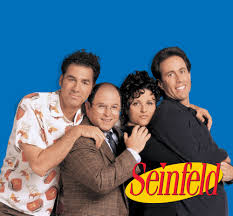 Seinfeld is one of my favorite TV shows of all time. It has so many memorable episodes and characters. Despite my love for the series, I’m not a huge fan of the early episodes. Many of the episodes, I just don’t find funny at all or they feel forced. This is not surprising in the slightest. It took those early episodes in order to get to the later ones. Early failures lead to better episodes later. A few of the story-lines were even repeated with better effect the second time around. The early episodes of Seinfeld were not a good indication of where the series was going.
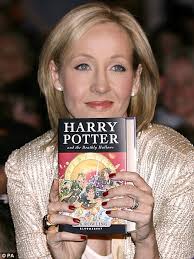 Despite all of the examples of enduring early hardship, there is still a pervasive desire for instantaneous results. People want to be hit right away, if not sooner. The perception of overnight success is usually due to the glossing over of the hard work done before the big break. Sylvester Stallone was a breakout start with Rocky! After he was a starving actor who had to deny a big pay day in order to star in his own movie. J.K. Rowling had the blockbuster Harry Potter book series followed by movies. After she was on welfare and had her book rejected by many publishers. Most of us are looking for the triumph without the trials. It seems that it doesn’t usually work that way.
 At one point in my life, ketchup was not a condiment, it was an ingredient. Ketchup sandwiches were a staple of my diet. Any undesirable food such as broccoli could be made digestible with an ample serving of ketchup. Obviously this is not an ideal system for a balanced diet. It was more of a survival tactic for an extremely picky eater rather than a conscious decision about eating good food. Eventually I learned that ketchup was not the answer to all of my food issues. It wasn’t versatile enough to be an everyday ingredient.
 Despite the extremely broad reach that the internet gives us, people seem to feel as though they are at the effect of their circumstances. If circumstances were what made people, then a frail asthmatic doesn’t become a president revered for his adventures. A stutterer doesn’t become one of the most recognizable voices of his era. And an actor with a partially paralyzed face doesn’t become the face of multiple film series. The truth is that we all know that circumstances are only part of the recipe. It is just easier to use poor circumstances as an excuse for poor results. Or a lack of resources as a reason for no results. You may not have everything you need to make today great but you have the most important thing and that is you. You’re the ingredient that you’ve been waiting for! If you’ll step up to the challenge and be what today needs.
 To a certain extent, I feel like I’m in therapy or at an AA meeting about to admit one of my biggest weaknesses but here it goes: I like a lot of Keanu Reeves’ movies. It really shouldn’t be that embarrassing because the man’s movies have made millions (maybe billions) over the years. Unfortunately he gets a bad rap because he’s pretty goofy and doesn’t have a lot of range. The interesting thing is that for the most part, this anti-Keanu sentiment comes from people who have never acted before and have paid to see his movies. So is it really that he is THAT bad? Or do people simply have a need to pick apart a mediocre swan because it’s easier than looking in the water to see an ugly duckling reflected back?
 In the English subway system, there are both visual and auditory reminders to “Mind the Gap”. This is a call for attention to the space between the platform and the train. It is a helpful reminder but probably almost unnoticed by most local people. However for the American tourist this is an out of the ordinary bit of speech. “Mind” is rarely used as a verb in American English and “the gap” is a store or possibly brings thoughts of Michael Strahan. Due to its unique wording and situational use, it tends to have sticking power with tourists. It is helpful to “Mind the Gap”. While it is a everyday practicality in the UK, it seems as though there is a gap issue in the USA.
 For the past six months or so, I’ve been learning Polish using a program called Duolingo. It is a completely free online language learning tool. I started using it to prove the point to my students that you can learn a foreign language by using such a tool. When summer hit, I took a Polish hiatus but now I’m back on the train. The funny thing is that I’m not sure that I’ll ever get to Poland. It is the homeland of my ancestors and I love to travel but it is not a huge priority. So then why bother to learn the language? There is no foreseeable return on my daily investment of time and energy into this language.
 Huryk Unlimited