SoccerLifeBalance

Talent and Tryouts and Trainers! OH MY!

wizard of ozIt was a big deal!  I remember it very plainly.  My parents, brothers and I would all sit down with popcorn and watch “The Wizard of Oz”.  It was an annual occasion.  The movie is definitely a classic but I think that the ritual and nostalgia factor make it a little more important for me.  Despite being released in 1939, the story stands the test of time.  A young girl has a magical adventure that ends up being a dream but she learns that her search to distant lands led her back to the home and people that really mattered in the first place.  Most of the things that she desired or feared ended up being fake or easily defeated.

As the spring soccer season continues, I am inundated with emails about tryouts, camps and recruiting services.  It is not a new thing that is unexpected.  However following many discussions that I’ve had with members of my own club, I’m left wondering if the modern American soccer culture isn’t a lot like Dorothy.  Are we searching for something that is hollow and the truest prize is in our own backyard?

It is tryout season and clubs throughout my area will be selecting the best talent they can find.  Then they will pair that talent up with a paid trainer in order to improve upon that talent.  (Full disclosure I am a paid trainer)  Games will be won and lost over the course of the year.  Then the cycle will repeat.  The teams and players will progress down the yellow brick road toward what exactly?  The best of the best will be professionals.  The second tier will play in college.  The rest will either fizzle out along the way or play in a recreational type setting for as long as they enjoy it (love men’s and women’s leagues!).  So is it really that a majority of us are hoping that our kids get to that promised land of professional or college that we’ve created this monster system?  Or is it that we’ve forgotten where we are and where we’re going?  My fear is that in a few more years many people are going to find the little man behind the curtain and be shocked.

CoachingSoccer is an inherently simple game that has so much to offer to the people who play and watch it.  The positives that it offers to young players are generally intrinsic rather than extrinsic.  Physical fitness, self-confidence and camaraderie just to name a few.  None of these positives require talent, tryouts or trainers, OH MY!  In fact all three may inhibit the expansion of these intrinsic positives because they are all short term.  Talent is relative and momentary.  Tryouts make players commodities first and people second.  Trainers are generally interested in the short-term improvement of skills in a very selective area.   It is not that these things are without their place.  However they should not be the silver bullets that are used to propel our young players forward.  If the vast majority of youth soccer players are not going to end up in the top two tiers of involvement, then should we (the adults) be building the yellow brick road?  Or finding our way back to Kansas?

My beliefs is that the solution is on the horizon if enough people are willing to look for it.  It all comes down to focus.  If the focus is put and maintained on the idea of making our kids great people first, then we all win regardless of the outcomes on Saturdays/Sundays.  Do we have to pay for that service?  Most likely not.  It takes involvement and time from the adults who truly care about the kids.  My father coached my teams for year and his soccer knowledge, at the time, came from books.  The game has progressed since then but so has the knowledge of the parents and accessibility to information.  Since the focus is not on game results, tryouts might go away or be held every two or three years.  That way the team gets to be “a team”.  Finally what will happen to the talent of our players?  Won’t their soccer skills drop if we no longer employ these improvement strategies.  For the long term, does it matter?  Off the field, my soccer skills have saved a few glass bottles from breaking.  Other than that, the non-soccer skills have been far more important.  Learning how to lead, fitness, problem solving and self-improvement are all practical skills that were honed on the field.  In the short term, there are other ways to improve one’s soccer skills without expensive trainers.  It’s called practice!  Kids are extremely adept at using YouTube to figure out many things.  Perhaps watch that video with the child and go into the backyard to practice.

In ten years will we not know our extremely talented former soccer players?  Or will we have a self-reliant young person that we can relate to who was OK at the kicking game?  There’s no place like home.  There’s no place like home.

See you on the field!

Pete

Blogpost, self-reliance, SoccerLifeBalance

The Championship Photo

ChampionshipPhotoIn this country and around the world Champions are lauded for their accomplishments.  Usually the scene of victory is filled with a trophy to be kissed, confetti falling, champagne popping and players/fans rejoicing.  The reason that this scene is so easy to recreate in one’s mind is that it is pervasive throughout sport.  Depending on the particular sport, one could be even more specific about the scene.  Regardless of which championship is won there is an invisible specter that is ever-present but has seemingly been forgotten by many who are watching.  The fruits of the labor are on full display but the labor often gets overlooked.  In a world where instant gratification is becoming more of the norm will we be seduced by the empty triumph of getting the small reward now or choose the labor that creates real results?  The answer is that both will happen.
There will be many people who get swept up in the power of the “Now Economy”.  They will take the short term rewards and overlook some of the long term consequences.  It is not a surprising phenomena that people take the easier path.  On a biochemical level, our reward system is easily seduced by the immediate regardless of its hollowness.  It takes time and training to override this system.

The greatest of all time were able to train themselves to be long term greedy.  Rather than giving in to the temptation of the moment, they put in the work now in order to reap the benefits later.  Often that was months or even years later.  The prize at the end may have been what drove them but the process of attaining greatness is won daily.

Each of us has the power within to choose.  There probably won’t be a championship trophy at the end for most of us.  Our accomplishments won’t be on ESPN.  It will almost all happen on the inside.  The triumph will be over self and circumstance with only a few fans (friends and family) there to celebrate.  Will you be able to hold your head high based on what you have done?  Or will you be looking down at the path of shortcuts that you took to run yourself in circles?  You have the power to choose and you’re choosing right now.  Choose wisely!

Pete

Blogpost, SoccerLifeBalance

Club Soccer and Dunbar’s Number: Is bigger better?

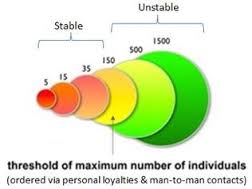
dunbarHumans are social animals.  Our ability to survive and thrive has been based on our interconnections.  Although technology has created the ability to “connect” with anyone around the world, our greatest and most meaningful connections are with those around us.  The people that we interact with regularly make up our “tribe”.  Despite the infinite number of possible connections, Dunbar’s number is a suggested limit to the amount of people with whom one can maintain social relationships.   Although it is merely a guideline, it makes for an interesting starting place when discussing organizations such as soccer clubs.

Soccer clubs in the United States have become a pervasive part of the landscape of the sport.  While many of these clubs are entities that improve the sport and the lives of its members, there is definitely room for improvement in the establishment and organization of a larger number clubs.  In essence, the successful club needs to find a balance in a two front battle of: where clubs come from and where the particular club is going.

Where Clubs Come From

Clubs start with people.  During my last trip to England, I went to an academy match at Dagenham & Redbridge.  It’s a small lower league club on the outskirts of London.  I was early for the match, so I went into the club house to stay warm and grab a beer.  It was obvious to the twenty or so people that were there that I was an outsider.  Perhaps I was pegged as an American because of my clothes but even without that, it was pretty obvious that all of these people knew each other.  That is the whole point!  Clubs are communities.  Although soccer is now the focal point, the social aspect is the starting point.  People’s need to be together is where clubs truly start.  Soccer clubs are just a subset of something that people have been doing for centuries for a variety of reasons.  Since being together is so integral, it should not be forgotten.

Club Direction

The second consideration is the club purpose or direction.  At some point (hopefully at the beginning), a club needs to define a purpose.  This is probably the biggest issue that most clubs have.  They are unsure of why they exist and therefore struggle to do more than be the administrative support for individual teams.  While this may seem like a completely acceptable arrangement, it is a neutered version of what the organization can be.  Clubs can improve young talent, be a force for good in the community, build confidence in young people or it can do all of the above and more.  Often this is done by default rather than design.  The results are felt by a small number of the members rather than the culture perpetuating them.  The vision and the actions of the club need to be in alignment with one another.  Being the club that helps develop the self-esteem of young people, is a fine vision for a club.  However this vision is inconsistent with having twice-annual tryouts.  Be who you are.

Once the vision is in place, Dunbar’s number can be applied in a variety of ways.  Although it may seem that Dunbar’s number lends itself toward the organization of smaller clubs, it can actually be applied to any size club but needs to be done with intention.

The Community Club – A local club that encompasses both a recreation and travel program can be an extremely effective environment.  With the shared surroundings, schooling and history, these types of clubs represent why Dunbar’s number was developed in the first place.

The Travel Teachers – A small club with a team at each age U9-18 hits Dunbar’s number almost perfectly.  While this may seem to max out the number, it truly depends on the structure and direction of the club.  Truly the U18 players do not need to relate directly with the U9s.  However if that is part of the culture that is being built, the older players can be mentors to the younger ones.  This type of scenario can have a virtuous cycle of development over the years.

The Talent Incubator – At some slightly larger clubs, it may be beneficial to have players of the same age group practicing and interacting regularly.  Rather than players being sectioned off as teams, an entire age group becomes a tribe unto itself.  The players see the competition at their own level regularly.

The Regional Behemoth –  A larger club can effectively apply Dunbar’s number by sectioning itself into smaller subsets.  All of these subsets need to understand the overall vision of the club.  This type of club is usually the most difficult to manage because of the sheer numbers.  However effective management can be achieved by each subset having a direct link to the central structure.  The name or the club’s reputation usually bring the players in but often teams tend to splinter off when they feel separated from the organization.  People are more loyal to friends and teammates than they are to logos and reputations.  So the club must always try to maintain its humanity regardless of size.

These examples are just generalizations of possible application.  However these short descriptions represent what many clubs have failed to do which is create a structure based on a thought process.   Dunbar’s number is a guideline that helps to avoid the pitfalls of over expansion without planning.  Humans are social creatures by nature.  Realizing and embracing that fact from the beginning gives anyone looking to build an organization a much greater possibility for success, whatever that word means for your organization.

Stand up and be counted!

Pete

Blogpost, SoccerLifeBalance

When Heroes Endure

Ricky Davis 79Time brings everything into perspective.  It is only with time that we can look back and see the moments that have shaped us.  Deciphering which moments will be truly important as they happen can be almost impossible.  It is amazing to think that a chance meeting from my childhood started me down a path that I follow to this day.  Even more surprising is that another encounter with that same person gave me more inspiration in my present day life.

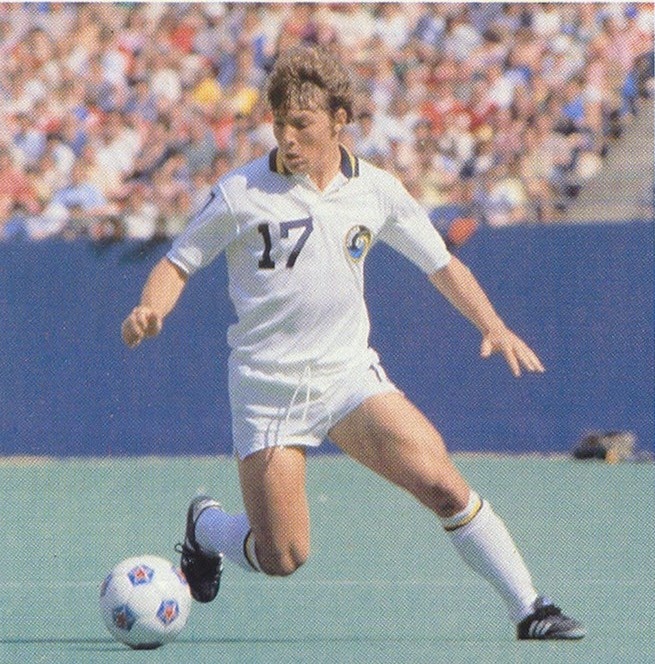
Ricky Davis was a member of the New York Cosmos in the late 1970’s and early 1980’s.  He was a young American player on a team of international superstars.  It was during this time that he was invited to attend a block party by a fan, Tony Gonsalvez.  I was a seven year old kid at the party who knew nothing about soccer.  However when Ricky started kicking the ball around with a group of kids, I was happy to jump in.  That is my first memory of kicking a soccer ball, it changed my life and I’ve never forgotten it.

At the National Soccer Coaches Association of America’s annual Convention, I got the chance to sit down with Rick and talk about some of his experiences and beliefs about soccer both then and now.

Q: Did you view yourself as a trailblazer or pioneer for soccer in America while playing for the Cosmos?

We didn’t look at ourselves as trailblazers or pioneers.  We felt extremely fortunate to play with an awesome team and for an awesome organization.  Reflecting back now it’s easier to see how things have developed but at the time, we just felt fortunate.  It’s awesome to look back and say “I played a part in that” but at the time it was hard not to think how lucky we were to be playing for that team.

Q: What do you think about your legacy?  How does it feel to have players like myself say that you were the reason we started playing?

It feels great!  It’s part of the evolution of the game in this country.  I came into the situation with possibly a naive perspective because I believed that professional athletes were the closest thing there was to perfect human beings.  They didn’t drink or smoke.  Doing things to help keep themselves fit were all part of a value system that I brought with me when I came to the team.  In many ways I learned that wasn’t the case but did that mean that I needed to change?  I feel that I’ve got this debt to the game.  I was fortunate to have all of these experiences and memories and now I’m just trying to pay it back.  Much of what I did was to invest in the game and the community because I wanted people to love the game that I loved.  

Q: What were some of your attributes and life experiences that allowed you to be successful at that time?

It started because I had a good family.  My parents were actively involved.  Much of my values came from my parents.  My dad used to joke that everybody should work a solid half day (12 hours).  When there was extra stuff to be done, the clinics, public appearances and other things were part of that twelve hours.  Whether I needed to work on my own or do those other things, I needed to give 100%.  I was raised with a strong work ethic.  Also had great influencers within the team, Pele, Franz Beckenbauer, Johan Neeskens, I couldn’t be them but I could learn from them.  My belief was that I could learn from anybody.  After the games, I would go into the parking lot and talked to fans.  They would give suggestions and there were gems there for me to take.  If nothing else, I heard things that were important to them.  These were things that I took from my parents and tried to pass onto my own kids.  It’s not what you want to get out of it, it’s what you put into it and you’ll get back.

Q: What do you believe is special about this game?

It’s a game for everybody.  Almost anyone can get involved unlike many of the traditional American sports.  The reality is that a kid can be a part of something regardless of their size or ability and they’re equally part of the team.  You can be small like Messi or Maradona.  You can be big like Ibrahimovic.  Soccer is truly the game of the people.

Q: Where are we going as a soccer nation? 

As a nation we’re going in a great direction.  When I see soccer touching our little part of Kansas, it makes me believe that soccer is taking strides forward.  Soccer is becoming part of America’s fiber.  Was the NASL a bad thing?  No, it was a part of our evolution.  I see a national team that is way more competitive than my generation was.  The public is much more accepting of the sport.  The Cosmos was unique.  Even though many of our players were in the twilight of their careers, we were able to play with almost any team in the world.  Set the Cosmos aside though.  If you look at the teams now, they are drawing good sized crowds. Soccer specific stadiums are huge.  The people investing in soccer in this country, it obvious that it’s a long term commitment to the sport.  

Q: What is your involvement in Futpong?

The idea is not new.  We played similar games with the Cosmos.  If you thought the games on the field were intense, you should have seen these games.  The games used to be very improvised but we’ve now standardized it with a small net and a small ball.  Futpong is designed to develop their touch and fine motor skills.  Our hope is that this will help develop the touch and control.  We want it to be fun and stimulating.

Rick Davis 2016It was a great treat for me to be able to sit down with Rick.  The nostalgia factor would have been enough for me  in this interview but our discussion made me respect the man behind the memory even more.  His commitment to family, hard-work and openness to learning from anyone were all examples of why my respect for him has grown.  Anyone who has read my material long enough knows that I don’t truly believe in heroes because we should strive to be our own hero.  However I do believe in role models.  Even though I didn’t know it as a 7 year old, I chose a very good role model and learned a few things from him as a 40 year old.  The game does not make us who we are but rather draws out that which is already inside of us.  I’m glad that the game brought Rick and I together twice.

Thanks Rick!

Pete

Blogpost, self-reliance, SoccerLifeBalance

Soccer for the 21st Century

The 20th Century of the United States was largely dominated by an industrial economy.  The US rode the wave of the industrial revolution into prominence on the world stage.  Factories flourished thanks to interchangeable parts and largely interchangeable people.  Most workers in the 20th Century were able to earn a substantial living by doing simple repetitive tasks under the orders of their bosses.

In this system, it is no wonder that the sport of the century was Football.  In so many ways, football was representative of the American way.  It was progressive.  Moving forward was success and moving backward was failure.  It mirrored our historical land acquisition with its own “land acquisition”.  The decisions were made by a few bosses and executed by largely  interchangeable people.  The sport was the perfect corollary for the industrial age and both served the country well in their time.

Now that the industrial age has passed and we have moved into what many are calling the “Connection Economy”.  The people who create value in the market place are not interchangeable cogs in a vast machinery.  Cogs can be replaced, automated or outsourced to other countries.  True value in the modern economy is created by an individual whose contributions are irreplaceable and unique.

This change begs for a different representation in sport.  The football model of “run the play” holds little value when the rules of the game change so quickly.  Soccer’s flexibility and subjectivity require that players deal with complex problems and must make individual decisions for the betterment of the collective.  Since each player is a decision maker, principles rather than directives are the dictating forces.  No one person is in control.  Therefore players must learn to control themselves and direct themselves in an uncertain environment.

The beautiful game will become “America’s Game”.  It is just a matter of time.

Pete

Blogpost, self-reliance, SoccerLifeBalance

Life is…

1998In 1998, my best friend, Schaefer, and I spent a month in Europe.  We truly went to watch five matches at the World Cup but we also traveled to England, Spain, Germany and France.  In many ways you could not have picked a more perfect vacation for me: best friend, Europe and soccer.

We actually arrived prior to the Cup starting and did some traveling in England and then headed to Barcelona, Spain.  After spending about three days in Barcelona, we were scheduled to take a train to Paris on Sunday in order to pick up our ticket and start the soccer part of our trip.  That Saturday, we were taking the Metro down to the Las Ramblas area.  We sat on the bench waiting for the train.  Schaef was rearranging some things between his money belt and backpack when the train arrived.  Thirty seconds after the train pulled away, Schaef realized that he’d left his money belt on the bench with his passport in it.  (Don’t judge Schaef here, out of character moment.)  At the next stop we turned around and went back but the money belt and everything in it was gone.

We figured out where the US Embassy was and took the train to get there.  Please bear in mind that the internet was not as widely accessible at the time.  Upon our arrival we were hit with the next problem, it was Saturday and the Embassy was closed.  The only person at the Embassy was a guard who only spoke Spanish.  I explained the situation to the guard and he put me on the phone with an official from the Embassy.  In order to cross the border into France (pre European Union), we needed a copy of his passport (we had) and a police report explaining that the passport had been stolen.  My Spanish abilities were put to the test by filling out a police report.  So the next day we went to the train station with our flimsy documents and a great deal of hope.  Luckily we made it across the border.

On Monday morning we had our next hurdle to clear.  We needed to pick up our tickets before 5pm at a hotel on the outskirts of Paris.  Since the tickets were in Schaef’s name, we needed his passport first.  We went to the US Embassy in Paris and spent hours waiting.  I don’t recall what time we got there but I know what time we left 4:30pm.  As fast as we could run with our large packs on our backs, we got to the Metro.  We found the street we needed on the Metro map.  There were two stops on that street but we had no idea which would be closer to the hotel.  50/50 chance and we blew it!  The hotel was about a mile up the road and it was 4:55.  So again, we ran as fast as we could and with our packs on our backs did about a 7 minute per mile pace.  At 5:02, we reached the hotel!  Upon entering we were informed that the pick up time for tickets had been extended two hours.

From a month long trip to Europe with my best friend, going to the biggest soccer event in the world, this is the story that I’ve told the most.  I remember who won all of the games that we saw but I can’t remember the scores.  How is it possible that my favorite part of the trip is when everything went wrong?

Life is not a spectator’s sport.  It is intended for people to take what God, Allah or nature has given to them and do the most that they can with it.  The times when you are going to figure out what you are truly made of are the times when things fall apart.  ANYONE can take the guided tours at the Louvre or Prado.  It takes little thought or ingenuity and it teaches you very little about yourself.  The limits of you are not found on the guided tours.  Easy, comfortable and failure-free are the lives of spectators.

We spend much of our life avoiding something that we call “failure”.  Usually failure is associated with mistakes and we try to avoid making big ones at all costs.  Schaef made a pretty big mistake.  It wasn’t fatal and it allowed us to live in a scenario with an outcome that was uncertain.  Uncertainty is something that we need at times in life.  Balance between certainty and uncertainty is what makes life interesting.  The thing is that we spend so much time trying not to fail that we often fail to live.  Anything that is truly worth having is a gamble on some level.

Life is a scenario where the outcome is uncertain.  That is part of the deal.  If you are looking for a life without failure, discomfort and difficulty, then you are looking for boredom.  Don’t go looking to fail but don’t avoid it either.  Failure is often where you learn the most about yourself and what you’re made of.  Make yourself better by learning from failure.

Get out there people!

Pete

Blogpost, SoccerLifeBalance

Winning vs. Leading

DaxGoalAs a teacher of language, I often find fault with the English language.  It falls short in many ways.  It breaks its own rules.  Pronunciation is ambiguous and changes happen all the time.  Probably my biggest gripe with English is that many of the things we say are either misleading or cause us to look at things in a way that does not serve us.

One instance of this vocabulary problem is from my position as a coach.  The phrase “we’re winning” needs to go.  It is something that I know I’ve said before because it’s what prompted me to write this post.  Winning is worthless until you have won.  Even worse is realizing that you’re winning causes a sense of comfort and a change in attitude toward the game.

Until you’ve won, you’re leading.  Leading does not imply a result but rather a process.  Leading means that you’re ahead of the opponent but they are still there.  Leading is something that can be taken away if you let it.  Leading is difficult and a struggle.  It takes effort and focus to lead until the end but if you want to win, it’s what you have to do.

Don’t let the word trick you.  You’re not winning or losing.  Either you’re leading or you’re trailing!

Don’t stop until you’ve won!

Pete