 I’ve not watch a NFL game for about four years. I used to love it but now I can’t stomach to sit through a play or two. The exorbitant contracts don’t bother me. Although the blind eye to domestic (or just regular) violence off the field do bother me, that’s not it either. It’s the fact that the people inside the sport no longer want to play the game. They want to play the system. Rather than going for the ball, they go for the call. Games are more about referees than players. The game has become a sad shell of what it was. I’ve got the same complaint about my preferred sport of soccer but it has not reach the point of boycott YET! There are millions of dollars (or whatever currency) on the line, I get it. The problem is that the we’re all being robbed, not just the fans.
The reason why sports are such an ingrained part of our world is that they are a metaphor for what it is like to be alive. Whether it’s football, soccer, badminton or any other athletic endeavor; it is a meeting of body, mind and spirit that is a test on what we are capable of. When you look at sport in this light, it is easy to see that every time that someone tries to dupe the referee and succeeds, we lose. The fans, the players, the coaches and sport itself loses because we are no longer testing what we are capable of, we are finding out what we can get away with. I’m not picking on professional athletes because unfortunately it has become a cultural norm. The reason why I point them out specifically is that they are in the spotlight and have the ability to move the culture. They train for most of their lives to become the best of the best on their field but then become snake oil salesmen when it truly counts. And none of us will ever know!
We’ll never know what they could have done. Had they just played through the foul, the contact or the almost contact of their opponent. It puts the result of the day on the line for sure and I know that everyone loves a winner but at what cost? If gaming the system is the most common way to win, then we need to consider very heavily what it is that we’ve lost. More than likely it is the willingness to put it all on our own shoulders. Until we do that, we’ll never know what we were capable of and that is the point.
So I beg of you, as you go out into your own life today, don’t take the dive. Don’t look for the loophole or the shortcut. Even though you’re not a professional athlete, we all have the opportunity to find the greatness within ourselves. The key to that is that you must demand a higher standard of conduct. Because if you don’t give it your all, you’re just never going to know!
Don’t give up!
Pete
[mc4wp_form id=”5149″]
 The spring season brings rejuvenation and tryouts. Soccer tryouts, hockey tryouts and I’m sure many others. The constant evaluation of players is now a cultural norm. While it may seem like a necessary evil, it is our job as the adults or forward thinkers to ensure that it doesn’t become pure evil in the mind of a young player. The constant question can go swirling through their head “Am I good?” While it may be a common question, it is probably the wrong question.
 There is so much fear at the moment about failure, rejection, looking foolish or being called out. These are not new fears by any stretch but they seem to have become more pervasive as each of us lives a half-public life. At times, I feel slightly sorry for the people who have grown up in a world with the internet and social media. Largely because they’ve never known anything different. Since I am not a digital native (first time on the internet was in college), I remember a time where I could fall flat on my face and only the people there to see it could really laugh. So taking chances on things that might not work felt “safer”. Although it may not always seem that way, it is a choice to feel safe or afraid.
 Our beliefs tend to color or almost define our worlds. The thoughts that we hold most dear are the filters through which we cyphon our experiences and produce meaning. Recognizing this would make one think that people would be deliberate in the creation of their beliefs. Unfortunately this is rarely true. People’s beliefs are often a mismatch of heritage and circumstances. This haphazard approach is bound to lead to disaster more often than not. I’m not here to offer a complete belief system but rather one small sample: Soccer Karma!
 This month I will post at least once per day. Seven days per week for all of May! It’s something that I’ve balked on before. I’ve had streaks that have lasted weeks but not an entire month. I can get ahead of the game by writing a bunch in one day and releasing them individually as I see fit. BUT if a post is not out, then I don’t eat until one is released. Now right there I’ve done some of the things that I know but do not always apply.
 There are plenty of nicknames for the police. The most common comes from the city of Chicago where the badges were made out of copper. So eventually the name “copper” became associated with the job. That of course got shortened to the word “Cop”. Whether it is the fuzz, popo, Five – O or any other version, the code is usually developed by someone who is doing something wrong and trying to hide the discussion of the over-watching force. So with all of that code in mind, it is probably time to Five – O – U.
 My first car was a 1977 Chevy Nova! I inherited it from my great aunt and it was the perfect first car. It had holes in the floor boards where you could actually see the road below you. It had an 8 Track tape player in it that never really worked. It was pale blue and covered with rust spots, as you can tell from the description, I loved it! There were plenty of reasons to love it that had nothing to do with how looked or how it ran. And now looking back on it, I understand even better that it was the perfect first car exactly because it was a piece of junk. At no point did I ever have to worry about messing it up. I learned how to change the oil, replace the bulbs and change tires on that car. At no point did I think, “If I mess this up, I’m screwed!”
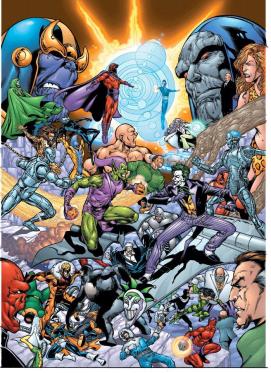 Marvel and DC have been churning out movies for years now. For many reasons, the Marvel Universe is leading the charge in this genre. One of the main reasons is that they don’t just have the heroes face the obvious Super Villains. They also continually show their heroes struggle with the more difficult Super Villains that are hiding within themselves. Whether it is Tony Stark battling his own ego, need for control and alcoholism* or Captain America’s conflicting values of friendship with right and wrong; these are all battles that we as mere mortals can relate to. So what do you do when the enemy that you must face resides within you? Identify your foe. This is usually the most difficult step.
 In 1998 my best friend and I traveled to Europe for the World Cup which was held in France. Despite our main goal being to watch soccer games, we also made side trips to other cities inside and outside of France. One of our stops was the Spanish city of Barcelona. It’s a beautiful city on the coast with the architecture of Gaudi, the shopping of Las Ramblas and hosted the Olympics only a few years prior. Despite all of those magnificent characteristics, whenever I talk about that trip, I usually talk about the Police Department. Let me explain!
 Huryk Unlimited