The 20th Century of the United States was largely dominated by an industrial economy. The US rode the wave of the industrial revolution into prominence on the world stage. Factories flourished thanks to interchangeable parts and largely interchangeable people. Most workers in the 20th Century were able to earn a substantial living by doing simple repetitive tasks under the orders of their bosses.
In this system, it is no wonder that the sport of the century was Football. In so many ways, football was representative of the American way. It was progressive. Moving forward was success and moving backward was failure. It mirrored our historical land acquisition with its own “land acquisition”. The decisions were made by a few bosses and executed by largely interchangeable people. The sport was the perfect corollary for the industrial age and both served the country well in their time.
Now that the industrial age has passed and we have moved into what many are calling the “Connection Economy”. The people who create value in the market place are not interchangeable cogs in a vast machinery. Cogs can be replaced, automated or outsourced to other countries. True value in the modern economy is created by an individual whose contributions are irreplaceable and unique.
This change begs for a different representation in sport. The football model of “run the play” holds little value when the rules of the game change so quickly. Soccer’s flexibility and subjectivity require that players deal with complex problems and must make individual decisions for the betterment of the collective. Since each player is a decision maker, principles rather than directives are the dictating forces. No one person is in control. Therefore players must learn to control themselves and direct themselves in an uncertain environment.
The beautiful game will become “America’s Game”. It is just a matter of time.
The election of a new USSF President is almost upon us. Although the holder of this post may not be as recognized as the President of the United States, the impact of soccer on the world is not a thing to be discounted. It has both started and ended violence. So with this decision looming in the near future, what impact will the new POTUSSF have on the sport and the country at large?
To the general public, the answer would most definitely be “none”. It is an absurd thought to give this decision anything more than a passing glance on their newsfeed. This is an organization that specializes in a sport that garners almost complete indifference from most of its populace. It’s national power would, to the average citizen, rank somewhere around that of the Boy Scouts or Girl Scouts of America. Mostly kids and adults running around to get medals and club patches. While that characterization might be accurate on certain levels, it completely discounts several factors that could have a tsunami type affect based on this relative flap of a butterfly’s wing.
Perception Is Reality
It’s often not pretty but the perception of truth often has greater staying power than the actual truth. At the moment, the United States has an international perception problem. Regardless of your personal feelings about Donald Trump, his policies or his impact on the United States; he is projecting many of the characteristics most disliked about Americans. His overall agenda to “Make America Great Again” seems to come with the postscript, “non-Americans watch out.” Despite being only one man, the President has the dubious responsibility of being a partial personification of what the United States is. Mr. Trump’s actions, statements and Tweets may be his own but they also belong to all Americans when viewed from afar.
The Butterfly’s Wing
Eight candidates are being considered with varying degrees of experience, personal motive and leadership potential. While I’ll keep my personal preference on candidates completely out of this, the worst thing that the voters could do in these circumstances would be to elect on celebrity rather than ability. The reason being that the perception of the USSF and its new President has very real implications in a short period of time. The selection of the host for the 2026 World Cup will be made on June 13th. While the North American Triad of the USA, Mexico and Canada may seem like a sure thing when pitted against Morocco, small nations have dealt us unlikely defeat recently (and I won’t bring up Qatar either).
Winning the bid to host the 2026 World Cup is one of the crucial components to a successful Presidency for any of these candidates. Failure to secure this bid is not just bad for soccer, it is bad for this country.
In the mind of the general citizen of the United State in 2018, the World Cup is nothing more than a soccer tournament. It’s a fun diversion at best and non-factor for most. However in an even more interconnected world of 2026, it is a spotlight shining directly onto the United States. This event gives us the opportunity to be gracious hosts to the world. While seemingly trivial from the inside, this role could be crucial to change an international perception of a nation that exports entertainment and soldiers under a leader of singular self-interest. As news becomes more dependent on the “man on the street”, it is conceivable (if not) probable that brand America’s reputation in the remote corners of the world will depend on the personal experiences of a group of soccer fans supporting their team in egocentric America.
Stirring the Melting Pot
In addition to the World Cup bid, the new President will at the very least have an influence over the involvement of Hispanic communities in US soccer. The recent loss of Jonathan Gonzalez to the Mexican National Team system is not so much a loss of talent but a loss of contact. The roots of many Hispanic Americans in this country run deep. US history is so inextricably intertwined with that of Hispanic heritage that a number of our states and cities have Spanish names (regardless of how we pronounce them). The involvement of Hispanic players, coaches and fans (or lack thereof) in US soccer will be another key to US soccer counteracting the more pervasive American perceived ethos.
While soccer does not possess the ability to cure all that ails this country, it can be a catalyst for positive change. The leadership that is selected must realize the importance of this game, not only as a sport but a form of quasi religion that can galvanize the people under its spell. With this power comes great responsibility, here’s to hoping that the lesser of the two presidents is able to learn from the missteps of the commander in chief. “Let’s Make American Soccer Great!”
Thanks for reading!
Pete
PS – Historically speaking, host nations seem to have a greater likelihood of winning the World Cup. With young players like Pulisic and Adams being in their mid twenties in 2026, there’s a fighter’s chance.
It has come to that time of year where many American football* fans are without a team to root for until the Super Bowl when they hope for good commercials. If you are a soccer fan and have a football fan in your life who is interested in learning about soccer, then I have some tips below. (NOTE: Do not try to convert the unwilling football fan. Save your energy for the father-in-law who has grand-kids that play. Trying to convert the uninterested usually backfires.)
The most incomprehensible thing about soccer to most football fans that I’ve spoken to is the offside rule. Luckily there is a pretty easy way to convey the concept using football terms. The key is to take the rule that they already understand and tweak it to help them understand the soccer equivalent. If you’re not a football person, you might first need to brush up your understanding of the carrying game first.
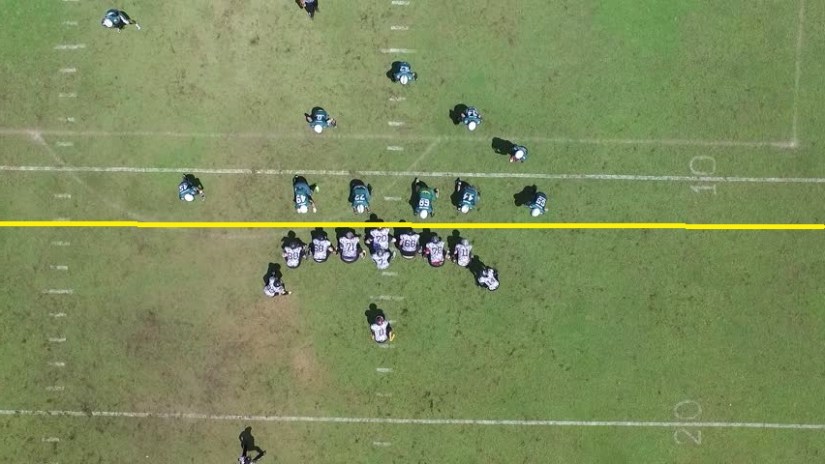
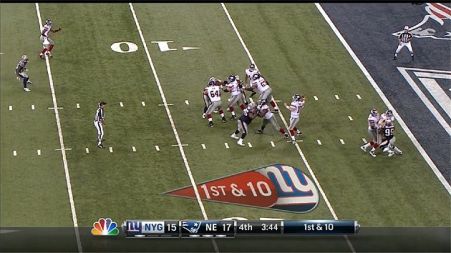
Offside in football is a foul in which a player is on the wrong side of the line of scrimmage when the ball is snapped. This foul occurs simultaneously with the snap. Unlike offensive players, defensive players are not compelled to come to a set position before the snap.
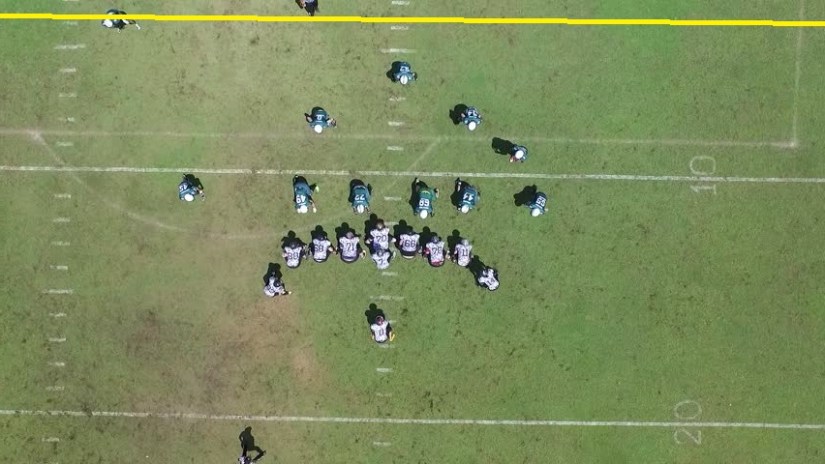
In soccer there is no line of scrimmage nor a “snap” of the ball. Since the ball is almost continuously in play, the rule is a bit harder to police but understanding is all that we’re aiming for now. First of all, only offensive players can be called offside and only in their offensive half of the field (nearest the goal they intend to score on). The line for offside is not a fixed yard line but rather it moves with the last defender** equivalent to the defensive position of safety. (See Below)
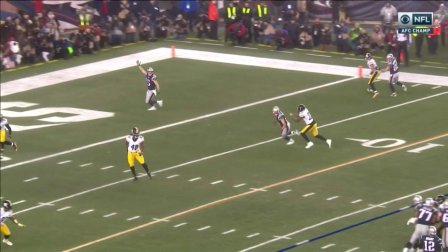
So since the ball is almost always in play, offensive players are moving around and can even cross the offside line. A call of offside is made when an offensive player is in an offside position and the ball is played toward him or her. In football terms, the wide receiver cannot run past the invisible yard line of the safety until the ball is thrown by the quarterback. So the timing of streak (go), post and corner routes need to be timed very well. If the ball is not passed before the intended receiver gets by the “safety”, he’ll be offside. Curl and comeback routes can be effective in keeping a player onside. But if he is offside at the time of the pass, receiving the ball in an offside position doesn’t matter (like a defensive lineman who tries to jump back as the ball is snapped).
The Receiver on the 15 yard line is onside at the time of the pass.The player in the end-zone is offside because he’s beyond the last defender at the time of the pass.
The player possessing the ball cannot be offside. So a player can dribble through the offside line. Therefore if the quarterback or running back carry the ball forward, they are not offside.
That pretty much sums it up. If I’ve missed anything, please leave it in the comments below and I’ll adjust it. Pass this information along to a football fan that cares to learn.
* I don’t like using the term American football but I do it to avoid confusion. I also dislike using one sport to explain another but have done this
**This statement is partially false. The last defender needs to have the goalkeeper behind them. This is something that soccer fans and even referees get wrong from time to time. Two defenders (one usually being the goalkeeper) need to be between the offender and the goal line. If the goalkeeper goes out of the goal a far distance, one defender is not enough to keep an offensive player onside.
In kindergarten (at least according to my recollection), I was the fastest kid in Mrs. Palma’s class. The reason that I know this is that we often had races across the blacktop outside of the classroom. I won everyone that I ran in. Although my memory is extremely fuzzy about that time period, I can make this statement for a few reasons with little fear of repercussion. First, it’s possible that it is true. I definitely wasn’t the slowest in the class. Second, everyone else’s memory is probably as fuzzy if not fuzzier than mine. Finally and most important, IT DOESN’T MATTER! While this may have been extremely relevant over thirty years ago, it’s importance has taken a nose dive down to zero.
Throughout our lives we re-calibrate the things that we build our self-esteem around. In a young person’s world, the focus is almost exclusively on short term races. Winning, the game, getting the right answer, having the newest outfit and other activities are momentary wins that give a quick burst of self-esteem. Most are not meant to be long lasting nor remembered years later. They are the icing on the cake because most of your life is about other things.
The real substance of life is made up by those things that we do on a regular basis. The more generalized self-esteem comes from all of the little things. Those thoughts, words and actions make us either proud or disappointed in who we are as people. It is not a competition to be better than someone else but rather a verification that we are living up to our own principles. Through the years the layers of who we are can either become a cake filled with robust flavor or a turd that needs to be covered in icing to hide its true taste. These are not the only two options but reality’s limits are informed by the extremes.
So the daily choice comes down to you. Choose who it is that you want to be and take the time to deliberately define the ingredients that you’ll allow into your life. Or use any icing that you can find in order to cover up the distaste that you have for yourself. Unfortunately both work but the latter will leave you malnourished and unable to run the long race of life with anything more than fits and spurts. Everyone needs to feel good about themselves but a life made mainly of fluff will most likely not sustain.
I’m fully willing to admit that I’m a relatively passive driver. It’s almost to a fault. Most of the driving routes that I take for local trips are based on their lack of difficult left turns. It’s not that I’m incapable of making the turns nor do I lack the patience to wait for openings. My overarching thought process is that I don’t engage with unknown chaos if I don’t need to. Overall I’m happy with the strategy. However recently I’ve been forcing myself to do more left turn heavy routes. Just to demonstrate to myself that my passivity is a strategy that I want and not character flaw born out of fear.
In many areas of our lives, we tend to become accustomed to things. There is almost an autopilot type of function that we employ to the regular and presupposed. This is not a problem until it is. Often the need for comfort keeps us anchored to the known. Most of the time the known is a positive but eventually you may end up driving in circles. “Big Ben, Parliament!”
People have an ingrained need to feel safe and comfortable. Unfortunately those emotions do not usually help you move forward in the most direct route. The road to your ideal life is not lined with rose petals, rainbows and unicorns. It is going to require grit, determination, unwavering faith in that unseen and YES! Hard left turns through major traffic! This realization is necessary to reach new destinations. If you’re happy going where you’ve always gone with path of least resistance, then by all means keep going that way. If not, then it’s time to recognize the power of the left turn and accept that they are going to be integral to you reaching your destination.
For my international reader who may drive on the left hand side of the road, just reverse all that I just said! :p
Sometimes the hardest things to see are those that are right in front of you. Your nose is always front and center but most of us don’t pay it any mind. The reason why we tend to forget about it is because it is always there. Our brains tend to discard or ignore those things that can be taken for granted. Air, light, food, water, friends, opportunity, etc. are just a beginning to the list of things that we take for granted each day. This is not to say that we should be spending major amounts of time contemplating air in a recreational effort. It is simply to point out that your brain is working at all times to determine what is worth your attention and what is not. This ability to ignore the inconsequential is wonderful until it isn’t. As they say, the dose makes the poison.
Although our brains were originally designed to act in our best interest, the operating system has not been updated in a long time. So if you do not intervene on your own behalf, your brain will protect you from things that are no longer relevant. Most of the fear and anxiety that you feel is supposed to keep you from being eaten by a bear or be kicked out of the tribe. The latter is more relevant than the former but both need to oversight. On its default settings, your brain will keep you alive and partially comfortable in the modern world. If you are looking for more than that, then you need to be more deliberate about the things that you see.
The invisible nose is just a representation of the things that you’re ignoring. More important things are out there that you should be aggressively pursuing but you just don’t see them. Opportunities pass you by or better yet you pass them by regularly. The reason is that you’re not programmed to notice them. That’s not safe! Stay where it’s comfortable! Don’t stand out! Don’t fail! These are all things that your brain screams subliminally everyday. Unless you take control and look for that which is most important to you. Those things may not be as obvious as you want them to be. Although they might be directly in front of you, they may be buried under a pile of societal and personal hard-wiring. Hacking your way through that will be difficult, time consuming and totally worth it once you’re on the other side.
So I’ve give you permission. Look at the world with fresh eyes and endeavor to see everything. Hack away at the beliefs that no longer make sense. Filter your vision to look for the ideal rather than the real. Your past low expectations will be there to catch you if you fall. It starts with a moment and builds from there. Make this your first moment!
Growing up in the 80’s, the desire to be a “rock star” seemed almost ubiquitous. Not everyone was in a band at one point but the numbers were high enough to take notice. The proliferation of MTV allowed for widespread exposure to a life that many people assumed that they wanted. In the end most of those dreams faded because the path was too difficult for most to bear. Constant practicing, trying to get signed, playing small gigs for no money and myriad of other obstacles were enough to teach “would be” rock stars to look for another direction. Another key obstacle was parental approval. Most parents saw the dream as unlikely and allowed their kids to pursue it but not overly invest themselves.
Fast forward to the present day where we have a similar situation surrounding professional sports. While kids have always aspired to be professional athletes, it has a much greater parental push than ever. Youth sports are a multi-million (probably billion) dollar industry. With the pervasive use of professional training, specialization and speed/agility work, one might think that every twelve year old kid was preparing for life as a professional athlete. The truth of the matter is that they already are.
Whether NBA, MLS, NFL or NHL, the business model is the same. The fans pay money for tickets which the owners then use to pay the players, coaches and for equipment. Sometimes sponsors help to offset costs but they usually reap an advertising reward. The only real difference is that the parents don’t receive a physical season ticket. They pay for the coaches and equipment but since this is a developmental league, the players don’t get paid yet. Although I am saying this with a little tongue in cheek, it is not far off.
The youth ranks seem to become more “professional” each year. So what explanation should be given to all of the players who don’t make it to one of the top levels? Is the justification for the capital investment going to be that it taught teamwork, confidence and other life skills? Seemingly it’s not teamwork, as parents move their kids in an almost mercenary fashion to different clubs for “exposure” or “better competition”. Not for confidence building as overly competitive teams focus on results rather than development so players are chopped and changed annually. Getting a kid to believe in themselves is tough when always under a performance microscope. Any life lessons that could be taught would have been administered as well by a parent with experience. Rather than a trainer whose interest in the kids may be based more on financial gain and results and not the kids personally. So how is the seismic shift toward youth professionalism going to be explained? Will it be an unfortunate memory like a bad hairstyle? Or will it be an core identifier of an entire generation?
At a certain point each of us must decide if we are on the right path. Supply is often based on demand. The demand for professional youth players may wane as the academy system matures and is less of a “cash grab”. Until then all of us must identify our desired outcome from sport. There is nothing wrong with chasing a life as a professional provided that it is done with open eyes. Traveling salesmen with miracle cures used to move from town to town selling their products. It’s easy to blame the salesman when he’s gone. It’s much more difficult to justify being hoodwinked by ourselves. So decide early which path you are truly on. It’s OK to change course but heading east to get to the Pacific is a bad strategy anywhere in the US.
I remember it all too plainly. Sitting in a cramped seat on an airplane flying back from Europe after almost a month of traveling with my best friend. We had attended five games of the World Cup and visited a slew of sites and cities. It was truly one of the greatest times of my life! However on the plane ride back I repeatedly listened to the song “The God of Wine” by Third Eye Blind. Despite the amazing experiences that I’d just had, I was heading back into a world that I could feel was going to hurt me. For some reason this premonition got stuck within this song and I can return to any time that I hear the song.
The trip ended up being a deathblow to the multiple year relationship that I had forecast in my head to be “the one”. Returning home should have been a step back into a world of known entities but instead it was foreign. My girlfriend informed me that things were over on the night that I got back. Our plans to move in together and any other future we had were now gone. In many ways I was homeless. The person and the future that I had put at the center of my universe were both gone and picking up those pieces was going to be difficult. I’d love to say that the resilient part of me kicked in and I made instantaneous progress. Quite the opposite, there was a long period of self-doubt, reflection and possibly some depression. In the end I found myself sobered by the experience. The song is like a time capsule where I get to travel back to who I was. Looking back on that time I realize how appropriate the song was to the moment. In many senses I was intoxicated by the future that I wanted from the situation. I was running my life under the influence of what I wanted to happen but not acting in a way that was going to get me there. The crash was inevitable.
So as we all move forward it is most important for us to keep our hands on the wheel, foot poised near the brake or accelerator and eyes on the road. Issues arise when the idea of the destination overrides the moments of driving. The process is where we spend most of our time. Yet we allow where we want to be supersede where we are. Remember not to fall in love with your future so much that you forget to live in your present. There signs you must follow and detours you’ll need to take along your route. Becoming intoxicated with your picture of the future may just end you up in a ditch!
About a year ago, I took my daughter to a Devils game. To be honest, she didn’t seem overly interested in the game. It appeared that she was more excited by the cotton candy and Devil horns. I was extremely surprised when she said at the end of the game “I want to play hockey.” At that point we had only taken her ice skating a handful of times. I told her that I fully supported the idea of her playing hockey but that there were some steps she needed to go through first. She needed to spend this winter improving her skating and starting to learn how to play the game. This past weekend she had her first hockey tournament.
This is not a story about some miraculous discovery of talent that blossomed over the past year. My daughter spends a large amount of time on the ice. Literally, she falls down more than anyone on her team, usually during the handshakes at the end of the game. Her team lost all of their games this past weekend by an average margin of over 10 goals. They did not score once. I loved every minute watching her play! Not because she played great, she didn’t. Not because she gave it everything she had, she didn’t. I loved it because she went out there to pay the price of entry: FAILURE.
This is the thing that stops most people. They don’t want to feel bad or look foolish, so they move on quickly from things that invite failure into their lives. The truth is that failure is the “ante” that we all must put in to play the poker games of life. We must risk failure in order to play. It’s unfortunate that we’ve become so completely risk averse that people don’t want to play unless they’re guaranteed to win. The joy in a “for sure” victory is relatively hollow. It is only in those times where we truly risk failure that we are living fully. Taking the chance to learn from missteps, blunders and shortcomings is a major ingredient of later success. The leap is a prerequisite.
So as you go out into the world today and do whatever it is that makes you feel alive, do it with the joy of a 9 year old girl. One who had such a big smile on her face most of the weekend that no one would have ever known her team lost by large margins. I do not believe that you should want to fail. I just believe that you should be willing to RISK IT!
To my toilet, I’m either a dick or asshole. To my shower, I’m varying degrees of dirty. To my mirror, I’m vain or self-obsessed. And you can just imagine what the toilet paper thinks of me. All of these perspectives are completely accurate but taken from a narrow view
Each day we live our lives and show particular sides of ourselves to people. None of them is 100% accurate but also they are not 100% inaccurate. We cannot control other people’s perception of us. That is in their control. What’s within our control are the actions that we take and the words that we use.
I’m completely comfortable with my toilet thinking of me as an asshole. However that’s not the message that I want to send to everyone. Being the person that you want people to see takes effort and forethought. Decide to give your best to the people who matter. That way you know they’ll be there when you’re at your worst.
 The 20th Century of the United States was largely dominated by an industrial economy. The US rode the wave of the industrial revolution into prominence on the world stage. Factories flourished thanks to interchangeable parts and largely interchangeable people. Most workers in the 20th Century were able to earn a substantial living by doing simple repetitive tasks under the orders of their bosses.
 In kindergarten (at least according to my recollection), I was the fastest kid in Mrs. Palma’s class. The reason that I know this is that we often had races across the blacktop outside of the classroom. I won everyone that I ran in. Although my memory is extremely fuzzy about that time period, I can make this statement for a few reasons with little fear of repercussion. First, it’s possible that it is true. I definitely wasn’t the slowest in the class. Second, everyone else’s memory is probably as fuzzy if not fuzzier than mine. Finally and most important, IT DOESN’T MATTER! While this may have been extremely relevant over thirty years ago, it’s importance has taken a nose dive down to zero.
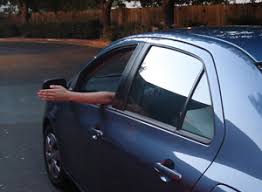 I’m fully willing to admit that I’m a relatively passive driver. It’s almost to a fault. Most of the driving routes that I take for local trips are based on their lack of difficult left turns. It’s not that I’m incapable of making the turns nor do I lack the patience to wait for openings. My overarching thought process is that I don’t engage with unknown chaos if I don’t need to. Overall I’m happy with the strategy. However recently I’ve been forcing myself to do more left turn heavy routes. Just to demonstrate to myself that my passivity is a strategy that I want and not character flaw born out of fear.
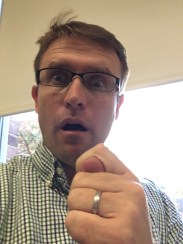 Sometimes the hardest things to see are those that are right in front of you. Your nose is always front and center but most of us don’t pay it any mind. The reason why we tend to forget about it is because it is always there. Our brains tend to discard or ignore those things that can be taken for granted. Air, light, food, water, friends, opportunity, etc. are just a beginning to the list of things that we take for granted each day. This is not to say that we should be spending major amounts of time contemplating air in a recreational effort. It is simply to point out that your brain is working at all times to determine what is worth your attention and what is not. This ability to ignore the inconsequential is wonderful until it isn’t. As they say, the dose makes the poison.
 Growing up in the 80’s, the desire to be a “rock star” seemed almost ubiquitous. Not everyone was in a band at one point but the numbers were high enough to take notice. The proliferation of MTV allowed for widespread exposure to a life that many people assumed that they wanted. In the end most of those dreams faded because the path was too difficult for most to bear. Constant practicing, trying to get signed, playing small gigs for no money and myriad of other obstacles were enough to teach “would be” rock stars to look for another direction. Another key obstacle was parental approval. Most parents saw the dream as unlikely and allowed their kids to pursue it but not overly invest themselves.
 I remember it all too plainly. Sitting in a cramped seat on an airplane flying back from Europe after almost a month of traveling with my best friend. We had attended five games of the World Cup and visited a slew of sites and cities. It was truly one of the greatest times of my life! However on the plane ride back I repeatedly listened to the song “The God of Wine” by Third Eye Blind. Despite the amazing experiences that I’d just had, I was heading back into a world that I could feel was going to hurt me. For some reason this premonition got stuck within this song and I can return to any time that I hear the song.
 About a year ago, I took my daughter to a Devils game. To be honest, she didn’t seem overly interested in the game. It appeared that she was more excited by the cotton candy and Devil horns. I was extremely surprised when she said at the end of the game “I want to play hockey.” At that point we had only taken her ice skating a handful of times. I told her that I fully supported the idea of her playing hockey but that there were some steps she needed to go through first. She needed to spend this winter improving her skating and starting to learn how to play the game. This past weekend she had her first hockey tournament.
 So as you go out into the world today and do whatever it is that makes you feel alive, do it with the joy of a 9 year old girl. One who had such a big smile on her face most of the weekend that no one would have ever known her team lost by large margins. I do not believe that you should want to fail. I just believe that you should be willing to RISK IT!
 To my toilet, I’m either a dick or asshole. To my shower, I’m varying degrees of dirty. To my mirror, I’m vain or self-obsessed. And you can just imagine what the toilet paper thinks of me. All of these perspectives are completely accurate but taken from a narrow view
 Huryk Unlimited