The election of a new USSF President is almost upon us. Although the holder of this post may not be as recognized as the President of the United States, the impact of soccer on the world is not a thing to be discounted. It has both started and ended violence. So with this decision looming in the near future, what impact will the new POTUSSF have on the sport and the country at large?
To the general public, the answer would most definitely be “none”. It is an absurd thought to give this decision anything more than a passing glance on their newsfeed. This is an organization that specializes in a sport that garners almost complete indifference from most of its populace. It’s national power would, to the average citizen, rank somewhere around that of the Boy Scouts or Girl Scouts of America. Mostly kids and adults running around to get medals and club patches. While that characterization might be accurate on certain levels, it completely discounts several factors that could have a tsunami type affect based on this relative flap of a butterfly’s wing.
Perception Is Reality
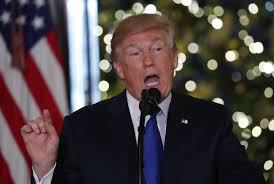
It’s often not pretty but the perception of truth often has greater staying power than the actual truth. At the moment, the United States has an international perception problem. Regardless of your personal feelings about Donald Trump, his policies or his impact on the United States; he is projecting many of the characteristics most disliked about Americans. His overall agenda to “Make America Great Again” seems to come with the postscript, “non-Americans watch out.” Despite being only one man, the President has the dubious responsibility of being a partial personification of what the United States is. Mr. Trump’s actions, statements and Tweets may be his own but they also belong to all Americans when viewed from afar.
The Butterfly’s Wing
Eight candidates are being considered with varying degrees of experience, personal motive and leadership potential. While I’ll keep my personal preference on candidates completely out of this, the worst thing that the voters could do in these circumstances would be to elect on celebrity rather than ability. The reason being that the perception of the USSF and its new President has very real implications in a short period of time. The selection of the host for the 2026 World Cup will be made on June 13th. While the North American Triad of the USA, Mexico and Canada may seem like a sure thing when pitted against Morocco, small nations have dealt us unlikely defeat recently (and I won’t bring up Qatar either).
Winning the bid to host the 2026 World Cup is one of the crucial components to a successful Presidency for any of these candidates. Failure to secure this bid is not just bad for soccer, it is bad for this country.
In the mind of the general citizen of the United State in 2018, the World Cup is nothing more than a soccer tournament. It’s a fun diversion at best and non-factor for most. However in an even more interconnected world of 2026, it is a spotlight shining directly onto the United States. This event gives us the opportunity to be gracious hosts to the world. While seemingly trivial from the inside, this role could be crucial to change an international perception of a nation that exports entertainment and soldiers under a leader of singular self-interest. As news becomes more dependent on the “man on the street”, it is conceivable (if not) probable that brand America’s reputation in the remote corners of the world will depend on the personal experiences of a group of soccer fans supporting their team in egocentric America.
Stirring the Melting Pot
In addition to the World Cup bid, the new President will at the very least have an influence over the involvement of Hispanic communities in US soccer. The recent loss of Jonathan Gonzalez to the Mexican National Team system is not so much a loss of talent but a loss of contact. The roots of many Hispanic Americans in this country run deep. US history is so inextricably intertwined with that of Hispanic heritage that a number of our states and cities have Spanish names (regardless of how we pronounce them). The involvement of Hispanic players, coaches and fans (or lack thereof) in US soccer will be another key to US soccer counteracting the more pervasive American perceived ethos.
While soccer does not possess the ability to cure all that ails this country, it can be a catalyst for positive change. The leadership that is selected must realize the importance of this game, not only as a sport but a form of quasi religion that can galvanize the people under its spell. With this power comes great responsibility, here’s to hoping that the lesser of the two presidents is able to learn from the missteps of the commander in chief. “Let’s Make American Soccer Great!”
Thanks for reading!
Pete
PS – Historically speaking, host nations seem to have a greater likelihood of winning the World Cup. With young players like Pulisic and Adams being in their mid twenties in 2026, there’s a fighter’s chance.
 It’s that time of year again where I make my trip to whatever city is hosting the United Soccer Coaches (former NSCAA) Convention. It is great to spend 4-5 days talking, thinking and learning about soccer. If this is your first time or you’ve never gone, here are some ideas on how to get the most out of the Convention.
 Although the 1980’s were memorable for many reasons, the crazy hair is probably one of the most prevalent. Big hair was all the rage at the time. Many of the 80’s rock bands invested a lot of time and money on their hair. Image was almost more important than the music. I’ve even heard interviews with bands who tried to gain information on the hair products of more successful bands in order to copy their formula. It’s a silly image isn’t it? Grown men hanging their hopes of musical success on the type of hairspray that they use. There is a disconnect that should have been obvious to all involved but sometimes people are too close to the situation to see their own ridiculousness.
 Talent is coveted, scouted, poached and revered in this country. It often comes with an extremely high price tag. That price is monetary in the professional ranks. However at the lower levels, the price of talent is far too often the possibility of teamwork. At times this comes from jealousy of teammates. Unfortunately it is more frequently a result of trading team ethos for star power. It may get results but are they the right ones and for how long?
 One of my bucket list items is completely out of my control. I want to see the US Men’s National Team win a World Cup before I die. While I believe this is completely achievable, it will take some doing. There are many moving parts to this endeavor both on a national and an individual level. Although I am sure that USSF policies will influence the speed at which this goal is achieved, the greater shift will need to be a cultural one. Those types of shifts happen in small groups first, then extend outward. Since the children of today are going to be the major influencers of future culture, my plea is “Don’t think that Messi is special!”
 It’s one of my favorite lines from a song by one of my favorite bands “Your actions speak so loud, I can’t hear a word your saying!” The song is called “I want to conquer the world” and it juxtaposes the idealism and the reality of people. It’s a punk rock song and due to soccer’s historical underground following in the US, I usually equate the two on a few levels. At the moment, the youth soccer world is caught in an almost Jekyll and Hyde scenario. Many of the positives of the sport that is loved by millions are regularly mangled and deranged in the pursuit of momentary glory. In each paragraph, I will start with the ideal and follow it with the real.
 It was a big deal! I remember it very plainly. My parents, brothers and I would all sit down with popcorn and watch “The Wizard of Oz”. It was an annual occasion. The movie is definitely a classic but I think that the ritual and nostalgia factor make it a little more important for me. Despite being released in 1939, the story stands the test of time. A young girl has a magical adventure that ends up being a dream but she learns that her search to distant lands led her back to the home and people that really mattered in the first place. Most of the things that she desired or feared ended up being fake or easily defeated.
 Soccer is an inherently simple game that has so much to offer to the people who play and watch it. The positives that it offers to young players are generally intrinsic rather than extrinsic. Physical fitness, self-confidence and camaraderie just to name a few. None of these positives require talent, tryouts or trainers, OH MY! In fact all three may inhibit the expansion of these intrinsic positives because they are all short term. Talent is relative and momentary. Tryouts make players commodities first and people second. Trainers are generally interested in the short-term improvement of skills in a very selective area. It is not that these things are without their place. However they should not be the silver bullets that are used to propel our young players forward. If the vast majority of youth soccer players are not going to end up in the top two tiers of involvement, then should we (the adults) be building the yellow brick road? Or finding our way back to Kansas?
 Huryk Unlimited