My son and I returned safely from our trip to see the mighty POSH and another team based in Liverpool. Compared with most of my other trips abroad, it was basically incident free. That was of course by design because while traveling with a 13 year old, it is probably best to play it safe. Despite that lack of crazy happenings, the trip was extremely enjoyable and gave us many things to ponder and remember.
Can’t Buy Me Love!
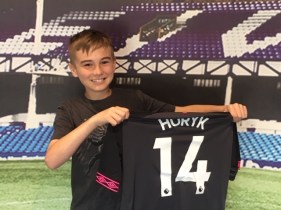 The Beatles may have been right by saying that love can’t be bought but the purchase of a new jersey of your son’s favorite team does help. Our first stop was in Liverpool for the Everton vs Manchester United match. We had a day to tour around the city a bit but most of our time was spent at the club shop and taking photos near the two stadiums of the city’s rival teams. Despite leaning toward Liverpool in the past, I had to stick with my son in his support of the Toffees. It was not an easy thing to do since the first English player that I ever knew by name was Kevin Keegan. Remember that I was raised in an era before the internet, so VHS instructional videos on soccer were my introduction to international soccer. However keeping with my overall thought process, supporting Everton makes much more sense for me. I tend to choose the road less traveled. Regardless, on match day it seems that I made the right choice. Everton pummeled the Red Devils from start to finish. It seemed as though ManU was expecting the Toffees to roll over and die. My son got the perfect introduction to live football in England, coincidentally 4-0 was the same score to the first POSH match that I ever attended.
We Lose If You Win!
Before and during the trip, I tried to impress upon Luke that football is taken very seriously throughout Europe but especially England. During our train ride to Peterborough, he got an up close look at what I was talking about. I had feared that we might end up seeing a clash between fans of opposing teams at some point. That didn’t happen. However on our trip to Peterborough, three Man United fans were having a heated discussion about who they would prefer to win the league. The two older (around my age) fans were adamant that they would prefer that ManU lose to Man City in order for City to win the title. Their historical hatred for Liverpool was so strong that they could not bare to see them win the title. The younger man was not bothered by who won the title and only cared whether United sorted out their own issues. It never looked like the conversation was going to turn physical but it was just enough of personal experience for Luke to see the gravity of support for one’s team in England. We changed trains in Manchester and headed toward our next destination. In the evening of Easter Sunday, we reached Peterborough.
Home Again!
One of my favorite quotes is “A man can never step into the same river twice because the river is different and so is he.” This quote applies to my return to Peterborough. Whenever I travel, I try to go for a run early in the morning. It’s a great way to see a city before it becomes crowded with people, traffic, etc. My first destination was London Road Stadium (The ABAX). It had been almost exactly twelve years since my last visit. The stadium much like the team seems to have been upgraded in noticeable ways but there is a core to both that have remained and make it seem the same. I often wonder how fans of teams that have been bought and revamped like Man City feel about their club. Having read the book by our chairman, I am quite comfortable with the methodical progress of the POSH over the past decade plus. The success has come with sacrifice and resources that are not limitless which suits me perfectly. The same is true of the city. Peterborough is a small city that is not overwhelming. It’s easy to feel at home there.
When In Rome!
 With my young son in tow, I could not take part in everything that football culture has to offer. I did take the time to visit the home of PISA at Eb’s. We didn’t stay long and I only had one beer but I felt like I needed to show up and see what was going on. I really should have coordinated better with some of the people on londonroad.net. It would have been nice to put faces with screen names but this was a last minute decision because I did not know what to expect from the place. It was actually the perfect place to go prior to the match. The food looked and smelled good. The memorabilia around the place was a good retrospective on some of the reasons why I’m a POSH fan now.
Close Enough to Feel a Part!
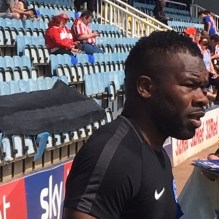 The match itself was preceded by a “First Time Fan” experience. My son got the chance to sit in the team seats and high five the players on their way out to the warm-up. For me it was an opportunity to be a few feet away from two POSH legends: Aaron Mclean and Darren Ferguson. Although I must admit that I dropped the ball on getting photos with both. As a coach I just couldn’t bring myself to interfere with pregame preparations. Despite that fact, I still enjoyed the experience of getting down on the field level and seeing the players up close.
Our seats were great and the Sunderland fans were definitely up for the game. During the first half, I was a bit worried by our play and support. The team created a few opportunities but there seemed to be a non-committal feeling from the players and the POSH fans. It was as if neither were truly ready to give their all for fear that they might be disappointed. In the second half, that all changed as the players and the fans seemed to be fully invested in challenging a “big club” for the win on the day. Although the Sunderland goal came first, it was at a point in the game where POSH were starting to cause real problems. I knew we could pull level!
Then it happened! Godden’s goal electrified the stadium (other than the Sunderland areas). I don’t know exactly why but the combination of all of the circumstances culminated into so much excitement that I almost fainted. Jumping, cheering and clapping, I could feel myself getting light headed. The only thought that saved me was that if I passed out, my son would have to deal with it. So I calmed myself down. Godden had a chance to make it the perfect occasion but it wasn’t to be.
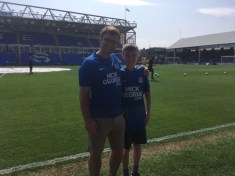 Prior to the match, the man who lead the “First Time Fan” activities had said to the group, “If we win, you need to come back because we won. If we tie or lose, you need to come back to see a win.” Although the game ended in a draw, it was still a great experience for Luke and I. I would have preferred three points and a dominant performance like I got during my last visit to London Road but this was special in its own way because I was there with Luke. We will will be back at some point and hopefully it won’t take a decade this time!
Pete
 Our beliefs tend to color or almost define our worlds. The thoughts that we hold most dear are the filters through which we cyphon our experiences and produce meaning. Recognizing this would make one think that people would be deliberate in the creation of their beliefs. Unfortunately this is rarely true. People’s beliefs are often a mismatch of heritage and circumstances. This haphazard approach is bound to lead to disaster more often than not. I’m not here to offer a complete belief system but rather one small sample: Soccer Karma!
 This month I will post at least once per day. Seven days per week for all of May! It’s something that I’ve balked on before. I’ve had streaks that have lasted weeks but not an entire month. I can get ahead of the game by writing a bunch in one day and releasing them individually as I see fit. BUT if a post is not out, then I don’t eat until one is released. Now right there I’ve done some of the things that I know but do not always apply.
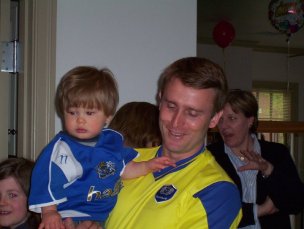 After playing the game with the POSH for a while, I decided to look into how the team was in real life. It was very casual at first but the season they got into a relegation battle really drew me in. After that I followed the team regularly online by reading the match reports and checking Skysports.com. The POSH forum at LondonRoad.net was another way that I got information relevant to the club. The slow burn of my love for POSH got a large log thrown upon it in September of 2006 when Darragh MacAnthony became chairman of the club. He stated that his ambition was to do exactly what I had done in the video game world. If I wasn’t hooked before, I was all in at that point. My newborn son had a full kit and I wore POSH blue (or bright yellow) regularly. In addition to game days, I wore the POSH colors whenever I ran long distance races.
 In 2007 I decided that it was time to visit London Road to attend a match. It was possibly the most frugally planned trip that I could arrange. I was in England for three nights including one in a basement room of a one star hotel in London. It was an amazing trip! The main reasons that the trip was amazing were all POSH related. The team beat MK Dons 4-0 despite Shane Blackett getting sent off in the second half. After the match, I waited around for autographs from the players and coaches. Shwan Jalal and Craig Mackail-Smith were particularly nice to me. Unfortunately I did not get to meet the new manager, Darren Ferguson. At that moment, I mainly knew him as Sir Alex’s son. Eventually he would become one of the best POSH managers by putting Darragh’s plan for promotion into effect. By signing ambitious young players and putting them into a system that created boatloads of goals, he has become my favorite manager.
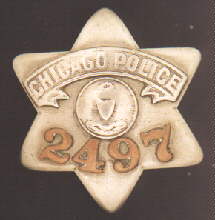 There are plenty of nicknames for the police. The most common comes from the city of Chicago where the badges were made out of copper. So eventually the name “copper” became associated with the job. That of course got shortened to the word “Cop”. Whether it is the fuzz, popo, Five – O or any other version, the code is usually developed by someone who is doing something wrong and trying to hide the discussion of the over-watching force. So with all of that code in mind, it is probably time to Five – O – U.
 My first car was a 1977 Chevy Nova! I inherited it from my great aunt and it was the perfect first car. It had holes in the floor boards where you could actually see the road below you. It had an 8 Track tape player in it that never really worked. It was pale blue and covered with rust spots, as you can tell from the description, I loved it! There were plenty of reasons to love it that had nothing to do with how looked or how it ran. And now looking back on it, I understand even better that it was the perfect first car exactly because it was a piece of junk. At no point did I ever have to worry about messing it up. I learned how to change the oil, replace the bulbs and change tires on that car. At no point did I think, “If I mess this up, I’m screwed!”
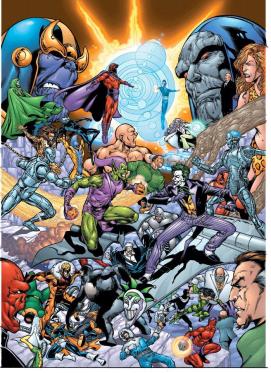 Marvel and DC have been churning out movies for years now. For many reasons, the Marvel Universe is leading the charge in this genre. One of the main reasons is that they don’t just have the heroes face the obvious Super Villains. They also continually show their heroes struggle with the more difficult Super Villains that are hiding within themselves. Whether it is Tony Stark battling his own ego, need for control and alcoholism* or Captain America’s conflicting values of friendship with right and wrong; these are all battles that we as mere mortals can relate to. So what do you do when the enemy that you must face resides within you? Identify your foe. This is usually the most difficult step.
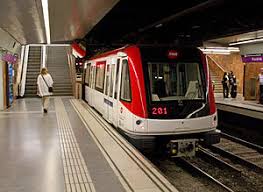 In 1998 my best friend and I traveled to Europe for the World Cup which was held in France. Despite our main goal being to watch soccer games, we also made side trips to other cities inside and outside of France. One of our stops was the Spanish city of Barcelona. It’s a beautiful city on the coast with the architecture of Gaudi, the shopping of Las Ramblas and hosted the Olympics only a few years prior. Despite all of those magnificent characteristics, whenever I talk about that trip, I usually talk about the Police Department. Let me explain!
 At certain point in history, in particular parts of the world, the wealthiest people such as kings lived in castles. I’m sure many people have fantasized about living in a castle. The fantasy probably does not mirror the reality of what it was like hundreds of years ago. By comparison, the comforts of most of our modern day houses outshines castle living. Castles were made of cold stone without heat or air conditioning. Although they served as protection from the elements in some ways, there was no escaping the fact that survival was the order of the day and not comfort.
