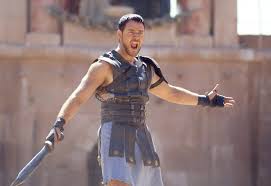
 It wasn’t a 100% binary equation. Gladiators could win, lose or “tie”. Not even all of the defeated were condemned to death. Despite these extenuating circumstances, one thing is most definitely certain, bad gladiators died. I have no desire to bring back gladiatorial games or anything of the sort but in some ways our pendulum has swung too far in the other direction.
In modern society the crowd would seemingly want every gladiator to feel like a winner. Swords would be made of foam rubber but helmets would still be worn just in case. Gladiators would be paired by skill level and the most likely death would come from boredom of the truly talented gladiators. While I am not a fan of truly “zero sum games”, there have to be stakes. Gladiators got good because they had to. Everyone knew that bad gladiators die, the gladiators knew this best.
By all accounts we do not live in a gladiatorial society nor would I truly want to. A bloodthirsty mob looking to revel in the pain of the vanquished is not where we need to go. However a world without stakes has no incentive to move forward. The same holds for an individual. What is at stake for you today? Have you set yourself up in a game where you can win, lose or tie? Or is nothing at stake today? Are you armed with your foam rubber sword hacking away at the same meaningless opponent that you fought yesterday? Bad gladiators of the past got to die quickly. Bad gladiators today die slowly while trying to reassure themselves that they would be lethal if not for this foam rubber. The price of finding out if you’re good or not is to risk the possibility of dying on the metaphorical sword. That might be embarrassment, finances, time or many other things but something needs to be at stake. So step into the arena, put something on the line and see what you’re made of!
The credit belongs to the man who is actually in the arena!
Pete
 I would not have been surprised if I annoyed the hell out of my former teammates. It’s not that I’m a bad player, I’m actually OK (or was). The annoying factor would come from two things in particular. First, I never shut up. I talk incessantly. Almost as if I were the unofficial play by play announcer for our team. The other would be my tendency to blame everything that went wrong on myself. Regardless of how small of an influence I had on a situation, I tended to focus on my little component rather than anyone else’s. If a goal was scored, it was almost always followed by an admission of guilt. As an intelligent human being and player, I realize that not everything that went wrong was my fault. It’s just not true. However I always wanted to exhaust the thumb before I went to the finger.
 Imagine it. A soldier walking through a jungle in a foreign land just as the rain stops. In the distance there is a rainbow. All of the sudden there is an attack from the enemy. The attack is repelled and the soldier marches on. The next day the rain stops, rainbow, surprise attack. This pattern continues for a week. On the eighth day, the soldier comes upon a beautiful waterfall. With the water plummeting from a height of over fifty feet, a mist above the surface of the water forms a miniature rainbow and soldier discharges his weapon several times into the falling water. There is no attack, so the soldier is sure that the enemy is dead. It is ridiculous, isn’t it? The soldier believing that the rainbow somehow caused or could help the prediction of the attacks. The truth is that we all do it at one point or another.
 Many sports teams are in the middle of their preseason sessions at the moment. I’m sure that many players are working hard. It is almost a prerequisite for any level of success in the sports world. The reason that I hedge is that there is a higher level of effort that is more in line with the actual effort. That level of effort is called labor.
 Huryk Unlimited