 The other night I had dinner with a former student/player of mine. We ran into each other a few months back. Our common love of books and podcasts started the conversation. He’s freshly out of college and we’ve been talking about life and career lately. This dinner was a eye opening conversation for me and I’m hoping that this post will help someone who may be in the same spot as my friend.
The phrase that he uttered the most was “I don’t know.” In some ways this could be viewed as a positive. Moving from the teen years where young people tend to think (or project) that they know everything, “I don’t know” could be a sign of positive motion. In this case (and possibly for this generation) there was a definite sense that his need to know was a bit of a surprise. His GPS had gotten him to the restaurant. He mirrored my choice in beer and our conversation followed that theme of uncertainty. While I know that this is not completely his fault, he needs to deal with the consequences. The finger of blame will do nothing to give him direction or satisfy the remainder of his life. So how does one find the answers for the test that’s not coming?
The first step is recognizing that the answers are your answers, not right or wrong answers. While the majority of a young person’s life may be spent in a very regimented existence today, the “real world” is becoming less definite each year. The internet has changed the rules of almost every facet of our lives. Industries that did not exist ten years ago are major components of our everyday life. The economy, geopolitics, the job-market and many other areas of life are variable at best and regularly volatile. While this amount of change may be disconcerting to some, the way to avoid being swept away in a tumultuous seas is to have an anchor. In a world that is always changing, it is important to find consistency in something that is under your control: YOU.
Perhaps the hand that you were dealt is not what you wanted, you still have to play it. For most of us, mom and dad can’t be relied upon forever. At some point we all must take responsibility. Break that word down into “response” and “ability”. Having the ability to respond to the good, the bad and the ugly of your life rests completely with you. Is your response going to be “I don’t like this”, “I hate this”, “I’m not ready for this” or “I can work with this”? Regardless of your circumstances, the only one that makes any sense is to work with the ingredients that you have. Stop comparing your life to some celebrity’s airbrushed picture perfect life or some other source that detracts from your pure power. No matter what comparison is a waste of time. No one has exactly your set of unique ingredients, so the only person that you’re competing with is yourself. There comes a time in each of our lives that we realize that this life belongs to only us. It is not your teachers’, parents’, professors’ or bosses’ life. If you choose to give them control, it is still your choice. So no matter what the question, the answer is yours to choose.
The second key is realizing that time is on your side and patience truly is a virtue. If you’re in your twenties or teens, you’ve got the time to figure things out. Just because you don’t have the answer right now, doesn’t mean that you won’t eventually. Amazon does not do “same day delivery” on the perfect life. Even the most incredible stories of overnight success usually have a less known story of hardship and patience. Unfortunately in a 140 character world, it’s easy to have expectations that surpass what the world actually consistently delivers. The only thing that you can get RIGHT NOW is the opportunity to plant seeds that you can reap in a year, five years, ten years or more. Climbing the mountain is not an instantaneous process and even if you could teleport there, you’d miss all of the good stuff that comes with the climb.
So take these two points out into the world and use them. Anchor yourself with an unshakable belief that you can figure out your life on your terms. Then be patient with your pursuits because nothing worth having comes without effort. With those two concepts in mind, I’m sure that you’ll do well on this art project called life. Enjoy it! It’s yours!
Pete
 In a world where almost anyone can have 1,000 or more followers, who is doing the leading? It seems as though there should be a connection between the two: leaders and followers. Unfortunately the act of following has such a low threshold for involvement that many have it as the default option. Following is easy, semi-rewarding and comes with little to no responsibility. The problem is that just because people are following, doesn’t mean that anyone intends to lead. Following the car in front of you is a good strategy if you’re going to the same place. It’s a horrible strategy if your intentions are different than the person you’re following. Leadership should be an intention, not meandering with followers in tow. So the question is, who should be a leader? You!
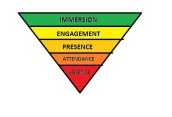 Distraction is a way of life in the country at the moment. Not only is completing tasks without getting distracted difficult but the fear of missing out (FOMO) seems to be an almost pervasive issue. People have divided their focus between too many activities and are simultaneously getting distracted from them. It’s a recipe for disaster no matter how you slice it. No one can be everywhere for everyone every time. Distraction always comes with a price tag and it is not you who is profiting. The losses are felt by you, your family, your friends, your colleagues and classmates. The people who are actually in your life are the ones who are missing out on a key component of their experience and that is you. All of you, not the partial you that has a technological device in hand “JUST IN CASE!” The cyborg version of you that cannot let go of the phone, tablet or computer has a distinct weakness, it is never fully present.
 Huryk Unlimited