 Humans are social animals. Our ability to survive and thrive has been based on our interconnections. Although technology has created the ability to “connect” with anyone around the world, our greatest and most meaningful connections are with those around us. The people that we interact with regularly make up our “tribe”. Despite the infinite number of possible connections, Dunbar’s number is a suggested limit to the amount of people with whom one can maintain social relationships. Although it is merely a guideline, it makes for an interesting starting place when discussing organizations such as soccer clubs.
Soccer clubs in the United States have become a pervasive part of the landscape of the sport. While many of these clubs are entities that improve the sport and the lives of its members, there is definitely room for improvement in the establishment and organization of a larger number clubs. In essence, the successful club needs to find a balance in a two front battle of: where clubs come from and where the particular club is going.
Where Clubs Come From
Clubs start with people. During my last trip to England, I went to an academy match at Dagenham & Redbridge. It’s a small lower league club on the outskirts of London. I was early for the match, so I went into the club house to stay warm and grab a beer. It was obvious to the twenty or so people that were there that I was an outsider. Perhaps I was pegged as an American because of my clothes but even without that, it was pretty obvious that all of these people knew each other. That is the whole point! Clubs are communities. Although soccer is now the focal point, the social aspect is the starting point. People’s need to be together is where clubs truly start. Soccer clubs are just a subset of something that people have been doing for centuries for a variety of reasons. Since being together is so integral, it should not be forgotten.
Club Direction
The second consideration is the club purpose or direction. At some point (hopefully at the beginning), a club needs to define a purpose. This is probably the biggest issue that most clubs have. They are unsure of why they exist and therefore struggle to do more than be the administrative support for individual teams. While this may seem like a completely acceptable arrangement, it is a neutered version of what the organization can be. Clubs can improve young talent, be a force for good in the community, build confidence in young people or it can do all of the above and more. Often this is done by default rather than design. The results are felt by a small number of the members rather than the culture perpetuating them. The vision and the actions of the club need to be in alignment with one another. Being the club that helps develop the self-esteem of young people, is a fine vision for a club. However this vision is inconsistent with having twice-annual tryouts. Be who you are.
Once the vision is in place, Dunbar’s number can be applied in a variety of ways. Although it may seem that Dunbar’s number lends itself toward the organization of smaller clubs, it can actually be applied to any size club but needs to be done with intention.
The Community Club – A local club that encompasses both a recreation and travel program can be an extremely effective environment. With the shared surroundings, schooling and history, these types of clubs represent why Dunbar’s number was developed in the first place.
The Travel Teachers – A small club with a team at each age U9-18 hits Dunbar’s number almost perfectly. While this may seem to max out the number, it truly depends on the structure and direction of the club. Truly the U18 players do not need to relate directly with the U9s. However if that is part of the culture that is being built, the older players can be mentors to the younger ones. This type of scenario can have a virtuous cycle of development over the years.
The Talent Incubator – At some slightly larger clubs, it may be beneficial to have players of the same age group practicing and interacting regularly. Rather than players being sectioned off as teams, an entire age group becomes a tribe unto itself. The players see the competition at their own level regularly.
The Regional Behemoth – A larger club can effectively apply Dunbar’s number by sectioning itself into smaller subsets. All of these subsets need to understand the overall vision of the club. This type of club is usually the most difficult to manage because of the sheer numbers. However effective management can be achieved by each subset having a direct link to the central structure. The name or the club’s reputation usually bring the players in but often teams tend to splinter off when they feel separated from the organization. People are more loyal to friends and teammates than they are to logos and reputations. So the club must always try to maintain its humanity regardless of size.
These examples are just generalizations of possible application. However these short descriptions represent what many clubs have failed to do which is create a structure based on a thought process. Dunbar’s number is a guideline that helps to avoid the pitfalls of over expansion without planning. Humans are social creatures by nature. Realizing and embracing that fact from the beginning gives anyone looking to build an organization a much greater possibility for success, whatever that word means for your organization.
Stand up and be counted!
Pete
 It’s far off in the future but it will be here in a developmental instant. Although the World Cup of 2026 is almost a decade away, the present is the only place where we can impact the future. Recognizing that Christian Pulisic and Tyler Adams may be the “veterans” of that team gives the extremely realistic picture that while our future could be bright, it is in our best interest to make it brighter. The loftier heights of the sport world are not reached by the individual but rather by a cultural movement that serves as a base to raise the many. So the US soccer world needs to realize that it’s chess, not kick ball.
 Head Coach, Evan Weller, has been building the soccer program at Phillipsburg High School for the past 16 years. This conversation highlights some of the components to their success and thoughts beyond the lines of the field.
 In this brief solo talk, I discuss some of the things that I believe are being missed in our current soccer culture. Even they may be the most pressing and most apparent, they seem to be the most overlooked. Send in your thoughts and questions to
  It was many years ago but I’ve still not encountered a better example. I was the field marshal at a youth tournament in Pennsylvania. The players were under twelve years old and engaged in a very back and forth game. One team was extremely adept at the offside trap. Late in the game, there was a corner kick. The cross was cleared out of the penalty box and the defense pushed up. The ball fell to the foot of a offensive player about 30 yards from goal. He shot. The ball rocketed toward the goal and hit the post. The rebound fell to a forward who was slow getting back onside and he scored. The referee instantly called offside and awarded a free kick to the defense. The coach of the team that had the goal disallowed went ballistic. He screamed about how “ridiculous” the call was and asked about the referees sight, etc. As the field marshal I felt that it was my job to diffuse the situation in order to avoid it interfering with the game. I said, “Coach, if you’d like, I can explain to you why that was the right call.” He responded, “I know it was the right call! I’m just blowing off some steam.”
 I’ve been extremely fortunate through the years to have won some medals and trophies, either individually or as part of a collective. Most of them are in a box in my basement or in a display case that I don’t have direct access to. Medals and trophies are all pretty similar. They usually have a name of an individual or group, a year and the indication of some accomplishment. As I was thinking about the trophies that teams and individuals are going to reach for this season, I realized that trophies are the tombstones of our past accomplishments.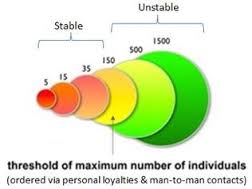
 Huryk Unlimited