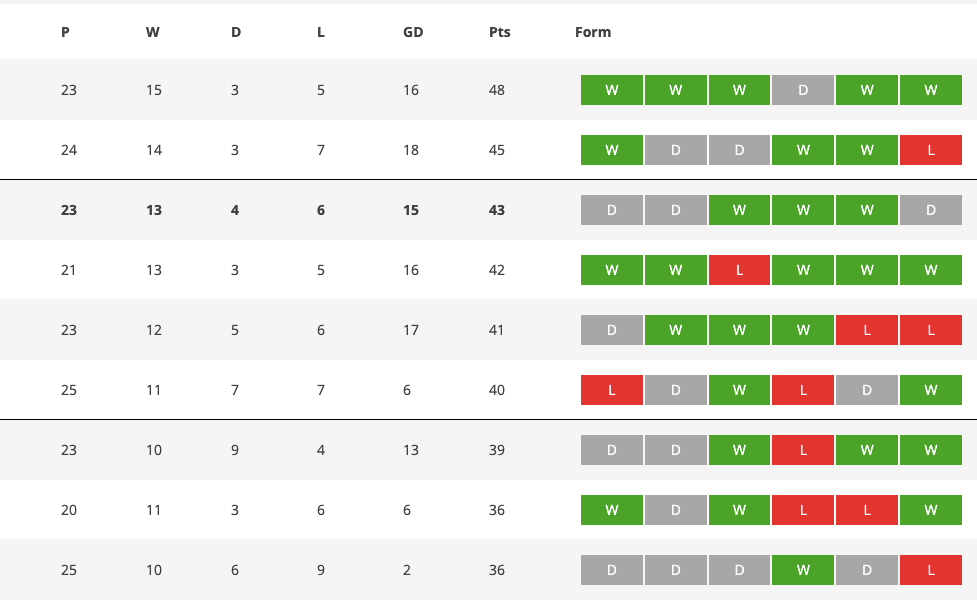
Points are definitely king of the table. There’s no denying that results are the thing that win championships and get promotions. However as the season progresses, it’s often possible to identify a “sleeper” team when their goal difference is greater than those around them in the table. Usually this is an indicator that the team has lost close games and blown out a few teams. It’s not as good as points in the pocket. BUT if a team doesn’t lose heart due to their present position, a promotion push could be around the corner.
Most of us are not particularly in the position that we want: socially, financially, mentally, emotionally, etc. Your present position is not predictive of the future. Although that’s easy to think because it feels accurate. You’ve been in this same spot for a while. The thing that you need to do is focus on your goal difference. When you lose, don’t let it be a blowout. If you win, make it a big win! What are you talking about?
The experiences of your life are not inherently positive or negative. We put that slant to the situation. So if each instance has no determined value, we get to add it. When you are evaluating the results that you are getting, don’t turn negative situations into catastrophes. Use language that will put it down as a smaller loss. We get disappointed, not devastated and this is an evaluation after the fact. Be professional as we lose. Shake hands and move on. Don’t say those negative things out-loud (Trevor Moawad).
When you do get a win, make it big! Even if it means almost nothing in the grand scheme of things, turn it into winning the FA Cup (for a small club, cause the top clubs barely care). We tend to undervalue our accomplishments because they are ours. If we can do it, then anyone can do it. BULLSHIT! Some people couldn’t fight their way out of a wet paper bag! Give some credit but don’t sit back and relax. It’s onto the next contest. A big win in isolation is nothing. Form matters! So take that momentum into the next thing and believe that a string of positive results is on the horizon. It’s the only way to climb up the table!
Most likely you’re the only one who is keeping score in your life. Tip the table in your favor. Stack up some little wins and then go for that title that you’ve been hoping for! It’s within your reach. All it takes is time and persistence. That combination is almost completely undefeated.
This may come off a bit harsh but honestly, no one cares about your problems. Whether you’re overweight, your pet just died, your spouse left you, your candidate lost, or a thousand other issues, nobody cares and they shouldn’t! The truth of the matter is that your friends, family, co-workers, etc. don’t care about your problems, they care about you. So regardless of how many bad situations have aligned themselves against you, no one cares. Once this realization is solid inside of your head, the other shoe must drop. You shouldn’t care about your problems either. “But my debt….my dog….my boss….the election….the pandemic….”
My statement isn’t that you don’t have any problems. It’s only that you shouldn’t care about them. People tend to become invested in the negative situations that surround their lives. They invest tons of emotion into a situation that they wish would go away. It’s like giving keys to the person who keeps breaking into your house. Regardless of the situation, your attention and emotion are only feeding the problem itself or your perception of it. So is the answer to just ignore them? Not exactly! You shouldn’t care about your problems but…
You should care about the solutions because they need your time and attention. Much like a newborn baby, solutions don’t just take care of themselves. Someone has to keep them alive and allow them to grow until they are self-sufficient. Friends and family can definitely nurture a solution for you but let’s be honest, they are less likely to do it if they see that you’re in love with your problem.
People tend to get more of what they focus on, whether in perception or reality. The key is to focus on the things that you want and give only the attention that is necessary to the things that you don’t. The big bucks aren’t earned by people who are best at describing the problem. They’re earned by the people who find the solution.
“Regret is momentary pain made permanent through inaction.” I first wrote that as part of a post called “The Fearometer“. Lately I’ve been thinking a lot about the momentary decisions that we make and how they carry forward. Decisions are forks in the road that take us in a particular direction. While some decisions only make us veer slightly one way or the other, it’s possible to take abrupt turns or even turn fully around. Without a GPS, it can be easy to get lost with so many possibilities. So more than anything, it is important to know where you want to end up.
Pushups today give possibility to muscles tomorrow. Avoiding the “pain” now may mean pain later.
Many of us (including me) spend our days in almost constant avoidance of momentary “pain.” This is a great strategy UNTIL it’s not. Each of us has a myriad of destinations in front of us. Would we choose the path that is leading to the most physical, mental or emotional pain? Or would we choose long term physical, mental and emotional comfort? My guess is that the choice is pretty obvious. However our momentary decisions may be cutting us off from that possibility. Avoiding that exercise program or food decision is leading you down a path that will be painful in the long run. Unfortunately we are not programmed to think that far ahead. We are set up to think about the here and now.
So it is on you to break from your programming in order to avoid that eventual pain that is on the horizon. Cancer, loneliness, heart disease, divorce, alcoholism, obesity, addiction or any other destination that you’d rather not visit. This is not my call for a return of the straight-edge movement. It’s simply a recognition of the fact that we carry these momentary decisions with us, especially when they become consistent. Regret is momentary pain made permanent through inaction. Decide who your future self is going to be. Then work your way backwards to the decisions of today. People usually know the right thing to do. However they have difficulty short circuiting the emotion of the moment. Put the power in the plan rather than the moment!
In Stephen Covey’s wonderful book “The Seven Habits of Highly Effective People,” the seventh habit is “Sharpen the Saw.” The concept is personal renewal throughout the process of improvement. The other six habits are specifically aimed at a part of the internal or external battles that each of us must fight. Although the chapter is called “Sharpen the Saw,” I’m going to depart from it slightly with the use of an axe. Even though a saw is an effective tool that largely does the same job as an axe, my life almost never feels like a saw cut piece of wood. There is not a perfect line cut through the wood with bits of sawdust lying on the ground. It is a hacking type of motion that gets the job done but isn’t always pretty. Maybe you can relate.
Now that we’ve agreed on the axe metaphor, it’s important to realize exactly how important its renewal is. One of Abraham Lincoln’s most famous quotes is “If you give me 6 hours to chop down a tree, I’ll spend the first 4 sharpening the axe.” His equation looks to spend two thirds of the time on the preparation for the task. Humans are not robots (yet haha). We require more than menial tasks to keep us engaged. The repetitious nature of the present situation calls for even more sharpening. We are hacking away at a life that does not look anything like what we’ve encountered before. It is mundane and separate. Also it carries with it a longevity that we cannot predict. Getting back to normal is what we all desire but we can’t know when that will happen, no one does. So it is more important than ever to sharpen.
Since each of us is our own person (axe), we each have distinct ways that we renew. A good book, a game on the TV, a walk, a run, meditation, or a myriad of other activities can help to elevate a person’s ability to perform at their highest levels. The thing that you need to know is what actually feeds you. There is a difference between leisure activities and renewal. Some people can sit in front of a TV for an hour and all it makes them want to do is watch more TV. Others it is respite that energizes. Often that comes down to the focus of the programming.
That is the point exactly. Where do you personally need to put your eyes, ears and maybe soul/heart for a while in order to come back refreshed? This is a personal thing that only you can know for sure. Other people may find banging their head to heavy metal music to be draining but if it gives you a boost, then bang away! Have these in your back pocket and available at any time. You’ll need some for a quick sharpen to get through the day and other longer ones that put a razor’s edge to you. Know what they are and use them when needed.
There is a reason why dull is a word that is used to describe people at times. Those are people who have not learned what it is that they need to do to keep themselves sharp. It’s your life, it’s your axe. Keep yourself sharp because life is going to hack at you for the next few months (maybe a year). Be ready to hack back!
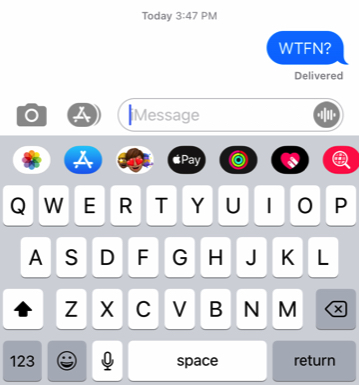
Although I’m able to understand text speech, I still tend not to use it very often. Since it is my fourth language, I just don’t feel comfortable with it. I was also raised in the 80s. So periods, commas, etc. were sold as important and old habits are difficult to break when you don’t really want to. Despite some similarities, I’m not Phil Dunphy. I know what the usuals mean. However, I do enjoy making up my own from time to time. WTFN?
The power of text speech is expedience but it can come off softer than the words themselves. In this particular case, I believe that brevity is everything. The message needs to get ingrained in your brain before it has time to formulate excuses, alibis, or arguments. Time is not your friend when it comes to action. The longer that you delay on goals, desires and dreams. The less likely it is that you’ll start. So now that I’ve built this up with too much explanation. Think of something that you want to do. Then ask yourself “WHY THE F%$# NOT!?!?”
Why not you? Why not now? Why not here? Usually the answers are just BS excuses that you’ve built up over the years. Their major purpose is to protect you. Protect you from the possibility of failure while also hiding the possibility of success. Those two go hand in hand. You cannot separate them. Am I suggesting that you completely throw caution to the wind? HELL NO! Forty-five years old is a bad time to start your NBA career. You’ll know the difference inside when your heart leaps and your head only half reacts.
So put it into regular use when a friend asks you to do something. WTFN? That way it’s on the tip of your tongue or thumbs when an opportunity comes your way. WTFN!?!? Give that thing a go because you’re more likely to regret not acting than you are the failure.
One of the more embarrassing moments that I had in high school was during my sophomore year. I did not possess anywhere near the self-confidence that I have today. There was a girl in my grade that I was interested in. I was walking down the hall during class time and serendipitously she was getting things out of her locker. It was just she and I in the hallway. NO ONE ELSE. The moment was perfect for me to strike up a minor conversation. Ask her about homework. Compliment her backpack. Say hello. Any one of those options would have been completely reasonable and probably effective. What did I choose to do? I ran into her with my shoulder as I walked by. We were the only two people in the hall! This was well before everyone had a cellphone, so I was not distracted by technology. I was just an unconfident boy who didn’t know how to get my message across. So I did something that made no sense other than it protected me from telling the truth out-loud.
It may look foolish now but at the time, we LOVED these jerseys!
These types of situations happen everyday. The question is not whether you’ll have opportunities to act on the things that you want in this world. You absolutely will! More than anything, the question is whether you will succumb to the fear that surrounds that opportunity or will you act? I’ve not done a statistical analysis but anecdotally I can confidently say that I rarely regret acting fully rather than hiding regardless of the result.
Regret is the leftover debris from a losing battle with fear. Sometimes that debris is easy to sweep away because another moment comes to replace it. Other times that regret lasts a lifetime. Being true to yourself and putting efforts out into the world honestly is rarely a mistake in my experience. When we hedge to protect the little coward inside, we actually only make him feel smaller. Not because anything has really happened to us in the real world. It is because in that internal world we live a half life that is strewn with failures and successes but none of them truly happened. So we don’t get to know the truth about what was possible, if we had just given it a shot! Life is meant to be lived. Not dreamt about.
So let me be clear here! This is a call to action for you to push your best self in the direction of the things that you want. Not to be an a$$hole just because you’re being “authentic.” Consider the people around you. Whatever that thing is that is calling you, you may need help or you’ll want to share it or at least have people around to enjoy the time with. The real world does not revolve around you like the internal world does but you need to jump on the train before it passes you by. The opportunities are there. You just need to take them!
Go get ’em!
Pete
P.S. – Just in case you’re wondering, the situation from above is an embarrassing moment, not a major regret on the relationship side. We both ended up where we needed to be.
Whether you’re Christian Pulisic breaking through the lines at Stamford Bridge to score or a U9 goalkeeper defending a corner, the penalty area or 18 yard box can be a place of high anxiety. That’s why the best strikers are worth their weight in gold at the highest levels and goalkeepers who are consistently good play until they’re almost 40 years old. Proximity to the thing that you want or that which you want to defend raises the stakes of the moment. The people who cope with that pressure well are considered special or talented. The truth is that like almost anything else it is a skill that can be trained. Also, the players who cope well have just compressed the penalty area.
A few weeks back I blogged about the relationship between the lines on the field and daily life. There’s also a video but more people read than watched. I guess I need to hire an actor or an editor. Regardless of my video issues, the 18 yard box at each end represents anxiety. At the defensive end, the anxiety linked to something that is going to hurt your self-esteem. It could be anything from fretting about a poor grade on a test, denial of college admission, the negative opinion of a boss or a multitude of other situations that might cause a dip in your self-esteem. Recognize, this isn’t the thing actually happening. It is just the anticipation of it. At the other end it is a similar situation. The 18 yard box represents anxiety around something that you want, a goal of some importance. Again the examples are numerous but a few might be college acceptance, a date with a special someone, a promotion and the list goes on. Notice at both ends, the goal represents the actual event happening. The box just represents the anxiety around it. So I suggest that you compress the box.
The idea that I’m suggesting is that you develop that same skill that world class strikers and keepers have mastered: being calm under pressure. This is not easy!!!! However it is also not impossible. Each of us have a different sized penalty area of anxiety. For some it is the tradition 18 yards. For others, it reaches all the way to the center circle (read about it) or beyond. The people who are best at dealing with their anxiety compress it down to 6 yards or less. How? Like any other time when dealing with emotions, I go back to the triad.
Physiology – The way that you use your body is going to influence how you feel immensely. Breathing is a great place to start. Building a breath practice into your day can be a game changer. Habitual movement patterns are another place where huge changes can be made. Your body sends signals to your brain and vice versa. It is possible to move yourself in and out of emotions. If you’re feeling anxious, how are you using your body? You can train “calm states” into your brain by doing particular movements. It just takes practice. Don’t expect it to just happen.
Focus – The things that you focus on become your reality. In this particular case, I suggest trading anxiety for excitement. It’s not a huge step. Each emotion has the same basic component pieces of anticipation, desire, uncertainty, etc. but excitement drops the negative connotation around the possibilities. I can hear you now, “That’s great when going to goal (a positive) but what about when I’m anxious about something bad about to happen.” Excitement can still work because just like the field, being under life pressure allows for acres of space to move forward after the crisis. Once this attack has subsided, the event will have happened or not. At that point, you can move forward with renewed possibility. There is also value in reframing the situation. It is more than likely that you are not going to die from this situation. So actually deal with the worst case scenario mentally. If this bad thing happened, how could you get past it without letting it damage your self-esteem?
Inner Dialogue – The words that we say to ourselves inside of our own head are extremely important. I just finished Trevor Moawad’s book “It Takes What It Takes” and his points about neutral thinking could be game changing for many people. However one of the key things that he talks about is not saying negative things out loud. Although I suggest working on your focus, everyone has messed up thoughts from time to time. It is crucial that you don’t say those things out loud because saying it amplifies the message to your brain by 7 to 10 times. Keep those negative thoughts out of your mouth!
None of these things are easy but they can be practiced and therefore improved. Compress your penalty area as small as you can. That way no matter what comes at you, the ability to stay calm will be at your fingertips. The astronauts who are thrust into space go through all kinds of training on keeping their wits about them in pressure situations. Their lives truly do depend on keeping an even keel. Most likely you’re dealing with something that you’ve seen in the past and you can handle it!
It was proposed as a thought experiment at a coaching course that I attended. The coaches in attendance were asked to imagine that another coach at their club show up to every practice smoking a cigarette. What should be done? The answers ranged from removing the coach completely to a discussion about appropriate behavior. Then the coaches were asked to consider what actions should be taken if a coach is overweight. The prompt was used to spark debate among the participants. I was reminded of this last night when one of my favorite pundits mentioned on Twitter that it bothers him when professional managers are unfit. He got a large number of negative comments and I think deleted the tweet. My intent is not to start a huge debate nor to get lambasted on Twitter. More than anything, I’m looking to unpack this idea with a bit more than 140 characters (or however many it is now).
A coach’s job is to influence her/his players regardless of the level. Whenever thinking about the subject, I always consider Robert Cialdini’s book “Influence.” It breaks people’s ability to persuade into six principles: Reciprocity, Commitment/Consistency, Social Proof, Authority, Liking, and Scarcity. Although it is not the end all be all to influence, it creates a simple model for dissecting people’s ability to persuade.
Taking the discussion back to coaches, making a blanket statement about any one characteristic being bad or good is probably inaccurate. The question becomes whether or not the coach is able to achieve desired outcomes with her/his players. In the professional ranks, the desired result is more victories than defeats. At the youth level it could be a variety of things: skill development, character building, physical fitness, or a variety of other possible outcomes.
The professional coach is the easier discussion. Does it matter if a professional coach is overweight? Probably not. As long as she/he is performing at a level commensurate with the desires of the club management, then it isn’t all that relevant. Players who are at or near their athletic peak will not particularly be looking to their coach to be a physical role model. It may help or hinder their ability to influence their players in specific area around diet and fitness. However other authorities can be brought in to handle that aspect. It’s the wielding of the other principles of influence in other areas that determine the worth of a professional coach.
The discussion of a youth coach brings in a multitude of variables that muddy the waters. Youth coaches can be role models to their players on a variety levels. Their appearance is a form of social proof. A message that is subliminally received is “at a certain point in adulthood, exercise/fitness is not as much of a priority.” The amount to which that aspect will influence is unknowable considering all of the other influences in children’s lives. Our fast food culture is much more complicit in that area than any one individual. Hopefully an overweight coach is delivering in a variety of other ways that influence the players in a positive manner. Reducing a coach down to one characteristic is not a fair estimation of their overall value. So a fat coach does not make a bad coach. Nor does a slender coach make a good one.
The final bit of consideration that I would offer here is a revisit to the 6 principles of influence. Although I believe that people can be over weight and be a good coach, I’m overweight at the moment and I’ll leave the other part up to my players. The idea I’d like to visit is, can any of us be the best coach that we can be while carrying around that extra bit of ourselves? We ask our players regularly to give their best to the team but do we respond in kind?
Reciprocity – Is it possible to give back to our young players the energy, enthusiasm and effort that they put in?
Consistency/Commitment – Are we staying consistent with the values that we profess to our teams about the importance of fitness and commitment to the team? Perhaps a team looks a lot more like a family.
Social proof – Are we adding to an already broken cultural model of what adulthood looks like?
Authority – Are we harkening back to a “do as I say, not as I do” ethos of leadership? Because if we know what’s best, then why aren’t we doing better?
Liking – Do we like ourselves enough to have people emulate us? It’s an interesting question.
Scarcity – There is a shelf life on this existence that we have. Should the message be that we are trying to conserve the precious resource of time through better decisions or toss it with all of the other disposable things in this world?
All of these questions have personal answers. Blanket statements rarely work. The only thing that I’m sure a coach should never be is abusive. Beyond that, the shades of grey are infinite. Each of us must look ourselves in the mirror and also imagine the view of us from the people that we coach. If you like what you see, carry on. If not, then change. No one is going to force it on you because they have their own baggage. As a coach, you are intended to be a leader. The most important person for all of us to lead is ourselves!
I showed up on Senior Skip Day! That is probably the most pathetic thing that I’ve ever admitted in my blogposts. It’s pathetic for two reasons that I can think of. 1. Because of the fact that I went. 2. Because no one cares. There’s no moral judgment placed on the kids who don’t go. The valedictorian didn’t even show up if I remember correctly. It was the kids who had too many unexcused absences, the kids who got 100% attendance every year and me. Another sad fact is that I wasn’t one of 100% attendance kids. I would take days off from time to time, just not that day.
The 100% attendance kids were a bit of a mystery to me. I was never quite sure if their parents made them come everyday, they got some kind of prize, or they valued their education that much. Although I’m not going to ask you to follow directly in their footsteps, I am going to suggest that you have a stellar attendance record.
Your goals require a stellar attendance record. Every goal is going to have its own schedule. Some goals might be oncer per week. Others may be every day. Regardless of the schedule, there are going to be days when you don’t want to show up. Most likely those are the days that you need to show up the more than any other. We all desire comfort, a rest or a day off. The problem is that once those desires are exercised, they grow stronger.
If you wait for motivation, you’ll get very little done in this world. Motivation is neither a consistent state of being nor is it a power that is bestowed by God upon a select group. Those people who seem as if they are extremely motivated, just have better established habits. “First you make a habit, then the habit makes you.” Stolen from Trevor Moawad. So what do I have to do to make a habit? ACT!!! Don’t wait for motivation, until you feel like or someone tells you that you have to. Once you act, your mind will catch up to your body and send a message about why you are doing that thing. If you act consistently enough, eventually your mind will get ahead of your body and start calling on you to do that thing.
Just like me, it’s possible that you’re the only one who will remember that you showed up. There won’t be a gold star put next to your name. You’ll just be a step, an inch or a millimeter closer to that thing that you want. That stellar attendance record will eventually start paying dividends. The sooner you start, the farther that you’ll be along the path in a week, a month, or a year. So ACT NOW!!! No one else is checking to see if you show up. Therefore, you have to!
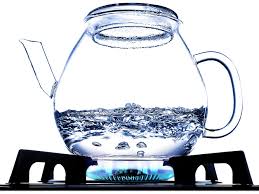
NO! The word “in” is not missing from the title. It is exactly as it should be and you need decide right now, if you’re only going to be HOT water this week. Hot water is useful but it is a few necessary degrees short of boiling. I’m not the first person to use this analogy. Boiling water happens at either 212 degrees Fahrenheit or 100 degrees celsius. Anything less than that is just hot water. Boiling water gives off steam which has powered locomotive engines in the past. It is a separation point between ordinary and extraordinary. That little bit extra, one degree even can make the difference.
Water has no choice! If it is put into the right environment, it will comply to the demands of heat that is put beneath it. Humans are quite different. We have to give ourselves permission to boil most of the time. Each of us have a set of criteria that will create that extraordinary behavior. It is most likely different for the varied areas of your life. Regardless, let’s revert back to the original question. Are you just hot water this week?
The time to decide is now. If you wait until the moment, there is a good chance that you’ll come up short. You’ll be missing some key ingredient that will give you those all important final degrees. Set yourself up to boil now! You know who you are and what you need to succeed in almost any area of your life. Draw up a plan and then put it into motion. Have the mental, physical and emotional components of extraordinary action put into place. That way when the moment comes, you’ll be ready to boil!