 The sport of skiing is one that I did not acquire until I was well into my twenties. My wife took me for the first time while we were engaged. I enjoy it but because I learned to ski later in life, I feel a certain amount of hesitance about pushing my limits. Skiing is an activity that allows for a good amount of self-policing. Generally speaking, there are no official representatives of the mountain telling you what trails to take. You need to have enough self-awareness to know if you’re a green circle, a blue square or a black diamond. Incorrectly gauging your level could have disastrous consequences. Despite this possible peril, most people make it down the mountain unscathed because they accurately police themselves.
It is amazing to me that in certain areas, the idea of self-awareness is ingrained and almost automatic. While in other places people are seemingly unable to see themselves at all. Perhaps it is the number of variables in the given situation. Or it is the perceived risk of bodily, emotional or social harm. Whether it is in sports, dating, business, school or any other area, we all know someone who does not know their own level. Either they think they’re an expert when they’re truly a novice. Or they think they should be on the bunny hill when they could truly handle or deserve so much more of an experience. Regardless of the situation, there are rewards to reaped from self-awareness.
So where do you belong in a particular area that means something to you? Are you a green, a blue or a black diamond? Take a real look inward and decide where you think you belong? Then take your self-assessment and bring it to people that you trust. Depending on the area, it may be worth it to take it to the streets and see what the common person thinks. Regardless of the outcome, the exercise is valuable because a map of Chicago is worthless if you’re lost in New York. Having a knowledge of where you are is a key component to getting where you want to go. Denial is not a strategy for progress.
So go out there and hit the slopes!
Pete
 In the English subway system, there are both visual and auditory reminders to “Mind the Gap”. This is a call for attention to the space between the platform and the train. It is a helpful reminder but probably almost unnoticed by most local people. However for the American tourist this is an out of the ordinary bit of speech. “Mind” is rarely used as a verb in American English and “the gap” is a store or possibly brings thoughts of Michael Strahan. Due to its unique wording and situational use, it tends to have sticking power with tourists. It is helpful to “Mind the Gap”. While it is a everyday practicality in the UK, it seems as though there is a gap issue in the USA.
 This morning on my run I had a glitch with my headphones. Only part of the sound was coming through. The guitars, bass and backing vocals all came through crystal clear while the drums and lead vocals were inaudible. Occasionally the vocals could be heard but only as a kind of echo. Each song that played was a muted version of what it normally is and those echoes were the only reminders of the lyrics of the normal song. The only song that came through relatively clearly was “Jane Says” by Jane’s Addiction because it was from live recording rather than a chopped studio version.
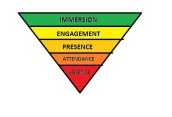 Distraction is a way of life in the country at the moment. Not only is completing tasks without getting distracted difficult but the fear of missing out (FOMO) seems to be an almost pervasive issue. People have divided their focus between too many activities and are simultaneously getting distracted from them. It’s a recipe for disaster no matter how you slice it. No one can be everywhere for everyone every time. Distraction always comes with a price tag and it is not you who is profiting. The losses are felt by you, your family, your friends, your colleagues and classmates. The people who are actually in your life are the ones who are missing out on a key component of their experience and that is you. All of you, not the partial you that has a technological device in hand “JUST IN CASE!” The cyborg version of you that cannot let go of the phone, tablet or computer has a distinct weakness, it is never fully present.
 Huryk Unlimited