Blogpost, self-reliance

Aliving!

Playing with language is one of my favorite things to do. We capture our experiences in words. Or perhaps evaluate or maybe even create through these sound and character accumulations. Our minds get a different picture or experience depending on the words that we use and how we use them. Push and shove mean basically the same thing but put into the context of a situation, they can be miles apart. So we need to be deliberate and sometimes careful with the words that we use. Sometimes I like to take a page out of my favorite author’s playbook (Dr. Seuss). I make up words to fit my purposes.

Today I didn’t do it on purpose. ”Aliving” was the product of my writing too quickly but it might serve my needs. If you’re reading this, then you’re living. Breathing, drinking, eating, sleeping, talking, walking, etc. you’re doing that thing in the present, right now! It’s an action. And almost the same exact meaning, you’re alive. It’s a state that you’re in. It’s adjective that describes you at the moment. So what if we put them together? Did a word double down on it! What if you weren’t just living or alive? You were aliving!

You weren’t just going through the motions and being the normal you. You had that extra pep in your step, you were seeing things clearly, recognizing how special this thing is that you’re doing right now! (Pete, I’m on the toilet reading this.) Yep! In structure that keeps you safe from the cold in winter and you don’t have to smell that crap ten minutes later because its flushed away! Aliving could be living life at a higher cadence. Most days you could be living but every once in a while, you could choose to be aliving.

It’s a silly concept isn’t it? Making up a word to get the most out of the moment you’re living. So much of what we do is silly. Hours of looking at photos of people that we don’t know that make us feel badly about our life even though the two are not connected at all. Reliving a mental picture of our worst mistakes despite not being able to fix them. Most of what we do is pretty silly when put under a microscope. So it comes down to how you want to run your life. It’s really up to you. Either way, you’re alive (unless I bored you to death, Sorry dead dude!) But now you may consider taking another step up the ladder by ALIVING!

It’s a great day to be alive-ing!

Pete

Blogpost, self-reliance

Embracing Failure!

Nobody welcomes failure with open arms. It often feels like that “not-so-attractive” girl who’s had a crush on you since second grade. Imagine you’re at the school dance, and she’s the only one who asks you for a slow dance. What would you do? Reject her, hoping that a more attractive partner will come along? Well, not quite. You’d dance.

  1. Learning through Failure: The first step in embracing failure is recognizing that it’s not the end of the world. Just like that not-so-attractive girl, failure has something to offer, too. It’s a chance to learn and grow. Failure teaches us valuable lessons that success often can’t. Each misstep provides an opportunity to refine our skills and strategies.
  2. Building Resilience: Dancing with failure builds resilience. Rejecting her might seem like the easy way out, but it won’t make you stronger or more experienced. Resilience is the ability to bounce back from setbacks, and it’s a trait highly valued in both personal and professional life. The more you face failure, the more resilient you become.
  3. Embracing Imperfection: Nobody is perfect, and nothing starts off that way either. Ideal opportunities are often the result of many imperfect attempts. By dancing with failure, you acknowledge that growth is a process, and perfection is rarely the starting point. It’s the imperfect steps that eventually lead to something great.
  4. Preparing for Ideal: When you learn to dance with failure, you’re not just settling. Instead, you’re preparing yourself for when the ideal opportunity finally arrives. By then, you’ll have honed your skills, developed resilience, and embraced the imperfections of the journey. You’ll be ready to seize the moment.
  5. Overcoming Fear: Fear of failure can be paralyzing. But when you’re willing to dance with failure, you diminish that fear. You understand that failure is just a temporary setback, not a permanent label. This newfound courage can help you take risks and pursue your goals more boldly.
  6. A Humble Perspective: Dancing with failure also keeps you grounded and humble. It reminds you that success is not always guaranteed and that setbacks are a part of life. This humility can make you more approachable and relatable to others, enhancing your relationships and leadership qualities.

So, next time failure extends her hand, don’t hesitate to dance. It might just be your ticket to a brighter future.

Blogpost, self-reliance

It’s a Cheap Trick!

There are only a handful of songs that I remember exactly when and where I heard them. “Iris” by Goo Goo Dolls is the most memorable but “I want you to want me” by Cheap Trick is a close second. I was at a pizzeria in Michigan while visiting my ex girlfriend in the summer between high school and college. It’s actually surprising that I’d never heard it before! The tune and lyrics are so catchy with the repetition of want, need and beg.

The world often doesn’t work the way that we’d like. In the minds of many, people should give us what we want. This is especially prominent with kids. They want what they want and can’t understand why they can’t get it… NOW! But the truth of the matter is that a smart adult who truly cares gives them what they need. We all need those people in our lives. The ones who do not simply give in to our temporary desires but can see a better future beyond the moment. The needs that we may not even realize that we have are the focus of their efforts.

So realizing that the tune may not work, the message is clear. I’m begging you to want people in your life who give you what you need rather than what you want or beg for! Maybe even make that person yourself. If you could pull that off, it would be a grand and not so cheap trick.

I want you to need you!

Pete

Blogpost, self-reliance

One!

It’s the start of things! Or the last thing before nothing is left! Zero to one is often a herculean effort that requires more fortitude than all the progress that comes later. Yet we often dismiss it at the beginning. Act like it’s the same as the next door neighbor, zero. When traveling on the decline, it’s far easier to see the value of one because it’s all that’s left. Teetering on the brink of empty puts one into perspective. The life-giving force that it is.

It’s funny to think how oblivious we are at times. Perhaps delusion is baked into our brains naturally but we tend to think we have unlimited time, unlimited attention and unlimited options. We don’t! And we should really know it. Not because someone wrote about it but because we’ve experienced it on both sides. The joy of single focus where time melts away. The desire for one more moment with a person lost. The recognition that by trying to do everything, nothing was done. We chide ourselves and promise to be different. Yet, when we get confronted again with the multitude, we forget about one.

This one moment is all that you truly have. It’s impossible to live every moment to the fullest because basic needs would get overrun by maximization. However, we can be cognizant of the moment know that it’s not coming back. So do what you can with it. The juxtaposition of two songs called “one” give a great perspective on the human experience of oneness. Metallica’s “One” is the story of a soldier who is injured in combat and lost his sight and his limbs. He is kept alive in an agonizing existence for the study of others while all he wants is to die. He is singular but separate. The “One” by U2 makes us all one. That we are connected and share our experiences whether painful or joyous by being one.

Our lives are meant for more than the mental masturbation that comes from being stimulated but not engaged. An endless loop of input without connection or meaning. Giving ourselves over to the only moment that exists with the idea of connecting with all that we can, that’s probably the point. We should probably try to remember that until the next time that we realize we forgot and went back to zero.

“We carry each other”

Pete

Blogpost, self-reliance

Brush Your Teeth and… Conquer the World

The two don’t seem like they should be in rapid succession on a “to do list” right? Brushing your teeth is such a mundane task that most people would take it off the list if they could. Conquering the world is so big and amorphous. How does one even begin to wrap their head around the concept? Genghis Khan probably came the closest when you think of access and scope. However, we now know that he had much farther to go. Even if he could have laid siege to lands on all seven continents. He could not effectively manage them in his time. The world is just too big!

There’s a lot of space in between these two concepts but it’s easy to get stuck at one extreme or the other. Maintenance is a necessary component to life. But it’s also a convenient place to hide. The “have to’s” on our list can overrun our lives if we let them and we would feel justified in never going beyond because we “had to…” It’s also easy to get stuck with our heads in the clouds. Thinking of all the distant horizons that we’ll conquer when the time is right and the stars align. Until that time comes, nothing else much happens. Spirts of activity give the impression of forward progress but the amount of territory acquired on the world conquest is quite minimal.

To be honest, I’m not sure what the best strategy is for getting “the most” out of life. There is a break even point with many things like fuel efficiency and speed. There is a mathematical equation to find that equilibrium. With humans, I doubt there’s a true way to figure it out. It may just be one of those things that we have to feel our way through. After we brush our teeth of course!

Pete

Blogpost, self-reliance

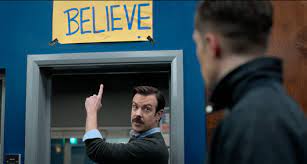
Believe!

Believe!

Believe that you can!

Believe that you will!

Believe that no one can stop you!

Believe that the obstacles in front of you can be overcome!

Believe that people are silently cheering you on!

Believe that you have all the resources in you!

Believe that it’s only a matter of time!

Believe it will be as good as you hope!

Believe in who you are!

Believe trying is worth it!

Believe in miracles!

Believe in you!

Believe!

Be!

Pete

Blogpost, self-reliance

Don’t Talk About the Streak

When you’re on a streak, you’re not supposed to talk about the streak! Just like the first rule of Fight Club. From my perspective, it’s not the talking about the streak that needs to be avoided. It’s idea that the streak is something that’s out there rather than inside. Streaks are a collection of positive results that are based on appropriate action. If you want to attribute them to a deity or luck or your unwashed socks, go for it! But you’re taking your hands off the wheel at that point.

The idea is not to stay silent on the streak. It’s to keep talking about the process. How did you get here and can you keep doing those actions? At it’s core, that is what needs to be done but at the extreme, everything is given value. So superstition springs out of consistency. Don’t give the jinxes power. Just show up consistently and the results will take care of themselves.

What streak?

Pete

Blogpost, self-reliance

The C Word

I’m kind of fed up at this point! Recently, the C word seems to be everywhere. Mainly I’m worried about kids using it. Language patterns can be tough to break and they impact the way that we think. Repeatedly using a word that’s detrimental to our psyche can easily slip past the radar if “everyone is doing it!” I get it! Kids have foul mouths at times. They drop an F-bomb here or there. No problem! But why in the f#$&ing H double hockey sticks does anyone need to even say the most damaging four letter word of them all? CAN’T

It hurts me even to put that deplorable word onto the screen! Hopefully my mother doesn’t read this!

Of course, I’m being a little ridiculous about this. Can’t isn’t a traditional curse word. You won’t get sent to the principal’s office for saying it. However, it hurts me when I hear it used so easily surrounding actions that are quite simple and possible for the individual. Somehow, we’ve become enamored with our limits rather than our possibilities. And those limits aren’t based in reality! They’re some arbitrary construction that has been thrown up due to a small amount of difficulty.

Struggle, challenge, and difficulty are all reasonable train stations to get off at before reaching the last stop of CAN’T! Life is not that binary. If we treated more pursuits like toddlers do walking, we’d all be slightly better off. Cutting off future success due to a few stumbles is foolish enough that even babies know better than to do it. Or perhaps giving up is a learned trait that we need to stop teaching!

Watch your mouth today because your brain is listening!

Pete

Blogpost, SoccerLifeBalance

Soccer In America: The Question of Lagging Behind

There is a desire among soccer fans to understand why the USMNT is “lagging” behind other nations. “We have great facilities and coaches. Why are we still behind other nations that are much smaller and less equipped?” A colleague asked me to respond to this perspective which I’m happy to do but as we begin, remember that this is not a problem of simple math where 2+2=4. This is an equation of multivariable calculus. The solution is not as simple as everyone would like for it to be but it is there nonetheless.

Credit: Jim Brown-USA TODAY Sports

The French Hockey Variable – If you were to research all of the characteristics of the best hockey players in the world, you would most likely find that a large percentage of them speak French. Therefore any hockey club that is looking to build a superior program should teach their players French. Obviously this is a ridiculous idea. However underlying the concept is a nugget of truth that needs to be realized. French is not the common denominator but it is an indicator. The indication is that a large number of the best hockey players come from French speaking Canada. The French is irrelevant but what is extremely relevant is the cultural implications. These players come from a place where success in that particular sport is nurtured and encouraged. The love for the sport is felt through their entire existence.

Largely the United States is still learning French. We are hoping that by playing Frankenstein’s Monster with soccer that national team results can meet the expectations of the few hardcore fans. Unfortunately that is not likely to work. Cultural shifts take a long time especially in a nation as large and diverse as the US. A small nation like Iceland has a much better chance of achieving a cultural overhaul that produces notable results on the international stage. Turning a motorboat is easier than turning an ocean liner. The United States will eventually hit a “tipping point” where an avalanche of cultural practices will reap benefits at the highest level. Again my prediction is 2026 but let’s keep moving on those variables.

The Distraction Variable – Unfortunately many people within the system of soccer are more interested in personal gain rather than altruistic motives for the improvement of the sport. An Icelandic youth player is probably separated from a national team player by a few degrees. So the dream of playing for the national team is real. Also the meaning of playing for the national team is potent with pride because basically everyone in the country cares. Kids in the US have so many more “shiny objects” to distract them before the USMNT is even a consideration. Elite teams, scholarships, academies, etc. are a confusing system of hoops that have some meaning but are not particularly a path leading to the USMNT or the betterment of soccer in this country. Since the system is difficult to decipher, kids and parents need to rely upon people who know the game. Since solidarity payments are not made to developmental clubs, the motivation for lower level clubs is to gain status by keeping talent rather than selling it up the pyramid. This system is changing slowly and many of the “fākademies” are being revealed as nothing more than profit centers rather than rungs on the soccer ladder. Once parents and players can see a direct path from the youth to professional game, the inflation of youth soccer will level off.

The En Vogue Variable – Although soccer is gaining popularity overall, Major League Soccer is far behind the upward trajectory of the sport. There are many reasons for this but eventually they need to break down. At one point, the Serie A was the most popular league in the world. At the moment, the English Premier League holds that moniker. In the future, MLS needs to hit that level and I believe that it will. However before it can, the league needs for soccer fans in the US to embrace it. Lack of great players, lack of history, lack of American superstars, and all of the other excuses that fans give for not supporting this league will eventually fade away. At that point, MLS will become like Marvel. Once something becomes popular then everyone “was always a fan.”

The Generation Variable – One or more of these variables could tip and cause the avalanche that brings the results that hardcore soccer fans want. This variable could have the strongest influence but also would be the hardest to track. My father didn’t play soccer. I started that tradition in my family. So I refer to myself as a first generation soccer player. My son now plays which makes him second generation. He is more educated about the game than I was at his age. The thing about a generational impact is that it is exponential growth. A player has three kids and that has potential of 3X growth. Since the US flirted with soccer throughout the 1900’s and especially in the 1970’s, it’s hard to pinpoint the generational effect. However it exists and if it hits at the right time with some of these other variables, THE WORLD WON’T KNOW WHAT HIT THEM!

Soccer in the US is not lagging behind other countries any more than we are lagging behind in consumption of chocolate. We ranked 8th in that statistic in 2019. Switzerland led the way by doubling our per capita consumption. There are some things that are difficult to determine about the US. One that I am never in doubt about is that we will find a way to achieve whatever we deem important. At some point, we’ll decide that soccer is important and this perceived lag will be history.

USMNT World Cup Champs 2026!

Pete

Blogpost, SoccerLifeBalance

Soccer Is Not a Zero Sum Game

lukesoccerThe youth sports culture (especially soccer) is in need of change.  The needed change is not one of rules or procedures but culture.  The norms and beliefs surrounding youth sports are largely influenced by the adults that administer the delivery of the sport.  This article is not a complete plan on how to fix all of the problems.  It is the beginning of a conversation to be had on an individual, team, club and national level.  Are we giving our children the experience that they deserve?

A Zero Sum Game: Look at the Goal Differential table for any league from the Premier League all the way down to a U8 Flight 9, the table always adds up to zero.  By this mathematical analysis of soccer, there is balance that delineates some teams as “winners” and some “losers”.  By taking this viewpoint, a team that ends up at the bottom of the table receives less from the game than the one at the top.  While this may hold true in accolades and trophies, it completely discounts the majority of reasons why young people and adults play soccer in droves every year.  Winning is not the point!  If it were, then the key to being a successful team or club would be to join the weakest league possible.  

In Search of Something More: The game is not the result.  The game is a process that is intended to bring out more of what makes us human to begin with.  Many clubs are fully committed to the Zero Sum Game.  Putting all effort into getting better at winning.  Replacing players each year with better players, investing in trainers who look to win but not develop and charging a premium price for a sport that is mostly for recreation.  The problem with aiming to be at the top of the Zero Sum Pyramid is that the cups that are received there are largely empty.  The reason why sports and specifically soccer are so popular is that they can mirror and enhance the human condition.  Unfortunately many have fooled themselves into chasing some elusive prize while sacrificing most of the value that they aimed to get from the sport.  Although this process of empty cup chasing may be pervasive, it does not need to be.  We can go after more.

Breaking It Down:  Electrical signals and chemical reactions are all that we are looking for.  This is taking the human experience down to the smallest pieces but it will bring clarity to what we are doing.  The four major chemicals that cause good feelings or “happiness”.  

The “Selfish” chemicals can be produced without anyone else.

Endorphins – Their major purpose is to mask physical pain and are regularly released during physical exercise.  Soccer and most other physical exercises are a great source of endorphins.  Although endorphins are a great start, their production is only dependent upon the individual.  Go for a jog and the same endorphins get produced.  It’s a start but soccer is merely one endorphin producer.

Dopamine – This is the achievement chemical.  It is a reward system for moving closer to goals.  It is not particularly linked to physical activity but can be attributed to physical goals.  This can be a useful tool for progress but can be an extremely addictive chemical.  Dopamine “hits” can be caused by things such as completing a task or achieving a goal.  Unfortunately they can also be caused by getting a text or email message regardless of its importance.  In our modern culture, no one needs to go out of their way to develop a dopamine addiction.  It is everywhere.

The “Selfish” Chemicals can be dangerous if they are not kept in balance.  The “Community” chemicals are aimed at the survival of humans in a group setting.

Serotonin – This is the leadership chemical.  It produces feelings of pride and status.  Serotonin in the veins increases confidence of the person.  Pride and status were extremely important in a hierarchical society.  Desire to be acknowledged by the community helps to reinforce the actions that are in the best interest of the group.  This chemical helped to strengthen tribes because it biochemically rewarded the individual for putting forth effort in the interest of the common good.  The problem in the modern world is that status can be bought and manufactured.   It is however an essential ingredient to effective group living that humans have serotonin releases based on real pride.

Oxytocin – This is the chemical of love, trust and friendship.  There are many ways to get oxytocin.  Physical contact is one of the key releasers of oxytocin.  Acts of generosity also release oxytocin into the system and encourage more acts in kind.  Oxytocin inhibits addiction and boosts your immune system.  It is a gradual chemical that builds up over time due to the inherent relationship dynamic.  It is the chemical that is released during childbirth that makes mothers feel an overwhelming sense of bond with their newborn.  Although our society is interconnected like never before, the separation between us seems to be widening.

Good for the caveman but not the modern man.

Cortisol – It is the chemical of stress and anxiety.  This is the chemical of fight or flight.  It prepares the body for dangers that are threatening.  Although the release of cortisol into the system can be extremely useful in the short term, its long term use is devastating.  The side effects of cortisol release are paranoia about possible threats and inhibition of the immune system.  

Club Culture

Our present club culture is aimed at systematically creating better soccer machines through the help of the “Selfish” chemicals and Cortisol.  The system is ingrained throughout almost the entire country.  Teams are formed by annual or seasonal tryouts.  Clubs use names like “Elite”, “Select” and “Premier” in order to advertise status.  While competition is an integral part of soccer, the club culture is unbalanced in its approach toward the development of our young players (who are more importantly people).  In essence we’re trading our human equity to rent falsified prestige.

The present club model will create better soccer players over time.  The competitive cauldron that we have cast most of our players into will incrementally produce better soccer in the US.  While that may be an objective for the USSF and other agencies invested in player improvement, is better soccer without regard for other consequences truly the aim?  

From a biochemical standpoint, our present club model is relying principally on Endorphins, Dopamine and Cortisol in order to move soccer forward.  While this method will be effective in getting players to perform, it is not a fertile field in which to grow confidence, connection, empathy and trust.  When viewed from a national level through a soccer lens, these attributes are not particularly the recipe for success.  However the majority of our youth who are playing soccer today will not be part of a National Team or a Professional Academy.  They will play club soccer through the years of their youth and at some point their playing career will end.  Even the longest professional careers only last into the early forties.  So the competitive cauldron ends for everyone with the message, “you’re no longer good enough”.  Whether early or late the player becomes what we all are on some level, a member of a community.  Since they will live a majority of their life interacting with other people and not a ball, it is the interpersonal skills and self-realization that should take precedence in a majority of our clubs.  Rather than treating the vast majority of our youth as if they are heading to a storied career of individual glory, focus on the team dynamic and each player’s contribution to that collective.

Suggestions for change

  1. Recognize the level – Teams and clubs can be broken up many ways but in terms of competition: Elite, Competitive Recreation and Recreation.  The competitive cauldron has its place but should not be everyplace.  If a team or a club is truly “elite”, then they are competing at state or regional level or have a proven gateway to professional ranks.  Most teams/clubs are “Competitive Recreation”.  Recognizing this fact is a great opportunity for parents, players and coaches to embrace the best of what both worlds have to offer.  The moniker of “Recreation” almost has a negative connotation in most sport circles today but it is something that needs to be embraced again.  Playing for the joy of the game is not a bad thing.  
  2. Act appropriately within the level –  Elite clubs need to be pushing their players and re-evaluating their talent levels regularly.  The level of expectation is higher because the ultimate desired destination is also higher.  Most Elite clubs do not have a problem setting this higher expectation.  The issue is usually that a club is trying to keep Elite expectations without being Elite.  At Competitive Recreation clubs there can be high expectations but the long term growth of the person should supersede the short term desire for “success”.  Simple changes like holding tryouts every second or third year would allow players, coaches and parents a period of team building.  This long term view allows players and all others involved to develop both on and off the field.  Professional trainers are still an option to develop players soccer skills.  However as we head into a third or fourth generation of soccer players in this country, the knowledgeable parents will begin to make this less of the norm.  The Recreation level should continue to be fun with friends.  
  3. Remember what’s at stake – Often the famous line from Bill Shankly used by people to discuss the sport’s importance. “Some people think football [soccer] is a matter of life and death. I don’t like that attitude. I can assure them it is much more serious than that.”   In terms of game results, I would disagree wholeheartedly with Mr. Shankly.  Game results are a moment in time that may be remembered or forgotten.  However in terms of societal impact, he is absolutely right.  This game has the ability to give and take life both literally and figuratively.  The passion for the sport has unfortunately taken life in several tragedies.  It has also given life by stopping violent conflicts in different parts of the world and giving a pathway to many poor children who would otherwise succumb to their impoverished beginnings.  In the US, the game is rarely a matter of life or death.  It can be a catalyst toward a better life.  Using the game as a vehicle toward better living involves a conscious recognition of short and long term impact of the game on the young person.  Pushing all of our youth into a “one size fits all” system of sport kills most of the inherent positives of participation.

The conversation does not end here.  The difficult thing is not recognizing a problem.  People see problems every day but generally wait for someone else to do something about it.  The answer is usually much closer to home.  Each individual needs to contribute to see the cultural shift that is needed in the beautiful game here in the land of the free and home of the brave.  There is a reason why “We The People” are the first three words of Constitution.  Change is brought by regular people, doing the right things consistently.