Six weeks…..That’s all she was. This was not part of the plan. Or the standard operating procedure. It was fear, anxiety and an entire host of emotions that coalesced into waves that could not be stopped but also could not be indulged. The fever had spiked for no apparent reason. And we, as new parents to a peanut of a little girl, took her to the hospital without delay. After a few attempts to lower her fever were unsuccessful, the doctors asked which one of us was going to stay with her. My wife had to leave. It was written on her face. I had to stay. Not because I wanted to and not for some macho reason that “I can handle anything.” I had to stay because my daughter would not be in a room of strangers as she had a spinal tap. My right hand clasped her little legs and feet. Under her head went my left palm. Gently but deliberately I folded her legs above her head, so the doctor could insert the needle into her back. Never before or since have I been so aware of my every motion and trying to subdue even my heartbeat as much as possible. The fever broke the next day and the spinal tap came back clear.

There are times when we get to choose to be a leader. Other times, leadership is thrust upon us. When we sign up for roles like coach, spouse, parent, teacher, etc., we tend to imagine the circumstances that we’ll face in terms of best case scenarios. Events that we not only can deal with, but that we want to. Life does not let the best case scenarios last for very long. At that point we must choose who we are going to be and the example that we set for those around us. It is our choices that define who we are.
One of my favorite comparisons to make is between Darth Vader and Teddy Roosevelt. They have something crucial in common. Both lost their mother and wife tragically. Roosevelt’s wife and mother actually died less than twenty-four hours apart. One chose to become the evil henchman to a diabolical tyrant. The other chose to become one of our greatest presidents.
Leadership is a choice that we make. Over and over again, we are confronted with circumstances. Our choices define us and the example that we set for others which is the strongest way to lead. Every single one of us is a leader, even if we are only leading ourselves.
It’s in your hands!
Pete
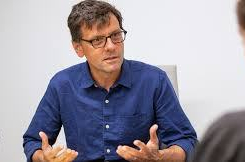 In this episode, Peter Loge and I have a wide-ranging conversation on soccer’s many uses as a metaphor. Peter is the author of “Soccer Thinking for Management Success.” Throughout the book, he discusses several different ways that soccer overlaps with management concepts. Check out his work at
 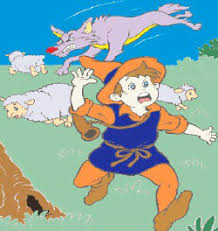 Cautionary tales like “The Boy Who Cried Wolf” seem to be less prevalent than in the past. Perhaps that is just my perception or my own implementation of life lessons to my kids. I remember exactly who told me this story and for what reason. It had the desired effect. In third grade, I would frequently “not feel well” in order to be sent down to the nurse’s office. Once my visits became frequent enough, the nurse recounted the story of the boy who cried wolf. My visits to her office became more legitimate.
 Donna Fishter is a Leadership Coach and Team Architect who works with athletes and coaches in order to make their teams better. In this conversation we cover some of the ingredients of good leadership, red flags and remedies for poor team chemistry as well as an assortment of other topics. You can find Big D at
  In a world where almost anyone can have 1,000 or more followers, who is doing the leading? It seems as though there should be a connection between the two: leaders and followers. Unfortunately the act of following has such a low threshold for involvement that many have it as the default option. Following is easy, semi-rewarding and comes with little to no responsibility. The problem is that just because people are following, doesn’t mean that anyone intends to lead. Following the car in front of you is a good strategy if you’re going to the same place. It’s a horrible strategy if your intentions are different than the person you’re following. Leadership should be an intention, not meandering with followers in tow. So the question is, who should be a leader? You!
 As a teacher of language, I often find fault with the English language. It falls short in many ways. It breaks its own rules. Pronunciation is ambiguous and changes happen all the time. Probably my biggest gripe with English is that many of the things we say are either misleading or cause us to look at things in a way that does not serve us.
 Huryk Unlimited