 Soccer in the United States is gaining undeniable momentum in American culture. While the progress of the sport in this country has been slow, its impact is becoming more widespread. Through the various parts of this “Manifesto”, I will plead a case for the reasons for the proliferation of the sport and the impacts on the country at large. Physical, social, psychological and philosophical outcomes can be reaped through the more widespread acceptance of soccer as a national force. It may be a difficult argument to the general public because as Tom Weir of USA Today wrote in 1993, “Hating soccer is more American that apple pie.” While this sentiment may be changing, a deep dive into the facets of a transition is in order.
History
The history of the kicking game has been chronicled at length by others. Therefore my historical narrative will not be about the development of the game in the country but rather a juxtaposition of our historically American sports’ positive impacts on the country at large.
Despite baseball being considered the “National Pass Time”, American football has largely been the dominant sport of the past century. This is due in large part to the sport developing during the emergence of the US as a world power while also sharing the American ethos of progress. Football (American Football)* served the country well in the 20th century as it ingrained ideals that were instrumental during the manufacturing age. The ideals of teamwork, coordination and positional hierarchy ran deep within the factory system and football. Plans and decisions were centralized to management and passed down for execution by the line. Statistics are used to track progress, performance and predict the emergence of talent. The school, industrial and sports models of the 20th century complimented each other in structure and values. Therefore football, baseball and basketball became dominating forces in the sports landscape of the United States. Their appeal was compounded because of the community component and inherent aspiration of the team. Professional sports teams created a sense of belonging to cities or regions. High schools fed players and students into colleges. Colleges fed players into professional leagues and students into jobs. The systems worked almost seamlessly for a long time.
Identity Crisis (My independent film about soccer’s place in the US)
Times Change
Nostalgia is a sentimental longing or wistful affection for the past, typically for a period or place with happy personal associations. While nostalgia may feel good and there may be good reason to long for times past, the present is the only place where we truly exist. The past cannot be recreated. While this may seem sad due to things that are perceived as “lost”, there are many gains that have come from that passage of time. So where are we now?
 As we progress even further into a new century and millennium, several of the rigid systems of the past are crumbling under the pressure of technology and the democratization of information. The old systems are being replaced for the very same reasons that they thrived a century ago. Cheap/efficient labor, mechanization, standardization and a consumer culture brought forth prosperity to the US. Now, cheap labor is found elsewhere or replaced entirely by machines. Standardizing of products has made many of them generic where cost and convenience become the most sought features rather than quality and craftsmanship. The model of consumerism has left many bankrupt financially, depressed emotionally and weighed down physically. The mantra “that’s the way we’ve always done it!” is the calling card of those primed for a fall to irrelevance or extinction.
The new economy of the United States is a connection economy that no longer depends on exclusively on commodity production but rather the unification of resources with opportunity. Entrepreneurship is not a buzzword of the silicon valley. It is an integral component of the new American economy that requires a more nimble approach to business. Bigger is not particularly better. Growth is not particularly the marker of success as people are often creating lifestyle businesses to balance work and life.
 The traditional American sports do not fit as effectively into this new economic paradigm. The industrial model of tracking productivity in order to become more efficient in the name of progress does not hold. The measure of a good worker in the new economy is not a mindless cog that produces more than the other cogs. It requires a mixture of technical ability mixed with the emotional intelligence to make decisions based on varying factors. In the traditional American sports, these decisions were made solely by the coach, quarterback or point guard. Most other players were doing their assigned job as a part of an orchestrated unit. Divergence from the rules of the system was not desirable. The new economy needs more decision makers rather than rule followers.
This new system is more in line with the processes of soccer. Eleven people working toward a common goal with principles in mind rather than plays. Each individual must analyze what they see in front of them and decide what to do next. Although there are statistics available in soccer, they do not particularly indicate good or poor performance. The intricacies of the game are human. There is a balance between pushing toward a goal while not overextending to the point of being exposed defensively. While there is a coach with a certain amount of control, the players and their decisions are the key components to the performance of the team.
The individual has greater power to impact the world than ever before in history. Our games, systems and education should be centered around the improvement of the decision making faculty while maintaining an empathetic compass. Realizing how our individual decisions impact the rest of our team, community and world is a skill that needs to be developed in the generations to come. Although soccer is implicitly a sport, there are components to its play that can have a greater societal impact. This is not at the exclusion of the other sports but in addition to them. The 20th century American ethos has a place in the amalgamation of our future as a nation. It is through our diversity that much of our strength comes.
*From here on, I will refer to American Football as Football and International Football as soccer. I’m sure this will upset someone somewhere but it is not my intention to please everyone but be as clear to as many people as possible.
 I remember playing soccer as a kid pretty vividly. There’s a smattering of games, practices, camps, travel and associated activities swimming around inside my head. Perhaps I’ve forgotten but there was only one time that I ever considered “quitting” soccer and that was near my transition to high school. However that was because I was considering going out for football. So other than that, I truly don’t have a recollection of not wanting to play anymore. Perhaps I’m wired differently because I also ran track through high school and into college. Basketball got left behind as a sophomore in high school. That was more of a “talent” and interest thing than burnout. When you’re getting the token minutes as a freshman, the writing is on the wall. I needed to get a lot better in order to be successful at the sport that was not my priority.
 Every weekend the players line up on the field, the referee blows the whistle and the microscopes come out. I’m speaking figuratively of course. Although a fusion between youth sports and science would be great, I’m talking about the tunnel vision of the fans on the sidelines. It’s actually not their fault. It is in our nature to pay attention to the things that we care most about. So a parent’s focus on their child at a time of high emotion is both normal and expected. Our youth sports culture has definitely swung toward the extreme with cost, intensity and behavior. The thing that we often lack as we go through life is perspective. We tend to think that the way we perceive the world is the way that the world is. It is only our version. There are billions of others and none of them is completely correct either. So it may be valuable to gain a different perspective.
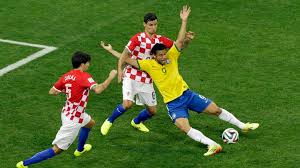 I’ve not watch a NFL game for about four years. I used to love it but now I can’t
  The spring season brings rejuvenation and tryouts. Soccer tryouts, hockey tryouts and I’m sure many others. The constant evaluation of players is now a cultural norm. While it may seem like a necessary evil, it is our job as the adults or forward thinkers to ensure that it doesn’t become pure evil in the mind of a young player. The constant question can go swirling through their head “Am I good?” While it may be a common question, it is probably the wrong question.
 In “The Junk Mail” episode of Seinfeld, we are introduced to Frankie Merman. He is Jerry’s childhood friend who has many quirks including digging holes to sit in when he is upset. Despite his eccentricities, George is slightly jealous of Frankie because Frankie and Jerry attended camp together. George ruefully refers to Frankie as the “Summer Me”. He even goes so far as to lie to Jerry about an imaginary summer friend of his own. All of this ridiculousness is par for the course in the world of Seinfeld. As far fetched as it all may be, it got me thinking about the soccer world in which American fans live.
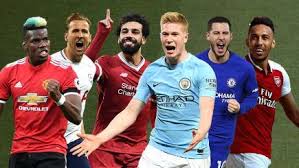 Next weekend marks the end of the Premier League. For those who religiously follow teams from England on Saturday and Sunday mornings, there is hole to be filled. Recognizing this fact, it might just be time to embrace Major League Soccer as your “Summer League”. I can hear the protests now, “MLS sucks!” “There’s no promotion or relegation!” “It’s a retirement league!” I’m well aware of this and all of the other vitriol that comes out whenever someone suggests that our domestic league should be watched by our domestic fans. I understand the thought process. My son and I just took a trip to England to see two matches. The allure of European soccer is not lost on me. The only question is do we want it to be this way? Do we truly want to be thousands of miles away from the best soccer in the world? Americans account for the largest number of ticket buyers at the World Cup, other than the host nation. Which means that we travel to far off lands at great expense to see the best in the world compete. In 2026 when the World Cup is here, will Americans not attend the games because they are here? That would be a ludicrous thought! We want the best games with the best players to be in our backyards. BUT we’re impatient, entitled and shortsighted. Let’s take a look at each.
 We’re impatient. Major League Soccer is barely 20 years old. Even the re-branded version of the English first division is older by around 4 years. Comparing MLS to any of the historic first divisions from Europe is at best an apples to oranges comparison. At worst, it ignores all common sense. Teams and leagues are made up by players and their endeavors are supported by fans. European fans have supported their clubs for generations. MLS clubs have not existed for a generation yet. Love for a team or club is not built overnight. It is a slow process and we’re in the thick of both the development of love for clubs and a talent pool. If the desire is that MLS should just buy the best talent in the world, do some research on the Cosmos.
 We’re entitled. Other than MLS, the other major sports leagues based in the US are arguably the best in the world. NFL, no competition. MLB, takes whatever talent is produced in other leagues. NBA, second tier talent from the US go to play in the other leagues. NHL, brings in talent from all over the world. Is it really that disheartening to have one league of the top five major sport that is not
  Huryk Unlimited