 My first car was a 1977 Chevy Nova! I inherited it from my great aunt and it was the perfect first car. It had holes in the floor boards where you could actually see the road below you. It had an 8 Track tape player in it that never really worked. It was pale blue and covered with rust spots, as you can tell from the description, I loved it! There were plenty of reasons to love it that had nothing to do with how looked or how it ran. And now looking back on it, I understand even better that it was the perfect first car exactly because it was a piece of junk. At no point did I ever have to worry about messing it up. I learned how to change the oil, replace the bulbs and change tires on that car. At no point did I think, “If I mess this up, I’m screwed!”
Fast forward to the present day and I don’t even change my own oil anymore. Cars have become computers and more complicated, therefore the idea of doing my own maintenance while possible is much easier to outsource. There are so many things like that today. Complexity of many systems within our world have changed us from capable amateur mechanics to people in the waiting room in anticipation of someone else fixing our problem.
While this may be helpful or even necessary with many of our possessions, it seems to have become pervasive to the point of a cultural norm. Day care, personal trainers, landscapers, etc. are all examples of outsourcing things that used to be done by the amateur ‘owner’. While these services can be helpful and possibly ‘necessary’ in a modern context, there is one thing that we can never turn the complete management over to someone else: your mind.
The best therapist in the land can be employed for multiple hours each day and still, it is on the individual to get their hands dirty and do the work. No one can change you without your conscious or unconscious consent. Recognizing this fact, I am amazed at how many brain owners keep waiting for the world or their life to make them happy. That is like expecting your neighborhood to take care of your lawn without ever communicating with them about it. And even if you did make that request, I’m sure that you’d get some raised eyebrows or questions like “why is that my responsibility?” So in this area, we need to realize that that amateur mechanic ethos is absolutely necessary. Help is not only desirable in most cases, it is necessary but it is on each and every one of us to maintain, diagnose or even overhaul our mind at times. With the amount of anxiety, depression and other mental concerns that seem to affect most of the population, it is time for all of us to recognize that we are all broken in at least a small way but we are also the mechanic. Learning about yourself, your habits, fears, triggers and so many other components of your mindset is no longer an option. Developing the tools to navigate this complex world is not only your job, it’s integral to your survival. So remember, you’re broken (but so is everyone else) and you’re the mechanic.
Get your hands dirty!
Pete
 Geometry was probably one of the easiest classes for me in high school. Despite its relative ease, I had trouble staying engaged with it. I found it tedious to give all of the reasons why something was true. It was usually pretty obvious whether a problem was going to withstand the scrutiny of the different theorems that we were learning at the time. So it seemed like a relative waste to my teenage self to write out all of the steps in proving or disproving a problem. Especially when the answers (to the odd problems usually) were in the back of the book.
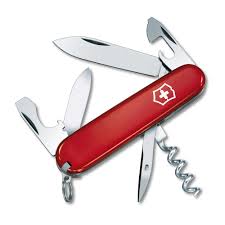 Every year I hike part of the Appalachian Trail with my brother. It is one of my favorite events of the year. First, it is time spent with one of my best friends. Second, it is enjoyable to forget about comfort for two days and walk into the woods with only the supplies we can carry. It’s not army survival training by any stretch but it’s not a picnic either. We never bring a picnic basket but we always bring a Swiss Army Knife. The tools that you pack on any adventure say a lot about what you are expecting, what you can handle and whether or not you’ll survive.
 One of my greatest concerns is the youth of today are under-prepared to deal with the challenges they will face. I fear that in many respects kids today are walking into the woods with picnic baskets. They are anticipating that everything will continue to be easy. The tests of life will be multiple choice. If they need it, they’ll get extra time to complete their work. Mommy or daddy will always be available to fix their problems. Unfortunately this picnic basket life that they are anticipating doesn’t exist. What happens when they find out that life is not always a picnic?
 Huryk Unlimited