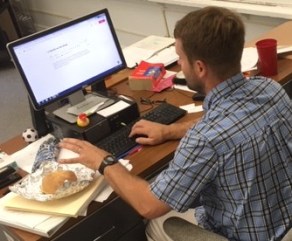
 For the month of May, I decided to commit to publishing a blog post every day. The stipulation was that if I did not publish a post, I would not eat until I did. Today is the last day of my successful endeavor. I was able to hold true to my word for the entire month. There were definitely hours of hunger where procrastination seemed like the only thing that was on my plate. But each day the publish button got pressed before the food went in. Below are some reflections on the experiment and things to consider moving forward.
Stakes matter! – There were definitely times during the month that I would not have published a post under normal circumstances. In the past, I’ve averaged about five posts per month. I would only post when I felt “inspired”. Even though I forced myself to go back to the keyboard every day, there was always something there to put out because there had to be.
Rules need to fit the actual outcome you want – For this experiment, I wanted to get my production up for sure. The rules definitely did that but… If I were to set up rules for posting a certain level of quality more often, I’d amend the rules in order to focus more on quality rather than quantity. Such as I would require myself to write a blog post every day before eating but the publishing would be done more sparsely. That way there is more of an editing process.
What’s your word worth? – Holding one’s self accountable is difficult. Some people have trouble keeping their word when it is only them who knows. They need an accountability partner or some other form of public pressure. The key is to know who you are rather than assuming that what works for others will work for you. I make deals like this with myself often, the other running one is about my consumption of iced tea. If you need that extra push of being accountable to others, don’t worry about it. The tools that work in the real world are the ones that matter, not the ones that work in our imagination.
Going the distance – As with any other endeavor, it’s best to sign up for a game that you have a marginal chance of winning. As a first time experiment, a year would have been an overwhelming amount of time. I’m not even sure that I would have made it a month if the length was a year. It would have been too much too soon. Now that I know that I can make a month, if it fit in with my life goals, setting a six month challenge for myself would be reasonable. There’s no reason to set impossible goals for yourself just to impress people. Your results are more important than your intentions.
Results – By writing every day, I was able to beat my average reads for the past year by 400% and the last day of May is not quite over yet. Now I recognize that I raised my posting by 600% but I can definitely say that there was a positive impact. My international numbers went up in certain areas. I also had more “LIKE” and subscribes in the past month than any prior. Also the number of old posts that were viewed by new readers was impressive. So overall, I am chalking this experience up as a success. I’m going to take portions of it and continue using them to improve my blog output. However next month, I think I’m going to move my focus to my exercise routine and see what improvement I can make there.
Thanks for following!
Pete
[mc4wp_form id=”5149″]
 At a certain point too much of something becomes its opposite. The drug that could save your life becomes poison. Too much time and attention from a significant other, no longer feels warm and fuzzy, it feels weird and creepy. The key to keeping this from happening is to keep from overdosing on something. At the moment, if I’m being honest, I’m LIKED out.
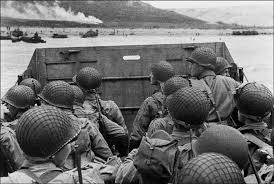 It’s extremely easy to get caught up in your own narrative. Look at it as if it is the truth, the whole truth and nothing but the truth. History is often told from only one perspective. The English probably don’t spend much time on the Battle of Bunker Hill in their history books. However there are always at least two sides to the story, if not more. It is difficult to avoid getting caught up in one narrative because we experience the world from only one perspective. No matter how difficult it may be to remember, it is key to relationships to understand that people are fighting a battle that you probably don’t understand.
 It has been said many times that soccer is a “religion”. While this may be taken as an exaggeration or possibly a slight against religion, there is reason to take the claim with a certain amount of seriousness. Although the sport does not call for the fealty to a superhuman controlling power, it could be considered a form of faith and worship. Routinely throughout the year, people flock by the thousands to sport cathedrals to have their faith tested by the team of their choosing. Much like a religion, an individual must decide to keep believing in the face of conflict. Although the teams, managers and players are the facilitators, it is actually the mass’s belief in the sport itself that makes it most like a religion.
 Things were different before the internet. There’s just no denying it. I told a group of young people recently about how we used to caravan to soccer games. Most of the group of parents would meet at a predetermined spot and follow each other to the location of the game. It may seem ridiculous by the modern day standard. Ten cars following each other down the highway to reach a youth soccer game. That was just how things were done. The positive side was that we combined cars a lot. People would ride together. One of my best friends from that time came from the fact that his mother didn’t like to drive on highways. So he and his mother would ride with us. So even though it’s not how we do it now, it had its virtues.
 Growing up playing soccer in the 1980’s was kind of like the Wild West. Not everyone fully understood the rules. Cultural norms were not fully established or recognized. Those players/teams who had a parent or relative who understood the game were an anomaly and an advantage. The first unwritten rule that I learned was “if you wore white cleats, you’d better be the best player on your team or even the field”. I learned this by accident because I wore white cleats for a season when I was young. They weren’t my choice. My mother bought what was cheap and these were definitely cheap! Either Patrick or Wilson, I don’t even recall. If anyone can tell by looking at the photo please put it in the comments below. Regardless of the brand, my attire sent off conflicting messages to people who understood. The color of my cleats sent the message, “I’m the best”. The fact that they were cheap said, “I don’t have the best tools (either through poverty or ignorance)”. My play sent the message “I don’t realize that I’m sending any messages!”
 It’s actually quite amazing when you think about it. The fact that pessimism can even exist in a world where we have achieved so much. The internet, space travel, self-driving cars and a myriad of other examples should really give us hope that anything is possible. In a short span of time, we’ve gone from living a relatively meager existence to bending the world to a place of our own design. I recognize fully that not all of the progress come without cost. However even the problems that we have created are well within our scope to solve. The problem is one of vision.
 It is graduation season! Whether high school or college or even pre-school, millions of students will be walking forward to receive their diplomas. This tradition has carried on for centuries and will probably continue into the foreseeable future. The act of public recognition of achievement is extremely important. It releases a cascade of chemicals into our systems that act as a reward/marker for the accomplishment. Our feelings are what drive us to do almost everything in our lives. So the event is important but what about the paper? What does it say or not say about us as individuals?
 In the 1970’s Philippe Petit walked a high wire strung between the Twin Towers in New York City. It was an amazing feat that was a result of a slow but steady progression of skill and daring over years. The film “Man On Wire” is a great documentary about the planning and execution of his walk. A slight warning that if you are afraid of heights, you may feel uneasy. Even though you are safe from any imminent danger, you may feel dizzy or tingly based on the images. I cannot imagine how Philippe Petit felt during the walk, over one thousand feet in the air without a net! Sure, he had years of experience and successful walks but the scale of this endeavor dwarfed everything else. It is easy to look at Philippe and say that he is special, talented or even crazy. Closer to the truth is probably that he was passionate about pursuing something to an extreme level. The use of a net negates the entire reason that he was walking in the first place. Under no circumstances and am I suggesting that a tight rope walk from dizzying height should be be in anyone’s future (I’m one of those people who tingles just seeing the photos). I am suggesting that the intersection of passion and stakes is a place of power. It’s someplace that we need to become more comfortable going to.
 Huryk Unlimited