Blogpost, self-reliance, SoccerLifeBalance

Formation Isn’t Everything

Having grown up in the relative infancy of soccer in the US, the information that I had about the game came directly from my coaches. Soccer was not readily available on TV like it is today. Therefore the switch from a 2-3-5 to a 4-4-2 seemed less like a change in tactics and more like a change in coaches or seasons. As the game has progressed over the past few decades, there are more formations available than ever. Players and coaches have their preferences on how to organize their teams. The function of a formation is not to directly solve problems. It is to provide a structure of standard operating procedures for a team. Therefore players can recognize patterns and hopefully create openings within their opponents defense. While this is a completely necessary portion of a team’s strategy, it does not solve all problems nor does it always represent the best use of talent.

While none of us is running a “4-4-2 life,” it is important to have some form of organization to the way that you attack your day. Leaving things up to chance is a great way to end up getting nothing meaningful done. Coaches will generally have two or possibly three formations that they will use in order to attack a particular opponent’s weaknesses. This is probably a helpful guiding principle for organizing your days. In general you want to have in mind whether you are attacking the day or defending in order to counter. If you look at each activity that you do as a player, then how have you aligned yourself. Are you completely defensive? Only doing the things that protect the status quo that you’ve set up for yourself. Or are you mainly offensive? Using all of your time to move yourself forward in some way: financially, socially, mentally, spiritually or in your career. The way that you allot your time is going to tell you something about intentions. Are you actually playing the game that you want to be? Are you trying to win it or hoping not to lose? Is your formation completely dependent upon your “opponent”?

Just like in the game, formations are necessary for organization and strategy but what happens in transition is usually the difference between winning and losing. The way that a team deals with things when their plans fall apart is crucial to their overall success. Those moments in between all of the planned activities. How are they spent? If you’ve invested time and effort into working out but then undercut that forward motion by snacking in transition, your formation becomes almost meaningless. While some people might use this as an excuse for more organization and formation, my preference is toward principles and defining goals.

In a game of soccer, the goal is always the same. However in life, our goals can cover a wide range of possibilities. At any given moment, I would try to limit yourself to three unless you have more that can truly coexist without interfering with one another. Build your principles around the goals that you have for yourself. If your major goal revolves around health and fitness, then set up principles that align with your desired outcome. Decide what you are going to do in chaotic situations before they come up. By developing principles ahead of time, it is less likely that a chaotic moment will devolve into negative consequences. Life is a game that you can win with the right formation and principles about how to deal with transition. Set yourself up and then ATTACK! Or defend, it’s really up to you!

Make a great day!

Pete

Many people refer to soccer as a “religion” and while I see where they are coming from, I use it as a metaphor for life. It can be used in a variety of ways to bring clarity to a world that can be difficult to traverse. My co-author and I are working on a book that uses soccer to explain person finance. If you’re interested in getting details as the project develops, sign up below.

Send me updates!

https://sendfox.com/js/form.js
Blogpost, self-reliance, SoccerLifeBalance

Climbing the Pyramid with a Parachute

It was a true pleasure to watch the US Men’s National Team dismantle El Salvador last night in their match. Although the game was a friendly and El Salvador was not at full strength, this is the type of result that one would expect from a sport obsessed nation when competing against a country one fiftieth its size. As Iceland has proven beyond the shadow of a doubt, population is not truly relevant when judging a footballing nation. However the numbers simply provide a context for available talent pool. Even with the competition from the other major US sports, more people play soccer in the US than the entire population of El Salvador. Seeing a tangible result to all of the shifts in US soccer over the past decade was refreshing. Despite my joy in seeing the young squad of US player, it has made me think about the collateral damage of a system that needs to cast aside over 99% of individuals to find those special few.

The US soccer pyramid is not truly a pyramid as it has several dysfunctions and offshoots. However due to the lack of a better term, we’ll refer to it as a pyramid. The structure itself is not completely relevant to the discussion.

The collateral damage that I am referring to is not unique to the US, nor is it new. A youth player from the Manchester City academy committed suicide earlier this year. This is the most extreme example of the ways in which young players can be affected by their fall from the soccer pyramid. Every year young players and old are given their release from a club. Sometimes it is simply a move to a different club or different level. Unfortunately when the ultimate decision is made that a player is no longer “good enough” at their particular level of the soccer pyramid, the fall can be devastating if they are not prepared.

In the United States, the academy system is in its relative infancy compared to the rest of the world. The college system used to be the route to the professional game and with it came an education which served as a “back up plan.” Even with that “back up plan” in place, I’m not sure that it deals with the most pressing issue. A player who has devoted over a decade to the dream of “making it” in soccer (however they would define it) needs to have the psychological tools to deal with that disappointment. A parachute can be a literal lifesaver when falling from high heights but it needs to be strapped on tight before the fall.

The following items are some suggestions that can be packed into the psychological parachute for players in case they fall off the pyramid.

  • A diversified identity – Although we are all only one person, we tend to have different roles that we play within our lives. A person with a singular focus like professional athletics can tend to have tunnel vision on that identity. Developing other aspects of one’s life can not only help in the case of a fall but also allow for the release of pressure during their career. Although this identity includes how the individual interacts with the outside world, it is also extremely important that he/she recognize these other identities inside of his/her own mind. The trauma of losing a part of one’s life is much worse if it is the only part that mattered. That void will need to be filled with something and the easiest things to fill a void with are usually destructive.
  • Quality self-talk – There are many ways that this could be characterized but the heart of the issue is that there is only one person that we spend our entire life with: ourselves. Therefore it is extremely important that we make that person who is living inside of our own heads a friend. Learning how to communicate effectively with yourself is crucial to the building and maintenance of self-esteem. For some reason it seems to me that “esteem” gets overshadowed in that compound word. Esteem is a pretty lofty opinion of someone. It should be something that we can bestow onto ourselves with our words and actions.
  • Quality relationships – Again this is something that needs to be packed in the parachute before the fall. People are less likely to help when they feel that they are being used. Friends and family are key components to our psychological well being. The bonds that we have with the people that we value in our lives releases oxytocin which lowers stress (cortisol) and inhibits addiction. If these types of relationships are not well in place before falling from the pyramid, the stress of “not knowing who to trust” can exacerbate an already difficult situation.
  • Physiological hooks – The body is an amazing antidote to most things that ail the mind. While my hope would be that a player of high caliber would understand how to change her/his state for games or practices, it may be less evident to use these tools when “the walls have tumbled down.” Disappointment, embarrassment, depression and a host of other emotional states may be easier to fall into after the end of a career. Recognizing the control that each of us has over our emotional state through our posture, habitual movements, facial expressions and others is a skill that every individual should develop. This is not a sports skill. It’s a life skill! Creating our emotional state is our job because when it is left up to the world, we are bound to be disappointed by the outcome.

This list is far from exhaustive. However it does begin the conversation about the psychological tools that we all should develop. In this hyper-intense world of high level soccer, it is easy to be so focused on a singular outcome that these tools do not get developed. Unlike the college education which was viewed as a “back up plan,” psychological well being should be THE PLAN for all of us in order to make our journey through life an enjoyable one.

Go pack your chute!

Pete

Blogpost, SoccerLifeBalance

First Touch Philosophy

A player’s first touch is crucial to their success as they progress to higher levels of playing. Although speed, a great shot, tactical knowledge, etc. may be desired, a quality first touch is a foundation that can enhance any skill stacked upon it and mask defects that would otherwise be apparent. Just like any other skill, a first touch requires physical practice but the skill in and of itself is heavily intertwined with being proactive. The ability to control the ball is not particularly a good first touch. It is the combination of control with the vision to see where it would be most advantageous to put the ball. Many players possess the skill to control the ball in open space. However amongst the chaos of small space, little time and huge pressure is the true proving ground for a quality first touch.

Although I would love for each of us to use this post as a catalyst for improving our first touch on the field, like always, I’m thinking to the bigger game of life. In life, the rules, skills and strategies are more subject to interpretation. That is why I put the word philosophy in the title. Each of us must develop our own stance on how we progress in life. Therefore it is not for me to say what is best for you, the philosophy part is up to you. However I am going to suggest some of the places where you might find opportunities to take great “first touches.” Below is a video of Frank Lampard (not my favorite player) scanning the field during his days with Chelsea (not my favorite team). Although I do not love the player, it’s easy to appreciate the preparedness. Being aware of your surroundings enough that you can make a better decision when the opportunity arises.

First Touch Opportunities

Here are some opportunities for you to set yourself up for success. The decision about how to approach these situations is up to you depending on your goals and strategy.

  • First thing in the morning. This is the truest of all “first touches.” What do you do when first wake up? Are you reactive to the way you feel? Proactive based on decisions made beforehand?
  • Meeting new people. This is another spot where you get to choose who it is that you want to be. This person doesn’t know you and no matter what you do, they will never know you 100%. They will only ever get a small percentage of who you are based on what you show them. Do you want to show them your BIG personality? Or are you sending the message that you are more interested in them? This may change based on the circumstances but is there a thought process behind your interactions?
  • Walking into a room. It’s true that you never get a second chance to make a first impression. However I am huge believer in the fact that you should not trust what people say, nor what they do, trust the pattern. So every time that you walk into a room, you have a new opportunity to be the version of yourself that you want on display. What is your pattern? How do you show up regularly?
  • After making a mistake. This is a crucial time where chaos may be upon you. Perhaps not external chaos but internal chaos. A first touch is all about control and setting yourself up for success. How do you react to mistakes? Do you tear yourself down internally? Externally? Do you relive it in your head? Do you evaluate it in order to prevent it from repeating? Worst case scenario, do you even see your mistakes? Amidst the chaos of life, it is easy to get turned around. If you’ve not defined which goal is yours, it is possible that you’re heading in the wrong direction and don’t know it.
  • After someone hurts you. Looking for retribution is easy! Sometimes it might be the right answer. More often than not, it isn’t! Usually the people that are given the power to hurt you, have it because you share a relationship. Two ends of a “ship” taking shots at one another almost guarantees that the “ship” is going down. Is it a mistake? Does hurting the other person make you feel better? Do you even need to be hurt by this? In the chaos of the moment, these are hard questions to ask. So it may be helpful to rehearse some situations inside your head before they happen. See yourself acting in a way that will help you.

Obviously this list is not complete. There are plenty of places in your life where you can employ control and a vision for where it is advantageous to go. Just like a first touch on the field, it takes practice before the chaos. Practice is something that starts when you are on your own. Meditation, visualization, journaling and self-talk are some of the best tools that you can use to develop control and vision. These skills need to be honed over time. Then much like Lampard in the video clip, you need to be scanning the field to make opportunities out of the openings that you see or avoid the hard tackle coming from your backside. Life is inherently “out of control”. The only thing that we can control is ourselves. Make the best of the touches that you get today.

Go for goal!

Pete

Blogpost, SoccerLifeBalance

Hand Stitched Soccer Balls

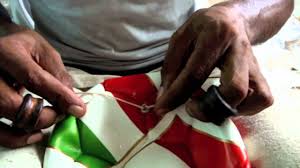
There was a point in the past where the mark of a “good” soccer ball was that it was “hand stitched.” Unfortunately most of that stitching was probably done by children in another part of the world but we’re going to put the geo-political implications aside for the moment. Quality was associated with human labor. Someone putting in an effort to create. Doing it with intention that lead to a better result. While technology has improved enough that a machine can make a better soccer ball than a kid in a sweat shop. Some tasks are better done by hand and maybe even by children.

While I have no desire to make a better soccer ball, I do have an explicit interest in helping to make better people. It is nowhere near as simple as manufacturing because the material is inconsistent. The methods are various and not always effective or efficient. However there is one that I am more sure of than ever as we cope with this pandemic. Better people are made by hand. This does not mean that they are stitched together by a low wage worker in another country. It simply means that contact is key. Our ability to become a better version of ourselves depends heavily on the influence of people. While the position of influencer seems to have been reduced to someone who has a lot of followers, it truly is the people that we allow to nudge us in one direction or another. Those little pieces of other people that we pick up can be stitched together into something beautifully functional. Much like the panels of a soccer ball, we have a patchwork design that fits together in a way that no machine could predict. So we need to be “hand-stitched” and at some point we need to do it to ourselves.

There is a societal push toward perfection. Clearer pictures on TV, faster Wifi, smarter automobiles… These improvements seem to positively impact lives. However that same expectation around human existence is more dangerous than anything else. We are born through difficulty and struggle. Usually that is what makes us better as well. We need to be hand-stitched because from time to time, life tears us apart. It’s a skill that needs to be developed, picking up the pieces. Even though we want to protect our kids from anything harmful, they need to learn how to sew. Otherwise they’ll be dependent upon other things or people to make them feel put together.

Get back to work!

Pete

Blogpost, SoccerLifeBalance

Leaders Go First; Leaders Eat Last

As we get closer to the beginning of a new school year and (possibly) new soccer season, leadership is a topic that has been on my mind. Leadership is a crucial component to a successful team. The unfortunate thing is that many people see leadership from the outside and make assumptions about it. Or have only ever experienced poor leadership and assume that is what it looks like. I’ve put two contrasting ideas here in order to encapsulate what true leadership is about.

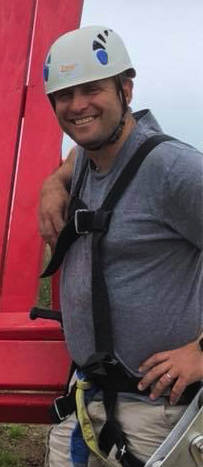
A picture taken directly before going zip-lining. I’m majorly afraid of heights but I went because my kids needed me to show them how to face fear head on.

Leaders go first is a statement that I repeat to my players often. It should be obvious because the word leader has the word “lead” in it. Despite this fact, many people miss it. The plain and simple fact is that in order to earn a position of leadership, you need to be willing to go first. A leader doesn’t need to go first all of the time but those in her or his charge need know without a doubt that the leader can/will do everything that they are asked to do. Many people try to lead from their position. This means that they have a position of power, therefore people should follow them. Although it can work out just fine, it has the potential to cause a “do as I say, not as I do” mentality/perception. This can be problematic because people follow people, not positions, at least not for long. Recognizing this fact is important. Eventually the shine of the title will wear off and the people in your charge be left with you. The title makes you accountable. The people under you need you to be responsible meaning “able to respond”. It is the thumbs before fingers ethos. Leaders need to respond without pointing the finger.

Leaders Eat Last is the title of a great book by Simon Sinek. It’s based on a practice in the Marine Corps where higher ranking officers eat after their subordinates. This seems backward and coupled with the first paragraph makes leadership seem like a raw deal. However it makes perfect sense. Leaders eat last because if they have done their job effectively then their subordinates will want to be sure there is food left for them. We’ve gotten far too accustomed to people in leadership positions taking all of the spoils that come with their position regardless of their subordinates. These relationships do not exist in a vacuum. Our hierarchical system allows for leaders to take some of the riches that come in. However when they don’t meet their leadership mandate of looking out for those under them, the system is out of balance and can topple. Simon Sinek’s book does a wonderful job of describing the biochemical system that creates effective leadership. This video gives an overview. Regardless of whether you understand the biochemistry, you need to understand the bookends of the leader.

Leaders live in a dichotomy where they must be both above and below the people that follow them. This is not 100% literal nor is it 100% of the time. The leader needs to model the behavior for those who are following and help protect them when things go sideways. Again this seems like a raw deal. If it is done well though, a leader will reap the benefits of all of that selflessness by having it returned tenfold. Serve your people so well that they want to serve you! Support your people so well that they want to support you! Protect your people so well that they want to protect you!

After all of this talk about leadership, it might be easy to say “I don’t want to be a leader.” Unfortunately, no matter what you are the leader of at least one person: yourself. Now is the time to step forward. Leaders go first, leaders eat last! Be a leader because there are far too many followers.

Go get it!

Pete

Sign up for my email list and get a copy of my book!

Blogpost

An Open Letter to My Future Players

To Whom It May Concern:

VESPhotoI am your new coach.  That’s a role that I take very seriously.  It’s a mixture of teacher, mentor, psychologist, personal trainer, confidant and many other jobs that coalesce into a position of great possible influence.  The word possible is in there because people are put into roles like this every day but just because someone leads does not mean that anyone will follow.  A position of power does not make someone a leader.  Leaders must be willing to go first.  My hope is that I am able to prove beyond a shadow of a doubt that I am.
At this point, I could list all of my past experiences and accolades but they are only slightly relevant.  Prior success is not a guarantee of future success.  Also that term is something that we will have to define together.  So what am I offering?  Commitment…  A similar commitment to the ones that I make to my wife and children.  I take it that seriously.  The commitment to do what I believe is best in the long run.  Not particularly today.  Not the things that are easy.  Not the things that most people would do but rather the things that few people would do.  Things that may lose games but improve lives.  Ultimately that is the game that I care the most about: LIFE.  Eventually everyone’s playing career comes to an end.  The things that we carry with us after the games are over are the true victories.  The friends, confidence, self-discipline, self-awareness, and so many others are the trophies that we not only carry with us but can rely upon for years to come.  In the end, your ability to control a ball will probably amount to very little but your ability to control yourself will give you everything.

So where do we go from here?  Forward!  We are going to take the necessary steps in order to prepare for what lies ahead.  There is no way to predict what those things might be.  Every team and every season is different.  So we will do our best to anticipate the challenges and prepare for them.  We will endure hardships.  Face opponents external and internal.  Enjoy the successes but no matter what it will be done together.  Every one of us will contribute to whatever we accomplish.  From the starting captain, all the way down to the last person on the bench of the lowest level team, we all have something to give.  It may not be goals, saves or minutes but there is value in all of it.

I could go on but rather than talking about starting, we should just start.  So for now, let me just say that I am extremely excited to be working with you.

See you soon!

Coach

P.S.  Below is something that I wrote a few months back.  Not sure how it will play into my plans but I’m putting it here for your consideration.

“Toward Full Stature”

I go out today in search of victory,

Not over the opponent who stands in front of me

But the lesser self that resides within me

Before I can conquer anyone or anything else

I must first conquer and control myself

And if today I am able to stand victorious,

I know that tomorrow will bring a new challenge

Each day my ability to stand tall will be tested

But I am confident that I will reach my full stature

Blogpost, SoccerLifeBalance

Soccer Karma

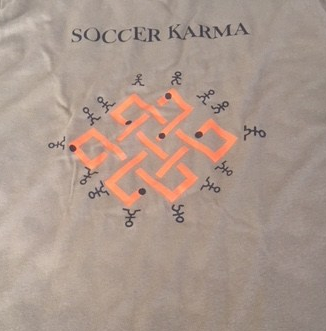
IMG_3939Our beliefs tend to color or almost define our worlds.  The thoughts that we hold most dear are the filters through which we cyphon our experiences and produce meaning.  Recognizing this would make one think that people would be deliberate in the creation of their beliefs.  Unfortunately this is rarely true.  People’s beliefs are often a mismatch of heritage and circumstances.  This haphazard approach is bound to lead to disaster more often than not.  I’m not here to offer a complete belief system but rather one small sample: Soccer Karma!

I’m a huge believer in soccer karma.  It is a term that I may have coined (or stolen, not sure!).  The concept is simple.  On the soccer field, if you give a good ball, you’re going to get a good ball.  Meaning that if you give a quality pass to a teammate, they’re going to give you a quality one back.  This is, of course, not completely accurate.  It’s completely possible that you give a good ball and get a crap one back!  This is true.  However the belief matters more than the reality.  If I believe that my intent is going to have positive returns, I’m more likely to put effort in that direction.  That effort will eventually influence those around me, especially if we all believe the same thing.  This belief acts a ratchet that brings positive returns.

For years now, I’ve been professing the positives of this belief system.  While I know that it has paid dividends for my players and teams on the field, my hope has always been that the metaphors of our sport are not lost on those who play it.  The moment that we step off of the field, we are being released out into a larger venue with bigger stakes and uncertain scoring.  Regardless of that, the belief system can be applied with equal effectiveness.  If enough of us believe in it, then we truly can make life “a beautiful game”.

The next pass is yours to make!

Pete

SoccerLifeBalance

Being Intentional in Coaching and Leadership – Donna Fishter (Leadership Coach and Team Architect)

donna fishter consultingDonna Fishter is a Leadership Coach and Team Architect who works with athletes and coaches in order to make their teams better.  In this conversation we cover some of the ingredients of good leadership, red flags and remedies for poor team chemistry as well as an assortment of other topics.  You can find Big D at http://www.donnafishter.com

Click the link to see: A List of Big D’s Favorite Books, Videos, Speakers, etc.


SoccerLifeBalance

Hard Work Pushing Young Bull Forward – Brian White (New York Red Bulls)

bwhiteBrian White was the first draft pick taken by the New York Red Bulls in the 2018 MLS Draft.  In this conversation we talk about some of the things that set him apart as an athlete and the transition to life as a professional athlete.

SoccerLifeBalance

Sweet Feet to Educated Coaches – Brad Nein (Coach, Blogger, Doctor?)

bradneinphotoThis episode I got the chance to talk to Brad Nein, Coach and Blogger who works with kids and coaches in order to make a better experience of soccer.  We discuss his beginnings, his dissertation and many other topics.  To find out more about Brad and what he does, go to http://www.educatedcoaches.com or http://www.sweetfeetsoccer.org.