Blogpost, SoccerLifeBalance

POSH Wobble Is Over, Unless…

One win in an almost meaningless cup game that was played by fringe players against West Ham’s youth team and POSH is back? The voice of Matt Kisby from the Yellow Block podcast is the one that I hear refuting my claim that the POSH are about to go back on a run. After just listening to their latest episode about Fergie In or Out, I had to put my thoughts out there. The decline in confidence amongst POSH fans is not surprising after a run of losses with 41% saying Fergie Out. However, those numbers will rebound before the end of the season as we push toward promotion.

Fans can be fickle and there are some that have a distaste for Ferguson regardless of the results. It’s hard to moan about a manager who is winning but one that goes on a string of losses, get out the torches and pitchforks. Despite those losses, Ferguson isn’t going anywhere. The owners believe that this manager is the architect for their club. His job is safe through wobbles. Only a complete collapse would be grounds for removal and that isn’t happening. The ship is already heading back in the right direction.

The win against West Ham is relatively meaningless other than the lineup. It was a game that required the lower half of the squad to play. The lineup was consistent with the others from the Papas Johns Trophy. Now it is up to Ferguson to get the players to believe that they are a squad again. The recent downturn in form is not a lack of talent. It is actually due to a squad that is full of talent but it needs to be utilized based on merit. Ferguson knows this and his salty interview is an indication of change to come.

Humans lead with belief and their actions tend to reflect it. Comfortable players do not give you their best effort. So a player who believes that his place in the starting eleven is secure will tend not give everything that he has. The flip side of that coin is that a player who believes that nothing he does will get him into the starting eleven tends to give less than optimal performance as well. Often this belief system will rear its ugly head when the bench player comes on late in a game. Not much time to impress makes every touch of the ball count. So the anxiety of the situation undermines the performance of a fully capable replacement.

The POSH players, both starters and replacements, need to believe that they are part of the equation. Mo Eisa needs to believe that he can contribute and has a chance when someone’s form drops. Sammie Szmodics needs to believe that the team scoring is far more important than him scoring and then goals will come. Ferguson’s frustration in the interview after Portsmouth came from his players underperforming and as Tim said in the Yellow Block Podcast, it is his fault. I truly believe that the team selection and result in the FA Cup caused a downturn in the squad’s belief that had already begun. A rotated squad for that game sends the message to the fringe players that they matter and to the starters that their position is not completely safe. Ferguson has proved time after time in his career that he knows how to strike this balance.

Although the psychology of each individual is important, a team or group also develops their own psychology based on the environment created by the leader/manager. The consistency with which Ferguson has gotten teams to perform at a high level lets me know that he can get this team to believe again. He doesn’t seem to lead completely with “fear.” Hitting that button too many times leads to players who resent their manager (Steve Evans). Whatever was said in the locker room needed to stay there, those who heard it most likely have gotten this message. The free passes are gone. None of us is bigger than all of us and we cannot wait for you to get it right. Unless I’ve completely misjudged him, Ferguson is going to get it right!

Up the POSH!

And listen to the Yellow Block! They’re good lads. (Can I say that as an American? Good guys is what I would normally say.)

Pete

Blogpost, SoccerLifeBalance

First Touch Philosophy

A player’s first touch is crucial to their success as they progress to higher levels of playing. Although speed, a great shot, tactical knowledge, etc. may be desired, a quality first touch is a foundation that can enhance any skill stacked upon it and mask defects that would otherwise be apparent. Just like any other skill, a first touch requires physical practice but the skill in and of itself is heavily intertwined with being proactive. The ability to control the ball is not particularly a good first touch. It is the combination of control with the vision to see where it would be most advantageous to put the ball. Many players possess the skill to control the ball in open space. However amongst the chaos of small space, little time and huge pressure is the true proving ground for a quality first touch.

Although I would love for each of us to use this post as a catalyst for improving our first touch on the field, like always, I’m thinking to the bigger game of life. In life, the rules, skills and strategies are more subject to interpretation. That is why I put the word philosophy in the title. Each of us must develop our own stance on how we progress in life. Therefore it is not for me to say what is best for you, the philosophy part is up to you. However I am going to suggest some of the places where you might find opportunities to take great “first touches.” Below is a video of Frank Lampard (not my favorite player) scanning the field during his days with Chelsea (not my favorite team). Although I do not love the player, it’s easy to appreciate the preparedness. Being aware of your surroundings enough that you can make a better decision when the opportunity arises.

First Touch Opportunities

Here are some opportunities for you to set yourself up for success. The decision about how to approach these situations is up to you depending on your goals and strategy.

  • First thing in the morning. This is the truest of all “first touches.” What do you do when first wake up? Are you reactive to the way you feel? Proactive based on decisions made beforehand?
  • Meeting new people. This is another spot where you get to choose who it is that you want to be. This person doesn’t know you and no matter what you do, they will never know you 100%. They will only ever get a small percentage of who you are based on what you show them. Do you want to show them your BIG personality? Or are you sending the message that you are more interested in them? This may change based on the circumstances but is there a thought process behind your interactions?
  • Walking into a room. It’s true that you never get a second chance to make a first impression. However I am huge believer in the fact that you should not trust what people say, nor what they do, trust the pattern. So every time that you walk into a room, you have a new opportunity to be the version of yourself that you want on display. What is your pattern? How do you show up regularly?
  • After making a mistake. This is a crucial time where chaos may be upon you. Perhaps not external chaos but internal chaos. A first touch is all about control and setting yourself up for success. How do you react to mistakes? Do you tear yourself down internally? Externally? Do you relive it in your head? Do you evaluate it in order to prevent it from repeating? Worst case scenario, do you even see your mistakes? Amidst the chaos of life, it is easy to get turned around. If you’ve not defined which goal is yours, it is possible that you’re heading in the wrong direction and don’t know it.
  • After someone hurts you. Looking for retribution is easy! Sometimes it might be the right answer. More often than not, it isn’t! Usually the people that are given the power to hurt you, have it because you share a relationship. Two ends of a “ship” taking shots at one another almost guarantees that the “ship” is going down. Is it a mistake? Does hurting the other person make you feel better? Do you even need to be hurt by this? In the chaos of the moment, these are hard questions to ask. So it may be helpful to rehearse some situations inside your head before they happen. See yourself acting in a way that will help you.

Obviously this list is not complete. There are plenty of places in your life where you can employ control and a vision for where it is advantageous to go. Just like a first touch on the field, it takes practice before the chaos. Practice is something that starts when you are on your own. Meditation, visualization, journaling and self-talk are some of the best tools that you can use to develop control and vision. These skills need to be honed over time. Then much like Lampard in the video clip, you need to be scanning the field to make opportunities out of the openings that you see or avoid the hard tackle coming from your backside. Life is inherently “out of control”. The only thing that we can control is ourselves. Make the best of the touches that you get today.

Go for goal!

Pete

Blogpost, SoccerLifeBalance

Hand Stitched Soccer Balls

There was a point in the past where the mark of a “good” soccer ball was that it was “hand stitched.” Unfortunately most of that stitching was probably done by children in another part of the world but we’re going to put the geo-political implications aside for the moment. Quality was associated with human labor. Someone putting in an effort to create. Doing it with intention that lead to a better result. While technology has improved enough that a machine can make a better soccer ball than a kid in a sweat shop. Some tasks are better done by hand and maybe even by children.

While I have no desire to make a better soccer ball, I do have an explicit interest in helping to make better people. It is nowhere near as simple as manufacturing because the material is inconsistent. The methods are various and not always effective or efficient. However there is one that I am more sure of than ever as we cope with this pandemic. Better people are made by hand. This does not mean that they are stitched together by a low wage worker in another country. It simply means that contact is key. Our ability to become a better version of ourselves depends heavily on the influence of people. While the position of influencer seems to have been reduced to someone who has a lot of followers, it truly is the people that we allow to nudge us in one direction or another. Those little pieces of other people that we pick up can be stitched together into something beautifully functional. Much like the panels of a soccer ball, we have a patchwork design that fits together in a way that no machine could predict. So we need to be “hand-stitched” and at some point we need to do it to ourselves.

There is a societal push toward perfection. Clearer pictures on TV, faster Wifi, smarter automobiles… These improvements seem to positively impact lives. However that same expectation around human existence is more dangerous than anything else. We are born through difficulty and struggle. Usually that is what makes us better as well. We need to be hand-stitched because from time to time, life tears us apart. It’s a skill that needs to be developed, picking up the pieces. Even though we want to protect our kids from anything harmful, they need to learn how to sew. Otherwise they’ll be dependent upon other things or people to make them feel put together.

Get back to work!

Pete

Blogpost, SoccerLifeBalance

Leaders Go First; Leaders Eat Last

As we get closer to the beginning of a new school year and (possibly) new soccer season, leadership is a topic that has been on my mind. Leadership is a crucial component to a successful team. The unfortunate thing is that many people see leadership from the outside and make assumptions about it. Or have only ever experienced poor leadership and assume that is what it looks like. I’ve put two contrasting ideas here in order to encapsulate what true leadership is about.

A picture taken directly before going zip-lining. I’m majorly afraid of heights but I went because my kids needed me to show them how to face fear head on.

Leaders go first is a statement that I repeat to my players often. It should be obvious because the word leader has the word “lead” in it. Despite this fact, many people miss it. The plain and simple fact is that in order to earn a position of leadership, you need to be willing to go first. A leader doesn’t need to go first all of the time but those in her or his charge need know without a doubt that the leader can/will do everything that they are asked to do. Many people try to lead from their position. This means that they have a position of power, therefore people should follow them. Although it can work out just fine, it has the potential to cause a “do as I say, not as I do” mentality/perception. This can be problematic because people follow people, not positions, at least not for long. Recognizing this fact is important. Eventually the shine of the title will wear off and the people in your charge be left with you. The title makes you accountable. The people under you need you to be responsible meaning “able to respond”. It is the thumbs before fingers ethos. Leaders need to respond without pointing the finger.

Leaders Eat Last is the title of a great book by Simon Sinek. It’s based on a practice in the Marine Corps where higher ranking officers eat after their subordinates. This seems backward and coupled with the first paragraph makes leadership seem like a raw deal. However it makes perfect sense. Leaders eat last because if they have done their job effectively then their subordinates will want to be sure there is food left for them. We’ve gotten far too accustomed to people in leadership positions taking all of the spoils that come with their position regardless of their subordinates. These relationships do not exist in a vacuum. Our hierarchical system allows for leaders to take some of the riches that come in. However when they don’t meet their leadership mandate of looking out for those under them, the system is out of balance and can topple. Simon Sinek’s book does a wonderful job of describing the biochemical system that creates effective leadership. This video gives an overview. Regardless of whether you understand the biochemistry, you need to understand the bookends of the leader.

Leaders live in a dichotomy where they must be both above and below the people that follow them. This is not 100% literal nor is it 100% of the time. The leader needs to model the behavior for those who are following and help protect them when things go sideways. Again this seems like a raw deal. If it is done well though, a leader will reap the benefits of all of that selflessness by having it returned tenfold. Serve your people so well that they want to serve you! Support your people so well that they want to support you! Protect your people so well that they want to protect you!

After all of this talk about leadership, it might be easy to say “I don’t want to be a leader.” Unfortunately, no matter what you are the leader of at least one person: yourself. Now is the time to step forward. Leaders go first, leaders eat last! Be a leader because there are far too many followers.

Go get it!

Pete

Sign up for my email list and get a copy of my book!

Blogpost, SoccerLifeBalance

5 Things Professional Soccer Coaches Can Learn from a Foreign Language Teacher

A foreign language can be exactly that to many people “foreign”.  Despite that fact, there are lessons to be learned and applied from the study of language that reach into the sports world extremely easily.  At the highest level, the margin for error is so slim that all possible advantages must be explored.

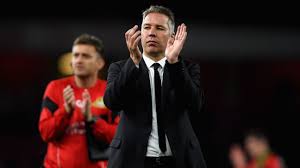
Darren Ferguson, manager Peterborough United.
  1.  Language is an agreement – This is crucial.  Right now you (the reader) and I are working under the English agreement.  We must agree in order for messages to travel freely and easily.  This is simple when we’re talking about identifying a table or a ball.  However this idea goes much deeper.  It involves vocabulary, tone, context and audience.  As a coach, when you address the team, it leaves your lips as one message but gets received eleven or more different ways.  This recognition by itself can be powerful but knowing your receivers can allow you to improve your messages.  Your business is results.  Anyone can bark orders.  Not everyone can craft a message. So learn to give the message in a way that will be received.
  1. You’re doing it to yourself – It doesn’t exist in every language but in several, there is a construction called a reflexive verb.  This is when the person doing the action is also receiving the action.  Think of washing your hair, brushing your teeth or shaving.  In Spanish there is a verb “ponerse”.  It means “to put on”.  Although it can be used for clothing, it also gets used for emotions.  You put anger onto yourself or sadness or excitement.  Even though your language may not represent it that way, it is exactly what happens.  You and your players are making yourselves feel a certain way.  Feelings don’t infect us.  We create them.  Do your players put excitement on by themselves at training or matches?  Or do they need your help? As the person who will eventually be held accountable for the results of the team, it is important to consider what emotions are continually being put onto everyone involved. Can you direct that more effectively?
  1. Permanent/Consistent or Temporary – Much like the last concept, language frames the way that we look at the world.  In Spanish, there are two words for the word “to be”: Ser and Estar.  Ser is used for things that are permanent or consistent.  Estar is used for things that are temporary.  In English it is possible for someone to say “I am depressed.”  Since there is only one word for “to be”, this could be a temporary thing or a long term.  The signal to other people and the mind can be difficult to decipher.  This overlaps with the concept above about agreement.  “John is horrible” and “John is having a horrible day” have very different meanings to both the sender and receiver.  In your team’s culture, what ideas or concepts do you want to be permanent/consistent?  What is meant to be temporary?  Listen to your players’ language patterns when they talk about themselves and others.  Are there patterns that are undermining success? Are you the one who put them there or did you allow them to stay?
  1. Slow Process vs. Fast Process – Languages are broken into four different modalities:  reading, writing, listening and speaking.  Reading and writing are slow processes that allow the person to take their time as they are doing it.  Listening and speaking are done in real time.  Therefore each can be more valuable at different times or may be used in tandem.  Consider the importance of the message that you want to send.  Is saying it enough?  Remember, you already know the message that you want them to receive.  So be sure to give them the opportunity to get it with the amount of depth that you intend for it.  Should you write it down for them to see it?  Should they write it down in their own words?  In their own language? Your players are going to be performing in a high stress environment. Make sure that the messages that matter stick.
  2. Question Words Require Extra – Who? What? ¿Dónde? Quand? Jak? And WHY?  Although there may be times when all you want is the simple yes or no, your players are complex creatures who have lives beyond the game.  Probing beyond the surface level may be the key to unlocking a level of focus and commitment that you never knew existed from an individual.  Yes men are easy to find and easy to replace.  Although all question words elicit extra information, they are not all created equal.  WHY is the eventual question that you want to find an answer for.  If you know a player’s WHY and are able to link it to the team’s goals, you’ll have a brother in arms rather than a mercenary.  One of my favorite illustrations of the concept of WHY comes from the movie Cinderella Man (2:00 minutes in).  He says what he’s fighting for but it puts his WHY on full display.           

In the world of professional soccer, everyone’s job is to prepare to the best of their ability in order to achieve a result on game day. Coaches are using words as their main tool to get the most from their players. Despite that fact, language patterns and word choice rarely get considered. The best version of you as a coach requires that you and your players understand one another. Be sure that your message is not being lost in translation.

Blogpost, SoccerLifeBalance

Me First and the Gimme Gimmes of Soccer: The opportunity of COVID-19 to fix American youth soccer

When music stores still existed on a large scale, I was mainly listening to punk rock. As I would shuffle through the CDs in the punk section looking for something by Millencolin, I would invariably see Me First and the Gimme Gimmes. It was a strange enough name to catch the eye but I never really looked into them because Youtube and other sampling tools weren’t available. In preparation for this article, I decided to look more closely at their history and catalogue. I just liked the name to hammer home an idea but it turned out to be more perfect than I thought. Me First… is made up of members from different rock bands and they perform punk cover versions of popular songs like “Mandy” by Barry Manilow or “Hello” by Lionel Richie. They take other people’s winners and dress them up a little differently. There’s nothing really wrong with what the Gimme Gimmes are doing because the original songwriters get a portion of the revenue produced. Now that you’re up to speed on Me First… let’s see what was can do about youth soccer.

The system of youth soccer in America is in need of an overhaul. The dissolution of the DA may end up being a positive in the long run but from top to bottom there’s a lot more wrong. Me First and the Gimme Gimmes are not pretending to be anything more than what they are a cover band. However their name seems to be a perfect way to describe the overall ethos of youth soccer at the moment. Leagues, clubs, trainers, tournaments, etc. are all part of a system that seems to be less about soccer and more about money. This is a game that could be almost free for kids to play but here it is big business. Why? Because the system is so disjointed that it allows people to take advantage and there is no real incentive to act in the interest of the greater good. So my hope is that the hiatus that we are on will shed some light on those issues. Allow me to explain.

In most countries there is a soccer pyramid that makes some form of sense. Teams that are higher up the pyramid get there by a type of meritocracy. The same is true about players. A player must climb the pyramid as well. Perhaps they are fortunate to get discovered early in their career. In the professional ranks, teams can either develop their own talent through their academy system or buy talent from elsewhere. If a player is bought, then their youth club gets some form of financial compensation called development payment. This money allows the smaller clubs to continue to develop players. Sometimes the financial gain is worth letting go of a good player. It helps the club’s finances and the player usually moves on to a higher level.

In the American system, there is no incentive for clubs to let go of their players. Development payments are not recognized yet by the USSF. Therefore clubs are less likely to help talented players move on. A quality player or team of players raise the perceived clout of the club and can bring in more money. Since the US does not embrace development payments, all of the money is brought in from the families of the players. So every player is also a customer and losing customers is not a good strategy for staying in business. Although this is a major problem, it is not the only one. Due to the lack of overarching structure the United States soccer “pyramid” has many organizational flaws. The lack of a concrete system allows perception to dominate common practice. NCAA, NAIA, ECNL, NPL, AYSO, US Club, ODP, and so many other acronyms are part of a landscape of muddied waters. Each acronym with their own vested interest that may or may not serve the betterment of their players or soccer in general.

Although the system is dysfunctional and needs an overhaul, a pandemic might be the perfect cure for what ails soccer in the US. More than anything, it is giving people time to reflect.

  1. Path to the Pros – USSF has already taken this opportunity to dissolve the DA. Although it may take some time for MLS to get its replacement right, in the end, any club in the “Development Academy” league should have some direct path to the professional game. This change can separate the cream of the crop from the pretenders who pay a lot for the prestige of being in the DA.
  2. Going Solo – The pandemic has forced all training sessions to be shut down. So since players can’t see their high priced trainers, they’re practicing on their own. It probably shouldn’t be this big of a revelation but American kids and parents are recognizing that skills practice in isolation can help. The flip side of this coin could also be a revelation. A kid who is not practicing during this huge opportunity to get ahead of competition, probably doesn’t love the sport enough to justify a huge financial investment.
  3. Dollars and Sense – With the economic impact of the pandemic on the average family’s income, most people are going to have to consider their expenditures heavily. So high priced soccer clubs are going to have to take a backseat to things like food, health care, electricity, etc. With the loss of DA status and the financial crunch that so many will be feeling, clubs will either prove their value or struggle to survive. If you’ve ever read my work before, I’m a huge proponent of the local club for the vast majority of players.
  4. Come Together – We can’t right now but eventually when we can, the game is going to need fans. Support your local MLS, USL or NPSL team. The common refrain that I get when I talk to people about supporting professional soccer in America is “I can’t watch MLS, it sucks!” This stance only helps the ego of the person who is willing to believe it. MLS is NOT the Premier League or La Liga or the Bundesliga or the Serie A. Roger that! However, do you really desire to have the best leagues in the world be an ocean away? Or would you rather have the best soccer in the world being played right in your backyard? If the answer is that you love the long distance relationship, then great. If you want the best to be within your reach, then you have to pay attention NOW! Investors are going to put money into soccer, only if they see that the product is selling. So Euro snobbery is only going to perpetuate the status quo.

So now I circle back to the beginning, Me First and the Gimme Gimmes. I’ve seen a lot of things throughout this pandemic and the attacks of 9/11 and other tragedies to know that people in this country are not all about themselves. Not everyone has got their hands out looking to take from others. However when things are “normal”, we’re so damn busy and distracted that we don’t think much about the collective. How we all fit into the bigger picture. Soccer is a we sport! My hope is that this pandemic will teach us the lesson that WE are all in the together: soccer, life, the world.

Blogpost, SoccerLifeBalance

The Comparison Problem (Soccer in the USA)

Women’s Soccer is an American sport. Men’s Soccer isn’t (yet). Therein lies the problem of comparing the two on every level. Although they kick the same ball, they are very different for a variety of reasons. Just in case anyone reading this is waiting for my arguments against equal pay, they’re not coming. I believe the women’s compensation from USSF should be “equal”. (actually fair is the right word because the structures of compensation are vastly different and should be for now) The drum that I’m banging on is the need to separate the men’s game in this country from the women’s game for a while (about 12 years is my guess).

Women’s soccer is an American sport and if that was not obvious before, it should be after the 2019 Women’s World Cup. All American sports have a distinct characteristic: first mover’s advantage. The reason that the best leagues in the world for football, baseball and basketball reside within the United States is that these leagues existed before the rest of the world was overly interested in them. Yes, the players in baseball may now come from a variety of islands to the south but they are playing in the stadiums that were built by the legacy of the Babe, Rose, Clemens, etc.

“But the women’s league in the US has failed multiple times and the NWSL is propped up by National Federations.” Absolutely correct but the institution of Title IX gave women’s soccer a place to breed female talent before any other nation cared. The proof was on full display during this Women’s World Cup. Both coaches in the final played soccer in college and neither were born in the US. Soccer on the women’s side has been growing in the United States for decades. It is only recently that other nations are beginning to invest in the idea of women playing soccer. France and Spain in particular have begun the difficult game of catch-up but they have many obstacles to overcome and many don’t rely on money. Rose Lavelle was a standout performer in this World Cup because of Mia Hamm. A culture of women’s sport does not develop overnight and the rest of the world needs to contend with that issue. Unfortunately a majority of the female soccer stars on the international stage are from one country.

The exact reverse situation exists on the men’s side. Soccer is not an American sport (yet). The heroes that young players in the US idolize are usually not from their country. The best talent from the US is exported rather than imported. The game does not have a “first mover’s advantage”. It is one of the last dogs to get to the feeding bowl and often the traditional American sports have taken the greatest athletic talent before soccer gets a sniff. So the comparison of women’s and men’s soccer in the United States is at best apple to oranges and at worst unfairly skewed. But do not despair comparison people! The playing field will eventually be level, again I’d guess in about 12 years.

To use a phrase from Peter Diamandis’ book “BOLD”, men’s soccer in the United States is in a deceptive phase. Diamandis uses this moniker to describe a period when progress in technology seems to be almost non-existent. Results have looked basically the same for a long time with the USMNT. Win some, lose some but never a sense of dominance like the women enjoy, even in our own region. The reason why this is a deceptive phase is because all of the groundwork for the breakout of the men’s game has been happening for 25 years. Slowly, fathers who played now have sons who play. Soccer is becoming less of an afterthought and more of staple. The professional game is stable in this country and there is more soccer shown on TV in this country than ever before. So while the results of the Gold Cup may be disappointing, it is not truly a representation of where the men’s game is now. It is on the cusp of disruption.

This is where I’ll stick a pin in my argument for not comparing the women’s and men’s soccer programs for a while. Eventually the two will be on a level playing field as the rest of the world catch up to our women and the men disrupt the status quo in American sports culture and world soccer. I’m not sure which will happen first but I’m fully confident that they are both going to happen!

Enjoy the games!

Pete

Blogpost, SoccerLifeBalance

Soccer as Religion

IMG_4372 (1)It has been said many times that soccer is a “religion”.  While this may be taken as an exaggeration or possibly a slight against religion, there is reason to take the claim with a certain amount of seriousness.  Although the sport does not call for the fealty to a superhuman controlling power, it could be considered a form of faith and worship.  Routinely throughout the year, people flock by the thousands to sport cathedrals to have their faith tested by the team of their choosing.  Much like a religion, an individual must decide to keep believing in the face of conflict.  Although the teams, managers and players are the facilitators, it is actually the mass’s belief in the sport itself that makes it most like a religion.

The belief structure of soccer is not something that is written in a holy book but there are some universals that are worth mentioning as they relate heavily to life.

You’re never fully in control.  Although the ball can be “possessed” by anyone on the field, that possession is tenuous at best.  Even the goalkeeper has a time limit on their ability to hold the ball.

Progress and protection must be balanced.  Even the most forward thinking teams recognize the need for a form of balance.  Those who do not recognize the need for balance pay the price eventually.

No one can stand alone.  Even the best players in history needed a supporting cast in order to be successful.  Much like life, the individual is part of a larger whole and therefore is dependent on others.

There are many ways to meet your aims.  Style of play, formations, personnel and other components are merely ingredients to an eventual product.  The path does not always follow the plan or the map but actually doing is the key.

The tools may be finite but the possibilities are infinite.  Each player has a finite number of tools to use but their ability to respond to the situation with those tools is what brings people back repeatedly.

These are not commandments or any form of religious doctrine but rather a few ideas that are inherent to the game.  It is because of these ideas and many more that the game of soccer is so universally beloved.  It mirrors life in so many ways that the people who love it may not even realize the overlaps.  The game encapsulates in ninety minutes (or thereabouts) the struggle of what it means to be alive.  Collectively and individually we are all caught in a struggle and the game is an available guidepost to help us along the road.

Play both games well!

Pete

[mc4wp_form id=”5149″]

Blogpost, SoccerLifeBalance

White Soccer Cleats (The Messages We’re Sending)

IMG_20190525_0002Growing up playing soccer in the 1980’s was kind of like the Wild West.  Not everyone fully understood the rules.  Cultural norms were not fully established or recognized.  Those players/teams who had a parent or relative who understood the game were an anomaly and an advantage.  The first unwritten rule that I learned was “if you wore white cleats, you’d better be the best player on your team or even the field”.  I learned this by accident because I wore white cleats for a season when I was young.  They weren’t my choice.  My mother bought what was cheap and these were definitely cheap!  Either Patrick or Wilson, I don’t even recall.  If anyone can tell by looking at the photo please put it in the comments below.  Regardless of the brand, my attire sent off conflicting messages to people who understood.  The color of my cleats sent the message, “I’m the best”.  The fact that they were cheap said, “I don’t have the best tools (either through poverty or ignorance)”.  My play sent the message “I don’t realize that I’m sending any messages!”

Ignorance and youth go hand in hand.  Lack of experience is part of life.  We pick up little pieces of information along the way that help us, mold us and allow us to move into a bigger world.  It was plain to see that I was not sending a message with my cleats.  They were simply a means to an end.  I’ve never worn white (or colorful) cleats again.  My skills don’t support them.  Even though that cultural norm has changed, I still subscribe to it.

So what messages are you sending to the world on a regular basis?  The cultural markers are different for all walks of life.  Whether it is the clothes that you wear, your hair style, your walk, or your smile; you are sending messages for sure.  But are they deliberate or clear?  This is not a post about conformity.  By all means, buck the cultural norms of the majority.  Rather it is about the subtle clues that you are giving to people about who you are.  Perhaps the message you want to send is “I don’t care what you think about me.”  And it is expressed with your clothes, hair, shoes, facial expressions and language patterns.  That’s completely fine!  However if you’re sending that message but want to be accepted by everyone then you’ve set yourself up for a losing battle.  The key is alignment.

You need to align the message that you are sending with the one that you want people to receive.  The first thing that you must do is DECIDE.  Decide on the message that you want people to get about you.  Keep it simple though.  No matter how deliberate you are about the signals that you send, no one is going to fully understand the complexities of you at first glance.  So lead with something.  Once you know what signal you want to send.  See if people are getting it.  Go to the people that you trust to tell you the truth and ask.  If you’re off the mark, it is up to you to adjust or accept that you’re not sending the right message.  The world is not obligated to understand you.

At this point, you will need to do a lot of observation.  Are you getting the results that you’re looking for?  Do people seem to be getting the signal that you’re sending?  This will probably be easier to read from people that you do not know well.  Those who know you well will take time to adjust to a new version of you.  If you’ve been a downer in the past, smiling more will tell those people that you see every day “she’s happy today” not “she’s a happy person”.  Changing long held perceptions will take time, effort and consistency.

So as you go out into your day.  Recognize that you’re sending signals.  You can keep sending the ones that you always have or change it up.  That’s completely up to you.  It just helps to have people receive the message that you want to send.  Those white cleats might be holding you back from opportunities that you don’t even realize!

Have a great day being you today!

Pete

[mc4wp_form id=”5149″]