 Growing up playing soccer in the 1980’s was kind of like the Wild West. Not everyone fully understood the rules. Cultural norms were not fully established or recognized. Those players/teams who had a parent or relative who understood the game were an anomaly and an advantage. The first unwritten rule that I learned was “if you wore white cleats, you’d better be the best player on your team or even the field”. I learned this by accident because I wore white cleats for a season when I was young. They weren’t my choice. My mother bought what was cheap and these were definitely cheap! Either Patrick or Wilson, I don’t even recall. If anyone can tell by looking at the photo please put it in the comments below. Regardless of the brand, my attire sent off conflicting messages to people who understood. The color of my cleats sent the message, “I’m the best”. The fact that they were cheap said, “I don’t have the best tools (either through poverty or ignorance)”. My play sent the message “I don’t realize that I’m sending any messages!”
Ignorance and youth go hand in hand. Lack of experience is part of life. We pick up little pieces of information along the way that help us, mold us and allow us to move into a bigger world. It was plain to see that I was not sending a message with my cleats. They were simply a means to an end. I’ve never worn white (or colorful) cleats again. My skills don’t support them. Even though that cultural norm has changed, I still subscribe to it.
So what messages are you sending to the world on a regular basis? The cultural markers are different for all walks of life. Whether it is the clothes that you wear, your hair style, your walk, or your smile; you are sending messages for sure. But are they deliberate or clear? This is not a post about conformity. By all means, buck the cultural norms of the majority. Rather it is about the subtle clues that you are giving to people about who you are. Perhaps the message you want to send is “I don’t care what you think about me.” And it is expressed with your clothes, hair, shoes, facial expressions and language patterns. That’s completely fine! However if you’re sending that message but want to be accepted by everyone then you’ve set yourself up for a losing battle. The key is alignment.
You need to align the message that you are sending with the one that you want people to receive. The first thing that you must do is DECIDE. Decide on the message that you want people to get about you. Keep it simple though. No matter how deliberate you are about the signals that you send, no one is going to fully understand the complexities of you at first glance. So lead with something. Once you know what signal you want to send. See if people are getting it. Go to the people that you trust to tell you the truth and ask. If you’re off the mark, it is up to you to adjust or accept that you’re not sending the right message. The world is not obligated to understand you.
At this point, you will need to do a lot of observation. Are you getting the results that you’re looking for? Do people seem to be getting the signal that you’re sending? This will probably be easier to read from people that you do not know well. Those who know you well will take time to adjust to a new version of you. If you’ve been a downer in the past, smiling more will tell those people that you see every day “she’s happy today” not “she’s a happy person”. Changing long held perceptions will take time, effort and consistency.
So as you go out into your day. Recognize that you’re sending signals. You can keep sending the ones that you always have or change it up. That’s completely up to you. It just helps to have people receive the message that you want to send. Those white cleats might be holding you back from opportunities that you don’t even realize!
Have a great day being you today!
Pete
[mc4wp_form id=”5149″]
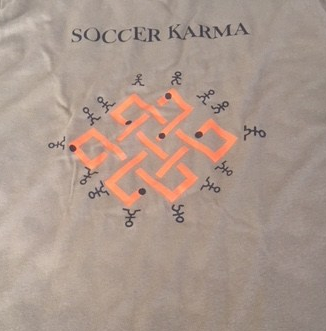 Our beliefs tend to color or almost define our worlds. The thoughts that we hold most dear are the filters through which we cyphon our experiences and produce meaning. Recognizing this would make one think that people would be deliberate in the creation of their beliefs. Unfortunately this is rarely true. People’s beliefs are often a mismatch of heritage and circumstances. This haphazard approach is bound to lead to disaster more often than not. I’m not here to offer a complete belief system but rather one small sample: Soccer Karma!
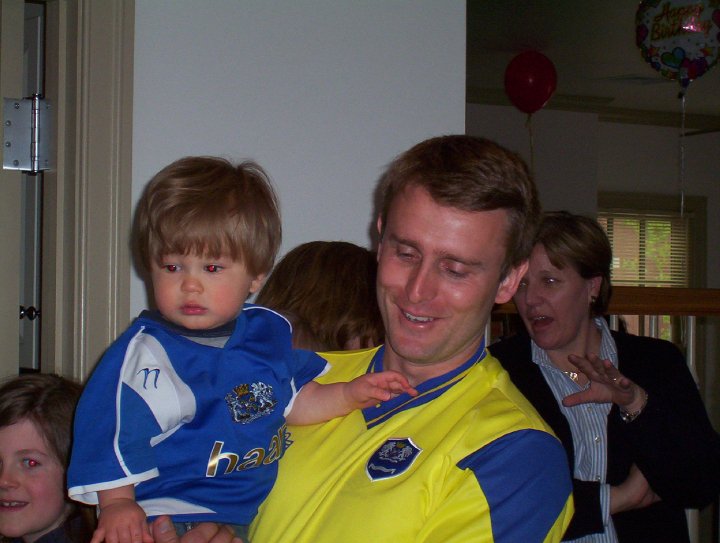 After playing the game with the POSH for a while, I decided to look into how the team was in real life. It was very casual at first but the season they got into a relegation battle really drew me in. After that I followed the team regularly online by reading the match reports and checking Skysports.com. The POSH forum at LondonRoad.net was another way that I got information relevant to the club. The slow burn of my love for POSH got a large log thrown upon it in September of 2006 when Darragh MacAnthony became chairman of the club. He stated that his ambition was to do exactly what I had done in the video game world. If I wasn’t hooked before, I was all in at that point. My newborn son had a full kit and I wore POSH blue (or bright yellow) regularly. In addition to game days, I wore the POSH colors whenever I ran long distance races.
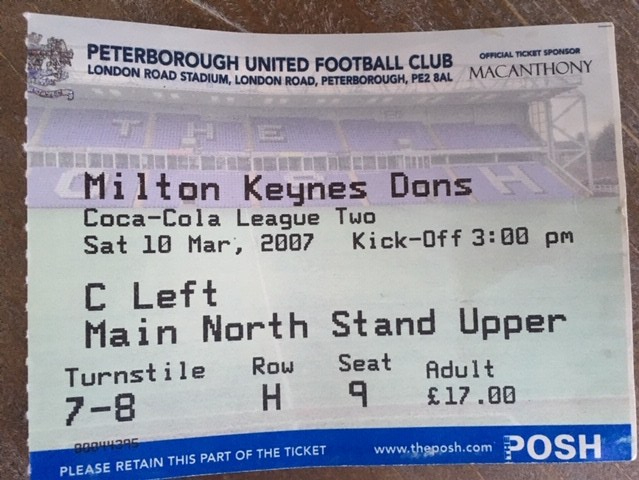 In 2007 I decided that it was time to visit London Road to attend a match. It was possibly the most frugally planned trip that I could arrange. I was in England for three nights including one in a basement room of a one star hotel in London. It was an amazing trip! The main reasons that the trip was amazing were all POSH related. The team beat MK Dons 4-0 despite Shane Blackett getting sent off in the second half. After the match, I waited around for autographs from the players and coaches. Shwan Jalal and Craig Mackail-Smith were particularly nice to me. Unfortunately I did not get to meet the new manager, Darren Ferguson. At that moment, I mainly knew him as Sir Alex’s son. Eventually he would become one of the best POSH managers by putting Darragh’s plan for promotion into effect. By signing ambitious young players and putting them into a system that created boatloads of goals, he has become my favorite manager.
 In this episode, Peter Loge and I have a wide-ranging conversation on soccer’s many uses as a metaphor. Peter is the author of “Soccer Thinking for Management Success.” Throughout the book, he discusses several different ways that soccer overlaps with management concepts. Check out his work at
  Donna Fishter is a Leadership Coach and Team Architect who works with athletes and coaches in order to make their teams better. In this conversation we cover some of the ingredients of good leadership, red flags and remedies for poor team chemistry as well as an assortment of other topics. You can find Big D at
  Brian White was the first draft pick taken by the New York Red Bulls in the 2018 MLS Draft. In this conversation we talk about some of the things that set him apart as an athlete and the transition to life as a professional athlete.
 This episode I got the chance to talk to Brad Nein, Coach and Blogger who works with kids and coaches in order to make a better experience of soccer. We discuss his beginnings, his dissertation and many other topics. To find out more about Brad and what he does, go to
  It’s far off in the future but it will be here in a developmental instant. Although the World Cup of 2026 is almost a decade away, the present is the only place where we can impact the future. Recognizing that Christian Pulisic and Tyler Adams may be the “veterans” of that team gives the extremely realistic picture that while our future could be bright, it is in our best interest to make it brighter. The loftier heights of the sport world are not reached by the individual but rather by a cultural movement that serves as a base to raise the many. So the US soccer world needs to realize that it’s chess, not kick ball.
 Head Coach, Evan Weller, has been building the soccer program at Phillipsburg High School for the past 16 years. This conversation highlights some of the components to their success and thoughts beyond the lines of the field.
 In this brief solo talk, I discuss some of the things that I believe are being missed in our current soccer culture. Even they may be the most pressing and most apparent, they seem to be the most overlooked. Send in your thoughts and questions to
