Blogpost, self-reliance, SoccerLifeBalance

Climbing the Pyramid with a Parachute

It was a true pleasure to watch the US Men’s National Team dismantle El Salvador last night in their match. Although the game was a friendly and El Salvador was not at full strength, this is the type of result that one would expect from a sport obsessed nation when competing against a country one fiftieth its size. As Iceland has proven beyond the shadow of a doubt, population is not truly relevant when judging a footballing nation. However the numbers simply provide a context for the available talent pool. Even with the competition from the other major US sports, more people play soccer in the US than the entire population of El Salvador. Seeing a tangible result to all of the shifts in US soccer over the past decade was refreshing. Despite my joy in seeing the young squad of US player, it has made me think about the collateral damage of a system that needs to cast aside over 99% of individuals to find those special few.

The US soccer pyramid is not truly a pyramid as it has several dysfunctions and offshoots. However due to the lack of a better term, we’ll refer to it as a pyramid. The structure itself is not completely relevant to the discussion.

The collateral damage that I am referring to is not unique to the US, nor is it new. A youth player from the Manchester City academy committed suicide earlier this year. This is the most extreme example of the ways in which young players can be affected by their fall from the soccer pyramid. Every year young players and old are given their release from a club. Sometimes it is simply a move to a different club or different level. Unfortunately when the ultimate decision is made that a player is no longer “good enough” at their particular level of the soccer pyramid, the fall can be devastating if they are not prepared.

In the United States, the academy system is in its relative infancy compared to the rest of the world. The college system used to be the route to the professional game and with it came an education which served as a “back up plan.” Even with that “back up plan” in place, I’m not sure that it deals with the most pressing issue. A player who has devoted over a decade to the dream of “making it” in soccer (however they would define it) needs to have the psychological tools to deal with that disappointment. A parachute can be a literal lifesaver when falling from high heights but it needs to be strapped on tight before the fall.

The following items are some suggestions that can be packed into the psychological parachute for players in case they fall off the pyramid.

  • A diversified identity – Although we are all only one person, we tend to have different roles that we play within our lives. A person with a singular focus like professional athletics can tend to have tunnel vision on that identity. Developing other aspects of one’s life can not only help in the case of a fall but also allow for the release of pressure during their career. Although this identity includes how the individual interacts with the outside world, it is also extremely important that he/she recognize these other identities inside of his/her own mind. The trauma of losing a part of one’s life is much worse if it is the only part that mattered. That void will need to be filled with something and the easiest things to fill a void with are usually destructive.
  • Quality self-talk – There are many ways that this could be characterized but the heart of the issue is that there is only one person that we spend our entire life with: ourselves. Therefore it is extremely important that we make that person who is living inside of our own heads a friend. Learning how to communicate effectively with yourself is crucial to the building and maintenance of self-esteem. For some reason it seems to me that “esteem” gets overshadowed in that compound word. Esteem is a pretty lofty opinion of someone. It should be something that we can bestow onto ourselves with our words and actions.
  • Quality relationships – Again this is something that needs to be packed in the parachute before the fall. People are less likely to help when they feel that they are being used. Friends and family are key components to our psychological well being. The bonds that we have with the people that we value in our lives releases oxytocin which lowers stress (cortisol) and inhibits addiction. If these types of relationships are not well in place before falling from the pyramid, the stress of “not knowing who to trust” can exacerbate an already difficult situation.
  • Physiological hooks – The body is an amazing antidote to most things that ail the mind. While my hope would be that a player of high caliber would understand how to change her/his state for games or practices, it may be less evident to use these tools when “the walls have tumbled down.” Disappointment, embarrassment, depression and a host of other emotional states may be easier to fall into after the end of a career. Recognizing the control that each of us has over our emotional state through our posture, habitual movements, facial expressions and others is a skill that every individual should develop. This is not a sports skill. It’s a life skill! Creating our emotional state is our job because when it is left up to the world, we are bound to be disappointed by the outcome.

This list is far from exhaustive. However it does begin the conversation about the psychological tools that we all should develop. In this hyper-intense world of high level soccer, it is easy to be so focused on a singular outcome that these tools do not get developed. Unlike the college education which was viewed as a “back up plan,” psychological well being should be THE PLAN for all of us in order to make our journey through life an enjoyable one.

Go pack your chute!

Pete

Blogpost, self-reliance

The Money Pit

Before Tom Hanks was an award winning actor, he played leading roles in several quirky comedies. Movies like Bachelor Party, Dragnet and The Money Pit were not the cinematic triumphs that a modern audience expect from him. However they (and TV shows like Bosom Buddies) were a proving ground for him to hone his craft. The reason that I bring up The Money Pit is that it’s not a great movie but it illustrates the point.

The Money Pit stars Tom Hanks and Shelley Long. They play a couple who decide to buy a house together. After buying the house, it quickly falls apart.The house falling apart is only one of the problems. A construction company is brought in to fix the problems. Tom’s character is told that it will take “two weeks” to make all of the repairs. Months later as he and Shelley’s character move closer toward a breakup, the house is a dumpster fire. Tom is asked by a variety of people if they are “testing missiles” at the house. In the end, it all comes together. The house and his relationship are both fixed by the end of the movie.

This movie is the story of any big endeavor. At the beginning, everything looks like its going to be great. Progressively though, challenges keep on surfacing. The promise of quick results is obviously a lie but you want to believe it. After months or possibly years of trials and tribulation, you have gained traction. The one issue is that you’re not guaranteed the happy ending. The struggle is the only thing that you can count on.

Tom Hanks starred in the Money Pit at the start of his career. It wasn’t destined that he was going to be the actor that we know today. He had to continue to show up in movies and TV shows, getting incrementally better. All of his movies are not box office hits, there are many duds in there. However we see these types of people and because we don’t see the struggle, we assume it was easy for them. It’s almost never easy for anyone! We all fall into the pit (money or otherwise) at some point. The question is whether or not we stay there.

Jump in!

Pete

Blogpost, self-reliance

The Lies You Tell… Yourself

It’s something that we all do at one time or another. Whether it is about that New Year’s resolution that you’re going to keep this year or something much deeper, our lives are lived from a particular point of view. Therefore when compared to the objective 100% truth, there are many times where we’re lying to ourselves.

When I looked up synonyms for the word lie, there is fib, fabrication, deception, falsification, invention, fiction, exaggeration, misinformation and the list goes on. This list gives many different levels of untruth to employ. So many shades of grey where the truth and the lie could easily be mistaken for one another. I’ll leave that middle ground up to you.

The lie that I want you to tell yourself is about that thing that is in the center of your being. That goal, desire or objective that you’re afraid to say out-loud because just the mention of it put tingles up your spine. The most naked truth about who it is that you want to be and I want you to tell yourself that it is going to happen. Not in some magical or mystical Disney movie type of way. Tell yourself that it is going to happen and that you need to make it happen through possibly years of slog and failure. But in the end you will get what it is that you’re looking for. Take a moment and with no regret, falsify, fabricate, deceive yourself into believing that it has to happen.

Then decide. Decide if the life that you live right now is any more satisfying than the lie. If it isn’t then it’s time to get to work. Every single person, who has done something great, had to make this type of decision. Greatness does not spring out of sensibility. It comes from being unreasonable. No matter if the entire world is telling you that you can’t do it, stand up tall with a straight face and say “I can!” Just recognize the fact that until you do, you’re a liar. And that’s ok!

Your pants are on fire!

Pete

Blogpost, self-reliance

Don’t Read the Directions

I’m pretty positive that I’ve never read the directions to a video game before I played it. The closest that I would have come would be Halo, where you have to go through the tutorial first, which was fine. As a kid growing up in the 80s, you would start to play and figure it out. From time to time, a friend would give a piece of information that would help you to beat a level. However it was basically all trial and error before you had infinite lives and cheat codes. Despite the fact that I’m going into my 45th* year on this planet, I’m going to hold to my childhood ethos of not reading the directions with one exception. Write your directions and read those!

As per usual, I’m not talking video games anymore. We should all get into the trial and error ethos for parts of our lives. However eventually, you pick up a nugget of truth that you should act on regularly but you don’t. The reason that you don’t is because you get distracted by one thing or another. In today’s world, distraction is almost a way of life. So writing down your own directions is not just a good idea, it’s probably 100% necessary.

Here are some questions that you may want to answer about your character as he or she heads out on the adventure.

  • What is valuable to you? To Mario, it’s coins, mushrooms, flowers, etc. A green mushroom is worth 100 coins and if you don’t know that, then you’re not paying attention.
  • What is your power? Pac Man could eat dot and ghost like no ones business. Little Mac was a little boxer with big dreams.
  • How do you get more life or power? Link had to collect hearts to stay alive and got containers to hold more.
  • What drains your life or power? If you are stuck in the video game mindset, now is the time to switch over. The things that drain you are important to identify. They could be hiding inside of a daily habit.

Those questions do not represent everything that you should consider but it is a start. Life may not always feel like a game but many parts of it work that way. At bare minimum, it may be helpful to identify how you can win on a daily basis. If you’ve been sold on a system that has you losing more often then you win, it is time to reprogram!

Power up!

Pete

*I officially declared myself a Martian a few years back. So according Martian years, I am 23 years old, turning 24 in 63 days.

Blogpost, self-reliance

All You Can’t See

In non-Covid times, my brother and I would go on an annual Appalachian Trail hike. The beautiful views, camaraderie and reconnection with nature were all good reasons to embark on the hike. One very good reason not to go is the first mile of the hike. It is almost all directly uphill that slopes at 25-45% degrees. It is the hardest part of the hike and it is right at the beginning. Once you get to the top, the world opens up in front of you and you can see for miles into Pennsylvania and New York State. It is truly magnificent! The remainder of the 20+ mile hike is far from easy but it is lined with intermittent views that consistently leave you in awe. The bulk of the price that is paid for those views upfront.

This is a concept that is peppered throughout our lives. Many of the rewards that we are looking for are hidden at the tops of steep climbs. From the bottom, it is impossible to see what the effort will produce for you. However it is plain to see the struggle, difficulty and labor in front of you. So most people don’t start climbing. Having been up that mountain several times, I know the payoff that is coming. In many of the situations that we encounter in life, the payoff is less than guaranteed. The secondary problem is that those endeavors also usually require something that you’ve never done before. This is again will stop many people before they start.

The things that can’t be seen before the start are all of the reasons to begin. The possible rewards are surely something. More importantly is the person that you become at the end of that path. While it’s easy to view ourselves as static individuals, we aren’t. You are a totally different person than you were five, ten, fifteen years ago. Keeping that in mind is crucial. Who will you be five years from now based on deciding to “ascend” or not? There is no doubt that either way, you will still be you. However the paths that you choose will impact what version of yourself shows up. Don’t just look up the mountain and see the climb. See yourself on top and envision how much more of your best self will be available from there.

See you at the top!

Pete

Blogpost, self-reliance

Fealty and Fidelity

Language is something that has intrigued me for almost my entire life. I remember distinctly wondering why the change of one letter could get me into trouble. Changing a singular letter in the word “duck” could get my butt beat. Although I didn’t understand the why behind it at the time, I definitely understood the importance of words and getting the words right. Despite the importance of words, we live in a world where there is so much information coming at us that we tend to only take in small chunks of it. Even before this information overload, there were several experiments where letters in the middle of words were jumbled to see if people could still read them. It turned out that as long as the first letter or two and the last letter or two were correct, the text was “readable.”

Whether you share my fascination with language or not, the words that you use to describe yourself and your world matter. Your brain is an extremely complex super computer that can produce astounding results for you, if you program it correctly. The problem is that many of us are consistently shoving poor programming into our minds. Not through any form of malice or contempt, simply due to routine, culture or laziness. Listen the next time that you ask someone “How are you?” You’ll hear a variety of answers that people use automatically. The problem isn’t that the answer is automatic. The issue is the content of what they say is impacting their disposition toward their present situation. “Fine” “Not bad” “Surviving” What the f#@%!?!?!? This exchange is so extremely low stakes as a conversation. The person who is asking may or may not care what the answer is. However YOUR BRAIN IS LISTENING! It heard you just say that you’re “surviving” and it takes that message semi-seriously. Now that super computer can send you all kinds of information to back up that assertion. It can send you pain in body parts or turn your focus to the unfortunate circumstances in your life rather than the great ones. Your brain is your servant and it’s only doing what you tell it to do.

Most of us have not lived life with servants. It’s less common than it was centuries ago. In the past, kings and other members of the ruling class had people who were loyal to them. Or rather they had fealty, a loyalty that was usually associated with living on the king’s land. While fealty is loyalty, it would often come from force rather than choice.

On the other hand there is fidelity. Only a few letters difference but conceptually huge. Fidelity is loyalty by choice. The person serves because they want to rather than are obliged to. Given the choice, which form of loyalty would you rather give to others or have from others? My personal preference would be to give/have fidelity.

Now think of that servant inside of your head. Is it exhausted by the thoughts that you force upon it? Has your routine, culture or laziness condemned your mind to living on the scraps of your poor perspective? Is your poor self-image an inheritance from past events or is it a daily tax that you’ve imposed because you’re afraid to forgive yourself for anything? The quote “The mind is an excellent servant but a terrible master” brings the entire idea into focus. Our mind should be our servant but we should be looking for its fidelity rather than fealty. A servant who chooses to serve will go out of his/her way to improve the life of the master. The one who is forced to serve will only do what is necessary to avoid punishment. Be a good master today and win your own fidelity. Then do the same with others.

Have a great day!

Pete

Blogpost, self-reliance

Kill the Deer or Plow the Field

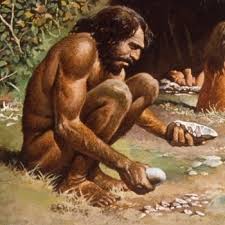
No one can deny that we’re a long way from our ancestors. A caveman would be completely baffled by our world. Even our relatives from 100 years ago would find our confusing. Things that they would have considered challenges have been completely conquered. While things that we consider relevant would be laughably inconsequential to them. At the tip of the spear of time, survival is much less of a concern than it has ever been even in a pandemic. Despite the huge difference between our worlds, we exist with basically the same hardware as our ancestors inside of our heads.

Mother nature was smart when she set up the human animal. We are wired to get pleasure out of the things that are going to keep us alive. It’s almost comical that now that we don’t have to “survive” as much, many of those joyous things are the ones that are killing us. But I digress. Historically speaking, humans have been largely hunters or farmers/gatherers. Keeping the simplicity of this in mind, recognize that these are two different skill sets. Both require a form of patience but one is more active. Tracking and hunting often took days. Planting and harvesting took months. Both take skills. Some that were innate and others that were learned. Despite never having experienced our modern perception of a computer, our ancestors had both an operating system and “apps.”

By looking at it in a similar fashion, you need to realize that you have a similar operating system. However the applications that you’re running, don’t always work well with the system. Things tend to develop glitches when your apps don’t align with your basic programming (no computer language pun intended).

Your body/mind want to survive: physically, mentally and socially. Keeping this in mind is important. Even though you’re unlikely to perish in your day to day existence, your basic programming is still trying to avoid it. So whatever problem it is that you’re having, it is probably a disconnect between your modern life and your body/mind’s prehistoric programming.

That assignment or paper that you’re avoiding. It’s not a bear or a lion or even chipmunk but it still causes fear. Not because it is going to kill you. It’s a disconnect between your modern view of school and your prehistoric brain’s need to live in a tribe. If you do something that offends the chief or hurts the tribe, you might be banished and you’ll never make it alone. It’s the possibility of planting seeds that you need for the winter and a drought coming.

The extra pounds that you’ve put on are a disconnect between your modern sense of “attractive” and your prehistoric mind’s need to take on calories whenever they’re available. Set up a system for getting food after a successful “hunt.” Remember that chasing down a deer might have taken days. So our ancestors were probably working on light food until they hit the big score.

Regardless of what you’re struggling with, there is most likely a portion of it that can be traced to a mismatch of your operating system with the world that we live in. On the one hand, this is slightly annoying. On the other, it is liberating. Freedom can be found in the fact that you’re almost never in as much danger as your brain is interpreting. So you’re starting from a place major advantage. Knowing what signals to ignore and how to leverage the helpful ones is your job as a modern day human. Set your mind up so that you can win the ancient game of survival that you’re playing.

Good hunting!

Pete

Blogpost, self-reliance

The Test Is Never Tomorrow

Although I’ve been a teacher for almost two decades, I’m not a huge believer in many of the standard operating procedures that we associate with school. We live in a world with rules and norms that are very different from the ones that we learn in school. This is not an indictment of the education system. There is still a reason for the system to exist and although it could be improved, we don’t seem to be able to agree on how to pivot. My point is actually on a much more personal level. For each and every one of us, the test is never tomorrow. It’s right now.

In school we are usually moving toward some form of informational crescendo where we will have a quiz, test or exam. Eventually we amass enough of these to warrant a graduation or certification. The documents that we accept are a proof of past knowledge. Passing a test on the War of 1812 would be pretty tough at the moment. However we’ve accepted this system to give ourselves titles of high school graduate, bachelor, or PHD. No matter whether we passed with flying colors or barely scraped by, we still hold the title. It is part of our identity and helps to form beliefs about who we are.

Each and every one of us has a variety of identities that we would use to classify ourselves. I’m a father, husband, teacher, coach, blogger, author, speaker, uncle, etc. Depending on the moment, I could be filling any one of those roles. Let’s dissect this, starting from the base and working our way up.

  • When I am being a coach, it’s possible that I’m 100% ignoring my role as an uncle. Does that mean that I’m a horrible uncle? No, just like in school, it’s possible to take multiple classes in order to be “well rounded” while majoring in other things. If I only had one role for myself, that role would get boring quickly.
  • Following along from the point above. Even though diversification of roles is important to stave off boredom, your attitude toward each role is going to usually determine your success more than your aptitude. A soccer player who pours his/her heart and soul into training and matches will often get farther than a similar level one who sees it as drudgery. (Another reason to revamp school)
  • The next step up is that very few of the tests in life are going to be based on extremely predictable information that we are just regurgitating from past situations. We need to interpret new circumstances and apply past knowledge while adapting with changes. It’s almost never multiple choice. Usually it’s multiple intertwined problems that we’ve never seen before and people are watching while we work.
  • Life’s tests are almost always “pop quizzes.” You’re rarely going to know when they are coming up. They are almost never representations of our cumulative knowledge in an area. Little combinations of information and skill are needed to navigate situations. There is almost no way to predict what tests are coming your way and what will be on them. There is no curve and often, you’ll never truly know if you passed or failed.

Life is less like school and more like juggling. You don’t pass or win at juggling. Invariably everything is going to fall down at some point. Some objects that you are trying to keep up will be more fragile or heavy. The only way to get better at juggling is to juggle, to chance the missteps and off balance situations. The performance and the practice are the same exact thing except one has an audience. Ultimately many of the variables can be changed but you are the constant. If you drop everything, it’s on you to pick up the pieces and start again. A teacher can tell you how to be a better juggler but it’s on you to make the throws.

This long post really only has one point. Now and you are all that you have. If you’re not ready for the tests/pins/bowling balls that life is throwing at you, then you need to use this moment to practice for the next time. Don’t expect it to be easy or that you’ll get extra time or extra help. If they come, great but they’re not a given, this isn’t school!

Practice and perform! You can do it!

Pete

Blogpost, self-reliance

How to be a superhero TODAY!

Superheroes vary in size, powers, intelligence many other factors. However there are some generalizations that we can make about superheroes. These will not be all encompassing but they are useful for a conversation.

  1. Superheroes (generally) put the good of the masses/others above their own.
  2. Superheroes are held in high esteem by people.
  3. Superheroes often have a secret identity that keeps them from getting “credit”.
  4. Superheroes have an origin story. It’s usually not a happy tale.
  5. Superheroes have flaws or something that undermines their power (kryptonite).
  6. Superheroes have a special power or powers.

So if you look up and down that list, it’s possible that you’ve already seen what I want you to see. The difference between a superhero and you is not radiation, toxic waste, better parents or anything of the sort. The difference comes down to basically two major ingredients: decisions and perspective.

Your decisions are the major difference between you and a superhero at this moment. Someone can choose to be more than halfway to superhero status simply by making a few changes.

  1. Choosing to put the good of others above your own is something that you can choose to do today. It does not have to be the world or a nation or a city. It could be your family or friends.
  2. By making that decision, it is highly probable that people will hold you in high esteem.
  3. It completely possible for you to do good for other people who will never know your name or possibly even ever see you act. Despite the fact that credit feels good, it is completely possible to feel good without the credit.
  4. Your story is good enough as it is. You can decide to do great things today. The radioactive spider or near death experience are not necessary. Start where you are and figure out the story later.
  5. Each of us has our flaws and most likely you’re judging yourself harshly for yours. Would you judge Superman for being weakened by Kryptonite? Even better for you is that you can work on your flaws.
  6. This final piece is one of perception. What do you perceive as special? Again, due to your proximity to yourself, you have most likely undervalued one or more of your abilities. My mother is an exceptional baker. That can be a super power when given the correct perspective and leverage. If you don’t have that thing yet, there is no reason why you can’t develop it.

Decisions and perspective are the obstacles between you and being a superhero. You can start your journey today! No one can stop you! The number of super villains in your world is probably pretty low. So get started today!

Have a super day!

Pete

Blogpost, self-reliance

Tip the Balance

Parents are preprogrammed to be proud of their children. It’s only natural that there should be that bias. At one point or another, we have all listened to a parent gush over their child’s big or small accomplishment. It may be annoying to people on the outside but it makes perfect sense. The scale between pride and disappointment is naturally weighted toward a parent’s pride.

Conversely our own pride and disappointment scale seems to be weighted in the other direction. It is often easier be disappointed in ourselves rather than proud. Since we spend every moment with ourselves and know our every thought and shortcoming, it makes sense that our “pride scale” might be weighted toward disappointment. This doesn’t mean that it’s helpful or the way that it should be. So it is your job to TIP THE BALANCE. This does not mean that you should feel proud of yourself for everything you do. Sometimes disappointment is exactly what the doctor ordered. My suggestion is that you celebrate your successes just a bit more. Allow yourself to get on a roll because the other option is a little scary.

We tend to avoid actions that are associated with negative emotions such as pain, embarrassment or disappointment. Generally speaking to reach even the most modest forms of success, some pain, embarrassment or disappointment is necessary. So avoiding the actions that create negative emotions and having a scale tipped toward them is a recipe for disaster.

Feel free to use this clip as a response to anyone who belittles your accomplishments. Maybe even you!

So celebrate yourself when you do something good. We’ve each got our own level. Getting out of bed and showing up to work on time may be your success for now. Or maybe you’re trying to break the world record for pull-ups and have failed twice. Give yourself a break because most people aren’t even trying that. The internet and social media have plenty of people for you to compare yourself to in order to undermine what we’ve just talked about. F$%& THEM! You’re you! Measure yourself based on your own standards. If you were still 5 years old, your mom would be bragging to everyone about how you stopped wetting the bed. So look at yourself through the most caring eyes that you can imagine. Get out there and start doing things. Some of it will work out and some won’t. Regardless, you have the potential to be one hell of a person. Just give yourself a break if you’re not yet!

I’m proud of you! Go make it happen!

Pete