While a draw to the league leaders may be an acceptable result for the day, the continued issues with defensive set pieces are anything but acceptable. The POSH statistics on defending set pieces are anything but impressive. It is an issue that is well known to the players and coaching staff. Regardless of the statistical analysis, numbers alone don’t change behavior.
The video of Lincoln’s goal from the corner kick is difficult to watch but indicative of the grander issue at hand. The cross deflects off our flatfooted captain and goes to a player at the back post who has been left by his marker. While it would be easy to point the finger at those two players, it could have easily been anyone else. Most of the POSH players look flatfooted on the play. Although some might say that a change needs to be made in the defensive set up on set pieces, my viewpoint would be that there needs to be a change in the story the team tells itself about defending set pieces.

Behavior does not change on its own, in an individual or a group. There are many ways to change behavior and one is through fear. The number of goals given up on set pieces creates a sense of fear when they happen. While fear can change behavior, it brings with it a lot of baggage. The fight, flight or freeze response can be triggered by fear and “flatfootedness” might be representative of this issue. At the moment, the players have a story running in their head about “not getting scored on.” That focus does not tap into the positive emotions that get better results. So what should be done? Flip the script.
POSH is perennially a goal scoring juggernaut. It’s part of the manager’s, team’s, club’s owners’ ethos to be forward thinking. From the type of players that we buy/produce to the school initiative, POSH is always looking to be on the front foot. So the posture of flatfooted and defensive does not suit our mindset. My suggestion is this. Whenever there is a set piece against us, the players need to get EXCITED! That’s right I said excited.
While a set piece in our end may seem like an opportunity for the other team, it creates opportunity for us as well. The field is about as wide open as it will ever be in a game. Center backs are brought forward leaving a skeleton defense at the midfield with one of our forwards. So rather than focusing on how to keep the ball out of our goal. Focus on what we’re going to do with it when we win it back. Create breakout plays from defensive set pieces to put us on the front foot. Then each player’s mindset is not, “I need to keep my mark from scoring.” It becomes “where am I putting the ball when I win it? Because we could score from this.” It’s obviously based on the pressing strategy in the final third that Ferguson has at least subconsciously sold the idea that “defense scores goals.” He’s absolutely right and the final third is not the only place that this is true. It’s true all over the field because in order to score we need the ball. Telling a different story about the situation changes the players’ internal dialogues and focus at these times of high stress.
The POSH go forward. That’s who they are as a team. This subtle tweak just puts them back on the front foot rather than being fearful and flat. Get excited because a goal at the other end is 20 seconds or less away! We have the speed and the players to do it. Now all they need to do is believe!
Up the POSH!
Pete
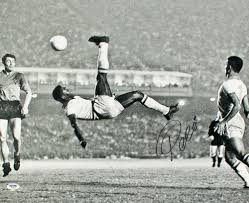 Talent is coveted, scouted, poached and revered in this country. It often comes with an extremely high price tag. That price is monetary in the professional ranks. However at the lower levels, the price of talent is far too often the possibility of teamwork. At times this comes from jealousy of teammates. Unfortunately it is more frequently a result of trading team ethos for star power. It may get results but are they the right ones and for how long?
 It’s something that every single one of us went through at one point or another. The hard-wiring is built deep within us based on our ancestors’ need to survive. Fear of the dark, unknown, bumps in the night, the boogeyman and the like are so natural that I do not blame anyone for that response. Even at the ripe age of 41, I still have that response to some situations. Even though I know that this is to a certain extent instinctual, it is possible to train it out. I no longer check for monsters under my bed at night. The question on my brain tonight is, would it be possible (and advantageous) to not only train the fear out but instill a sense of dominance over the monsters?
 The trilogy is not truly the king of cinema but rather stack-able stories. There’s no magical power to the number three. The key component to the greatest movie series is the way that the stories fit together and one movie can be catapulted based on the strengths of its predecessor. While I’m a huge movie fan and have been since my childhood, there is something that’s missing from the great movies that are being released today. Kids aren’t stacking them into their own lives.
 Huryk Unlimited