It was proposed as a thought experiment at a coaching course that I attended. The coaches in attendance were asked to imagine that another coach at their club show up to every practice smoking a cigarette. What should be done? The answers ranged from removing the coach completely to a discussion about appropriate behavior. Then the coaches were asked to consider what actions should be taken if a coach is overweight. The prompt was used to spark debate among the participants. I was reminded of this last night when one of my favorite pundits mentioned on Twitter that it bothers him when professional managers are unfit. He got a large number of negative comments and I think deleted the tweet. My intent is not to start a huge debate nor to get lambasted on Twitter. More than anything, I’m looking to unpack this idea with a bit more than 140 characters (or however many it is now).

A coach’s job is to influence her/his players regardless of the level. Whenever thinking about the subject, I always consider Robert Cialdini’s book “Influence.” It breaks people’s ability to persuade into six principles: Reciprocity, Commitment/Consistency, Social Proof, Authority, Liking, and Scarcity. Although it is not the end all be all to influence, it creates a simple model for dissecting people’s ability to persuade.
Taking the discussion back to coaches, making a blanket statement about any one characteristic being bad or good is probably inaccurate. The question becomes whether or not the coach is able to achieve desired outcomes with her/his players. In the professional ranks, the desired result is more victories than defeats. At the youth level it could be a variety of things: skill development, character building, physical fitness, or a variety of other possible outcomes.
The professional coach is the easier discussion. Does it matter if a professional coach is overweight? Probably not. As long as she/he is performing at a level commensurate with the desires of the club management, then it isn’t all that relevant. Players who are at or near their athletic peak will not particularly be looking to their coach to be a physical role model. It may help or hinder their ability to influence their players in specific area around diet and fitness. However other authorities can be brought in to handle that aspect. It’s the wielding of the other principles of influence in other areas that determine the worth of a professional coach.
The discussion of a youth coach brings in a multitude of variables that muddy the waters. Youth coaches can be role models to their players on a variety levels. Their appearance is a form of social proof. A message that is subliminally received is “at a certain point in adulthood, exercise/fitness is not as much of a priority.” The amount to which that aspect will influence is unknowable considering all of the other influences in children’s lives. Our fast food culture is much more complicit in that area than any one individual. Hopefully an overweight coach is delivering in a variety of other ways that influence the players in a positive manner. Reducing a coach down to one characteristic is not a fair estimation of their overall value. So a fat coach does not make a bad coach. Nor does a slender coach make a good one.
The final bit of consideration that I would offer here is a revisit to the 6 principles of influence. Although I believe that people can be over weight and be a good coach, I’m overweight at the moment and I’ll leave the other part up to my players. The idea I’d like to visit is, can any of us be the best coach that we can be while carrying around that extra bit of ourselves? We ask our players regularly to give their best to the team but do we respond in kind?
Reciprocity – Is it possible to give back to our young players the energy, enthusiasm and effort that they put in?
Consistency/Commitment – Are we staying consistent with the values that we profess to our teams about the importance of fitness and commitment to the team? Perhaps a team looks a lot more like a family.
Social proof – Are we adding to an already broken cultural model of what adulthood looks like?
Authority – Are we harkening back to a “do as I say, not as I do” ethos of leadership? Because if we know what’s best, then why aren’t we doing better?
Liking – Do we like ourselves enough to have people emulate us? It’s an interesting question.
Scarcity – There is a shelf life on this existence that we have. Should the message be that we are trying to conserve the precious resource of time through better decisions or toss it with all of the other disposable things in this world?
All of these questions have personal answers. Blanket statements rarely work. The only thing that I’m sure a coach should never be is abusive. Beyond that, the shades of grey are infinite. Each of us must look ourselves in the mirror and also imagine the view of us from the people that we coach. If you like what you see, carry on. If not, then change. No one is going to force it on you because they have their own baggage. As a coach, you are intended to be a leader. The most important person for all of us to lead is ourselves!
Team on 7! 1, 2, 3, 4, 5, 6, 7, TEAM!
Pete

 It’s that time of year again where I make my trip to whatever city is hosting the United Soccer Coaches (former NSCAA) Convention. It is great to spend 4-5 days talking, thinking and learning about soccer. If this is your first time or you’ve never gone, here are some ideas on how to get the most out of the Convention.
 It was a big deal! I remember it very plainly. My parents, brothers and I would all sit down with popcorn and watch “The Wizard of Oz”. It was an annual occasion. The movie is definitely a classic but I think that the ritual and nostalgia factor make it a little more important for me. Despite being released in 1939, the story stands the test of time. A young girl has a magical adventure that ends up being a dream but she learns that her search to distant lands led her back to the home and people that really mattered in the first place. Most of the things that she desired or feared ended up being fake or easily defeated.
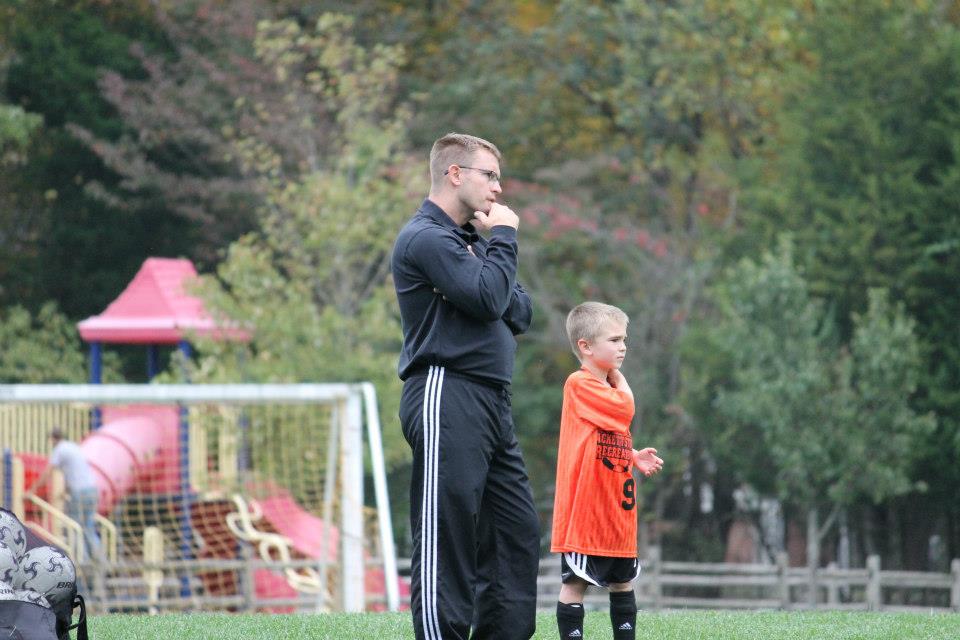 Soccer is an inherently simple game that has so much to offer to the people who play and watch it. The positives that it offers to young players are generally intrinsic rather than extrinsic. Physical fitness, self-confidence and camaraderie just to name a few. None of these positives require talent, tryouts or trainers, OH MY! In fact all three may inhibit the expansion of these intrinsic positives because they are all short term. Talent is relative and momentary. Tryouts make players commodities first and people second. Trainers are generally interested in the short-term improvement of skills in a very selective area. It is not that these things are without their place. However they should not be the silver bullets that are used to propel our young players forward. If the vast majority of youth soccer players are not going to end up in the top two tiers of involvement, then should we (the adults) be building the yellow brick road? Or finding our way back to Kansas?
 Huryk Unlimited