 At certain point in history, in particular parts of the world, the wealthiest people such as kings lived in castles. I’m sure many people have fantasized about living in a castle. The fantasy probably does not mirror the reality of what it was like hundreds of years ago. By comparison, the comforts of most of our modern day houses outshines castle living. Castles were made of cold stone without heat or air conditioning. Although they served as protection from the elements in some ways, there was no escaping the fact that survival was the order of the day and not comfort.
In the past month, I’ve challenged myself to take cold showers every morning. This has been an eye opening experience for a variety of reasons. Although I started it for a variety of health benefits, it has actually been the change in perspective that I’ve noticed the most. The key to making it through the cold exposure is control. Not control over the external world but control over the internal world. Recognition of the discomfort that you are in and finding a way to become comfortable with it is a revelation.
WE LIVED IN CASTLES! The wealthiest people used to live in a discomfort that we don’t really understand but they survived. The human body, mind and spirit are actually set up to endure much greater discomfort than we put ourselves through on a daily basis. The thing is that we’ve lured ourselves into the comfort trap. We’ve trapped ourselves into a 10 or even 5 degree window of comfort. It’s not the circumstance but rather our perspective on it that traps us. We believe that we cannot handle the discomfort, so we live as if it were true. The space between where you are and where you want to be is filled with the discomfort that you think you’re not ready for. So the question becomes, do you want to live in comfort of your present life or in the castle of your dreams? Neither of them requires your circumstances to change, the latter requires that you do!
Get moving!
Pete
 It’s odd the way that we think of things. Often an effective story is a much better tool for creating change than the actual 100% truth. I’ve run up the “Rocky Steps” in Philadelphia well over a dozen times. Each time I felt a sense of accomplishment and kinship with Rocky. The truth is of course that Rocky Balboa never truly existed and in that moment I’m play acting much like Stallone was in the 1970’s. Regardless of those facts, the story gets me to where I need to go more effectively. So my explanation below is not the 100% gospel truth but it is rather an effective way to exercise change.
 Geometry was probably one of the easiest classes for me in high school. Despite its relative ease, I had trouble staying engaged with it. I found it tedious to give all of the reasons why something was true. It was usually pretty obvious whether a problem was going to withstand the scrutiny of the different theorems that we were learning at the time. So it seemed like a relative waste to my teenage self to write out all of the steps in proving or disproving a problem. Especially when the answers (to the odd problems usually) were in the back of the book.
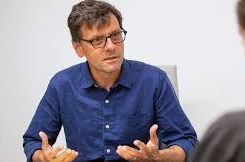 In this episode, Peter Loge and I have a wide-ranging conversation on soccer’s many uses as a metaphor. Peter is the author of “Soccer Thinking for Management Success.” Throughout the book, he discusses several different ways that soccer overlaps with management concepts. Check out his work at
 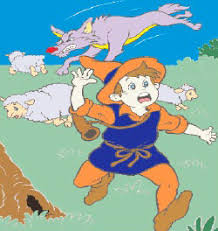 Cautionary tales like “The Boy Who Cried Wolf” seem to be less prevalent than in the past. Perhaps that is just my perception or my own implementation of life lessons to my kids. I remember exactly who told me this story and for what reason. It had the desired effect. In third grade, I would frequently “not feel well” in order to be sent down to the nurse’s office. Once my visits became frequent enough, the nurse recounted the story of the boy who cried wolf. My visits to her office became more legitimate.
 Donna Fishter is a Leadership Coach and Team Architect who works with athletes and coaches in order to make their teams better. In this conversation we cover some of the ingredients of good leadership, red flags and remedies for poor team chemistry as well as an assortment of other topics. You can find Big D at
  Brian White was the first draft pick taken by the New York Red Bulls in the 2018 MLS Draft. In this conversation we talk about some of the things that set him apart as an athlete and the transition to life as a professional athlete.
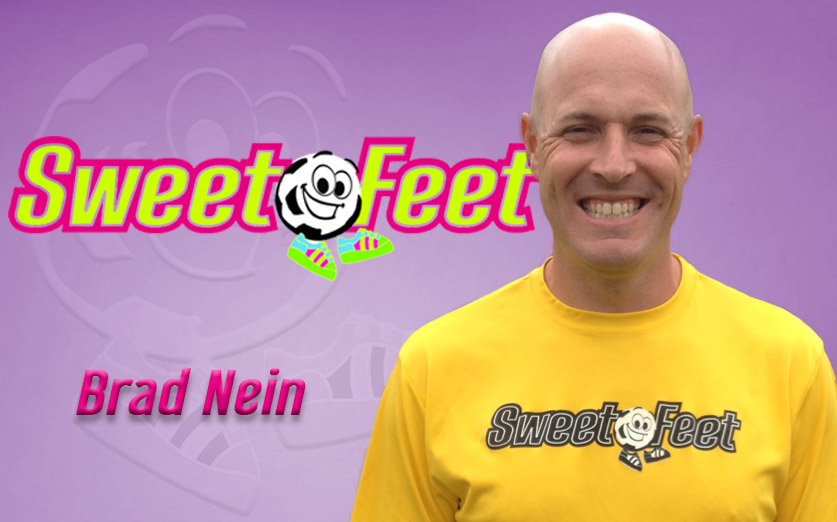 This episode I got the chance to talk to Brad Nein, Coach and Blogger who works with kids and coaches in order to make a better experience of soccer. We discuss his beginnings, his dissertation and many other topics. To find out more about Brad and what he does, go to
 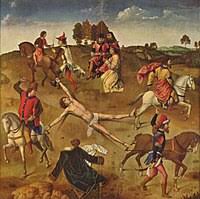 As recently as 1781, the practice of dismemberment was used. In the particular case I am referring, Tupac Amaru II (Incan King) was tied to four horses who were faced away from the victim and urged to run toward the four corners of the square. It was a brutal and painful way to die. Usually it was used as a way to “send a message” to other’s that would oppose the powers of the day. In the end, these forms of execution were abandoned by civilized society. I can’t even begin to imagine the immense pain felt by the victim and the horror of those who were watching.
 It’s far off in the future but it will be here in a developmental instant. Although the World Cup of 2026 is almost a decade away, the present is the only place where we can impact the future. Recognizing that Christian Pulisic and Tyler Adams may be the “veterans” of that team gives the extremely realistic picture that while our future could be bright, it is in our best interest to make it brighter. The loftier heights of the sport world are not reached by the individual but rather by a cultural movement that serves as a base to raise the many. So the US soccer world needs to realize that it’s chess, not kick ball.
