Blogpost, self-reliance

Upward Spirals

During my youth, I had the unique opportunity to visit the Statue of Liberty with my Boy Scout troop. At that time, a group of us decided to brave the ascent to the crown, a journey requiring us to conquer a long, ancient spiral staircase. I’ve seen images of renovated stairs, but back then, they were weathered and you could peer through the steps into the inner workings of Lady Liberty herself. Occasional resting platforms dotted the path, meant for those weary from the climb. But for someone like me, who’s afraid of heights, even the thought of stopping on those platforms was daunting.

As I ascended that stairwell, a worst-case scenario crossed my mind: What if someone tumbled backward while climbing? Packed tightly, one person’s misstep could spell disaster for all. My dizziness and nausea started to creep in. The only thing that kept me going was the fact that I was facing forward. If I did fall, I would land on my face on the steps, but at least I’d be okay. By the time I reached the crown, I barely took a glance at the view. As I turned around, my prior fear confronted me anew. The descent presented the same possibility of falling, but now I was facing that direction. For my younger self, it was a nerve-wracking and scary experience, and I despised every moment of that descent. So much so that I can’t even recall who convinced me to embark on this ordeal because it was precisely that bad.

Downward spirals in life can be equally nerve-wracking and terrifying. Things often seem normal at first, but then a series of setbacks starts to nudge you slightly off your upward trajectory. It’s like the gradual descent on that Statue of Liberty staircase. Your perspective gets faced away from your goal to the fear of a fall. However, it’s crucial to understand that the staircase itself isn’t wavering; it’s you.

In such moments, remember that you are not helpless. Take a breath. Pause and reflect on your path. Ask yourself if the “crown” you’re striving for is genuinely worth it. If it is, refocus on your goal and take the next step forward. Falling on your face while climbing upward is still not problematic.

Your fear of a fall can either be your enemy or your ally. When it encourages you to focus on the process and take each step carefully, it becomes your ally. But if it makes you nervous and causes you to freeze, then it’s your enemy. You have the power to choose how you perceive and utilize fear. Transform it into a driving force that keeps you grounded and aware of your journey.

And here’s a crucial perspective: If you’re going to fall (or fail), do so while moving forward. Every stumble is an opportunity to learn, to pick up new information, or to understand what doesn’t work. In essence, fall forward. Gain something from your missteps, even if it’s just the wisdom to navigate future challenges better.

So, as you navigate life’s spiral staircase that can be overwhelming, remember that you have the power to choose your perspective. The crown is within reach if you stay focused and resilient.

The difference between an upward and downward spiral is focus.

Pete

Blogpost, self-reliance

Let’s Get FAT!

I’m passionate about languages! They’re an agreement that we use to express ourselves to other people. They can stir emotions and ignite contemplation. In our daily lives, it’s easy to overlook the fact that many of the words we casually use have been around hundreds or even thousands of years. These words evolve, meanings shift, and their original connections can get obscured. This realization struck me during my morning run while engrossed in a podcast. The host mentioned a “fatal error” made by a business, and my mind fixated on the word “fatal,” leading me down a linguistic rabbit hole.

Within this word exploration, I stumbled upon five words that resonated: fate, fatigue, faith, fathom, and father. This intriguing word salad prompted me to reflect on the intricate processes we all navigate in life.

Every aspiration, project, vocation, or calling begins with a seed—the FATher. It’s the inception, the spark of an idea that ignites the journey. Once we embark, we must have FAiTh, for it serves as the relentless fuel propelling us forward—a belief in the unseen when evidence is scarce. Along this path, we encounter FATigue—the weariness inherent in the exhaustive effort required to bring our dreams to fruition.

Then there’s FATe—an element that appears preordained, unstoppable, simply meant to be. Fathom enters the scene, not just as a unit of measurement but as the quest for understanding, a vital component of our journey. Finally, we arrive at the word that initiated this linguistic adventure—FATal.

Delving into the origins of “FATal,” I discovered that in the late 14th century, it meant “decreed by fate.” It seems this word took a pessimistic turn over time, becoming synonymous with the one thing most deemed destined by fate—tragedy.

But what does all of this linguistic exploration mean for you and me?

We should all aspire to get FAT. Plant the seeds of our boldest dreams. Nurture them with unwavering FAiTh in their realization. Be prepared for the FATigue that will accompany the hard work. Acknowledge the hand of FATe, that which seems preordained. Seek to fathom the depths of understanding through your journey. And, whether for better or worse, don’t shy away from the FAtal aspects of life—those that feel fated.

Ultimately, we all reach an end, but if we’re willing to get FAT, perhaps our journey’s conclusion will align with our deepest desires. So, my message to you is simple: Go out there and get FAT today. Embrace the inception, the faith, the fatigue, the fate, the understanding, and even the seemingly fated, for they all play a part in our extraordinary journey.

Get started on your FAT today!

Pete

Blogpost, self-reliance

Defying Gravity and Fear

My mother is an extraordinary cook. Her culinary creations are celebrated by both family and friends. Her cookies are legendary, her macaroni and cheese is simply sensational, and I’ve been told her apple pie is second to none. I don’t like apple pie, so I can’t say! I want to begin by showering her with praise because, despite her remarkable culinary skills, my mom has a bit of a reputation for being, well, a bit clumsy. She has an uncanny ability to attract accidents. In fact, she once managed to break her ankle without even taking a tumble. Gravity and my mother aren’t exactly best friends – it’s a force that occasionally wreaks havoc in her life.

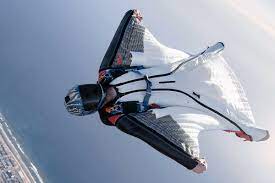
Gravity, in its essence, is a force that pulls us downward, but in a more profound sense, it’s a force that challenges us to lift ourselves up. While gravity might seem like an overwhelming adversary, it’s actually a relatively modest resistance that we face daily. As a species, we’ve developed various ways to overcome this force, from building airplanes to performing breathtaking acrobatics. Our problem today isn’t that we can’t conquer resistance; it’s that we rarely encounter enough of it.

In our modern world, daily challenges often amount to little more than minor irritations. With such minimal resistance against us, we should be able to soar to great heights, almost defying gravity itself. Yet, we don’t. The reason is quite simple: we’re afraid. Afraid of failure, afraid of taking off only to fall, afraid of the possibility that someone might witness our mishaps and laugh.

Gravity is a force of nature, a constant that we cannot control or eliminate. We didn’t create it, but we’ve found ways to work around it. Why, then, can’t we do the same with fear? Unlike gravity, fear is a construct of our minds, something we create. So, circumventing it or banishing it entirely is well within our reach. We have the capacity to fashion our own wings and take flight, free from the shackles of fear that hold us down.

So where are you tied to the ground but you should soaring? Is a real obstacle holding you down or just your fear of taking action? Either way there is bound to be a way around it! It’s up to you to find or stay pinned to the ground. More than anything, the choice is yours. Face fear or live under its thumb!

Pete

Blogpost, self-reliance

The Game of Now

In a nation that’s fervently obsessed with sports, where stadiums are revered and athletes command colossal salaries, we’re often reminded of our deep-rooted passion for competition. Championships and winning seasons are celebrated with grandeur, showcasing our reverence for results. Yet, amidst this overwhelming obsession with competition and achievement, we frequently overlook the most meaningful game of all.

The Unseen Game: What’s the game we often disregard? It’s the game of NOW. This game doesn’t have a stadium, a scoreboard, or a roaring crowd. It’s an intangible, relentless contest played out in the moments of our lives. Each moment can be won or lost, and NOW is the only game that truly matters. The opponents are countless, but we’ll name a few: laziness, procrastination, fear, indifference, foolishness, and the ever-alluring promise of “later.”

Conquering NOW: NOW isn’t a game you can afford to lose. It’s a game where you call the shots, set the rules, and choose your opponents. In essence, it’s a rigged game if you decide to seize control of it.

The Decision: Today, right now, make a decision. Ask yourself, “How do I win this moment?” Challenge yourself to string together a series of winning moments in life. Have you been losing without even realizing it? Life, in so many ways, resembles a game. And in this game, remember—you’re not just a player; you’re the referee and the scorekeeper. Most importantly, don’t forget to lace up and start playing NOW!

Conclusion: In a nation that worships the competitive spirit, let’s not overlook the most crucial competition of all—life itself. The game of NOW is a constant, ever-present challenge. It’s a contest where victory is determined by your choices, actions, and mindset. As you step into the arena of each moment, remember that you hold the power to emerge victorious. So, embrace the game, define your rules, and make every moment a winning one. Your life is the ultimate battleground—play it skillfully and cherish every victory along the way.

Blogpost, self-reliance

Train Wreck or Car Wreck?

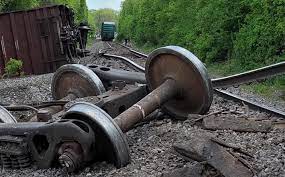
Given the choice, would you prefer to be involved in a train wreck or a car wreck? It’s a question I’ve posed to friends and acquaintances, and the responses vary. However, more often than not, someone will respond with, “I don’t want either.” In my view, that’s the wisest answer. Opting to avoid experiencing trauma and pain is a sound and straightforward decision, especially when we consider the physical aspects of such accidents. While it’s impossible to directly compare train wrecks and car wrecks, there are some general differences to consider: train wrecks are typically more public and involve a larger number of people, while car wrecks tend to be less public and affect fewer individuals.

In our reality TV-saturated world, we encounter numerous examples of human “train wrecks.” It seems we’re almost obsessed with finding individuals who appear to be at the lowest point of humanity. It’s a troubling reality that many in the public seem to crave witnessing those who are “worse” off than they are. Depending on personal preferences, one can watch the unfortunate lives of teenage mothers, millionaire’s wives, aspiring youth beauty queens, young cheerleaders, and the list goes on. After just half an hour of watching, it’s easy to feel vastly superior to the person at the center of that “train wreck” of a life.

The issue arises when people who are watching may actually be living a “car wreck” of a life but feel better by comparison. Their life may not be as terrible or as publicly scrutinized as the “train wreck” on the screen. Instead of striving to live the best life possible, we often seem determined to find examples of those who are worse off than us. This comparative mindset serves us little good, especially when those we are comparing ourselves to have set the bar so low.

This tendency isn’t limited to the world of reality television; it extends to the classroom as well. Have you ever felt disappointed about the grade you received on a quiz or test, only to feel better when you notice your neighbor received a lower score? Instead of measuring our potential, we often measure ourselves against what makes us feel comfortable in our current situation. This strategy is unwise, as it leads us to settle for less than our true potential.

So, if you find that your life is in disarray, don’t seek solace in comparing yourself to someone with a worse life. Instead, gather the pieces, tend to your wounds, and get back on the road to self-improvement.

Blogpost, self-reliance

Embracing Failure!

Nobody welcomes failure with open arms. It often feels like that “not-so-attractive” girl who’s had a crush on you since second grade. Imagine you’re at the school dance, and she’s the only one who asks you for a slow dance. What would you do? Reject her, hoping that a more attractive partner will come along? Well, not quite. You’d dance.

  1. Learning through Failure: The first step in embracing failure is recognizing that it’s not the end of the world. Just like that not-so-attractive girl, failure has something to offer, too. It’s a chance to learn and grow. Failure teaches us valuable lessons that success often can’t. Each misstep provides an opportunity to refine our skills and strategies.
  2. Building Resilience: Dancing with failure builds resilience. Rejecting her might seem like the easy way out, but it won’t make you stronger or more experienced. Resilience is the ability to bounce back from setbacks, and it’s a trait highly valued in both personal and professional life. The more you face failure, the more resilient you become.
  3. Embracing Imperfection: Nobody is perfect, and nothing starts off that way either. Ideal opportunities are often the result of many imperfect attempts. By dancing with failure, you acknowledge that growth is a process, and perfection is rarely the starting point. It’s the imperfect steps that eventually lead to something great.
  4. Preparing for Ideal: When you learn to dance with failure, you’re not just settling. Instead, you’re preparing yourself for when the ideal opportunity finally arrives. By then, you’ll have honed your skills, developed resilience, and embraced the imperfections of the journey. You’ll be ready to seize the moment.
  5. Overcoming Fear: Fear of failure can be paralyzing. But when you’re willing to dance with failure, you diminish that fear. You understand that failure is just a temporary setback, not a permanent label. This newfound courage can help you take risks and pursue your goals more boldly.
  6. A Humble Perspective: Dancing with failure also keeps you grounded and humble. It reminds you that success is not always guaranteed and that setbacks are a part of life. This humility can make you more approachable and relatable to others, enhancing your relationships and leadership qualities.

So, next time failure extends her hand, don’t hesitate to dance. It might just be your ticket to a brighter future.

Blogpost, self-reliance

Same Old, Same Old

It’s easy to get fed up with the “same old, same old.” The monotony of repetitive activities can eat away at you. Until access to the tried and true is no longer available. Lamenting that which you have is probably not the best strategy for fulfillment. No doubt, strive for new. Go for better! But don’t discount now because you’re blind to its beauty. The same old is neither the same nor is it old.

It’s now!

Pete

Blogpost

The Coffers (part 1)

This is an experiment. If it doesn’t work, that’s fine. I’ve written bits of fiction here and there through the years. Since I have an outlet, I figured I’d use it. If no one is interested, cool! Maybe I’ll keep posting anyway.

The Coffers (Part 1)

Sissa had always harbored a fear of the darkness for as long as Eli could remember. He never needed to discuss it as she clung closely to him beneath their worn blanket. The fear was ancient, rooted in the time before Momma’s passing eight years ago. Despite being six years Sissa’s junior, Eli had accepted his role as the courageous one when night shrouded their world. It seemed that her fear intensified when warmth enveloped the land. During summer nights, she’d sometimes cry out for Momma as she clutched his arm in her sleep.

On this particular night, the cold bore down upon them, but hints of spring’s arrival had begun to thaw the snow. Eli sensed the impending change of seasons. Spring, he knew, brought opportunities to scavenge for food and supplies. The village relied on miners, who, despite having enough clothing for everyone, continued their quest for more. Elders whispered that if they could dig deep enough, the treasures they sought would be enough for a village ten times their size. Eli understood numbers up to ten, a lesson etched into his memory after Mr. Burdin’s stern lecture when he had gathered only nine baskets of apples.

Mr. Burdin had been their protector ever since Momma’s departure. She had joined the Purists during the hiding, a time before Sissa and Eli’s births. Momma’s history seemed shrouded in secrets, but Mr. Burdin had shouldered his responsibility to protect them, perhaps out of loyalty to Momma for the hardships they endured during the hiding.

The post-war world had been marred by chaos and violence, where the strong preyed upon the weak. Those who could wield power or secure weapons took what they wanted, leaving the vulnerable to hide. Initially, the hiders had banded together to scavenge for sustenance under the cover of night. The Takers, ruthless and armed, hunted down anyone who dared challenge their dominion. Food grew scarcer by the day, and many hiders succumbed to hunger. As despair grew, some believed survival meant consuming the fallen among them.

The hiders had eventually divided into two factions: the Feeders and the Purists. The Purists staunchly refused to partake in the macabre feast, even when the cold of winter became unbearable. Many Purists perished during that harsh season, some outright and others succumbing to the temptation of survival through cannibalism. Spring brought a glimmer of hope, and the Purists, numbering about thirty, ventured forth together, only to find a desolate world. For months, they journeyed, subsisting on grass, berries, and meager prey. Then, as if by divine intervention, they stumbled upon an apple orchard, untouched by looters—a miracle in the midst of devastation.

Over the years, the Purists constructed humble shelters from the remnants of their old world, creating Purist Village. Small victories added comfort to their lives. The discovery and taming of turkeys by Mr. Burdin in the first year offered a steady food source. Then came the revelation of the “red circle,” a place Momma mentioned as a store in the distant past, now reduced to rubble. Five village men, self-proclaimed “miners,” labored tirelessly, uncovering supplies that gradually improved their lives.

Sissa was the first child born in Purist Village. Momma named her Mary, but it was Eli who playfully christened her “Sissa.” Momma recounted tales of her father, who ventured out to find a better place for the village but never returned. Despite Momma’s story, no one else recalled anyone leaving or knew who Sissa’s father was. Mary was eight when she awoke one warm summer night to find Momma gone. Her screams roused the entire village, and frantic searching ensued, but Momma had vanished without a trace. Weeks turned into fruitless months of scouring the hills. Mary, left in the care of the kind Habner sisters, grew despondent, convinced she would never see her mother again.

Then, a month later, Momma reappeared, descending from the western hills into her hut. She kindled a fire, prepared food for herself and Mary, but her demeanor was distant. She hugged Mary, albeit with an emotional disconnect, muttering to herself, “the coffers, the coffers,” as though reminding herself not to forget.

Several days passed before Momma fully regained her senses. She retained a strange fixation on something she called “the coffers.” Mary couldn’t grasp its significance, but she promised to stay away from it. The cryptic warning piqued her curiosity, and she skipped some of her chores to secretly watch over Momma. One day, while eavesdropping outside their shack, she overheard a conversation between Momma and Mr. Burdin.

“There were two of them. I don’t know how they got me. I woke up in their house, tied up. At first, I was hungry and thirsty. They offered food and water, but it only made me drowsy. When I woke again, I knew they had done something to me. I stopped eating and drinking, but they insisted. They said they needed me alive for nine months,” Momma sobbed as she recounted her ordeal.

The revelation left Mary bewildered, but she dared not let Mr. Burdin discover her eavesdropping. She hurried to complete her chores, knowing she needed to keep an eye on Momma.

As weeks passed, Momma grew ill, though people did not avoid her as expected. Her sickness seemed different, as if it were an ailment exclusive to her. When Mary inquired, Momma confided, “I’m going to have a baby, Mary—a brother or sister for you.”

The villagers rallied around Momma as her belly swelled, and the Habner sisters assisted during the birth. Mary watched, eager and anxious, as her baby brother entered the world. After a day, she finally asked, “What’s the baby’s name?”

Momma hesitated, her eyes distant. “Mary, I don’t know what to call him. I don’t even know how to feel because he’s illegitimate.”

“We can call him Eli, since he’s eee…,” Mary trailed off, struggling to pronounce the unfamiliar word, “Eli.”

Eli, their redheaded bundle of curiosity, became the name that stuck, not just for Mary and Momma, but for the entire village. The past was unchangeable, but the Purists, ever resilient, continued their modest existence.

Years passed, and the Purist Village adapted to its surroundings. Life progressed in small increments, primarily marked by discoveries made by the miners. Some findings transformed their lives, while others served as reminders of the world they had lost. Shovels allowed for more outhouses and easier maintenance. A chainsaw, though fuel-starved and futile, brought brief excitement. Among their discoveries were several iPhones, now defunct relics. Momma held one close, recalling a time when such devices connected people across great distances, offered directions, and entertained with games. Though seemingly useless, the iPhone held a special place in her heart, a place where Eli had never resided.

Eli, now seven, remained an outsider in the house he shared with Momma. His usefulness, however, grew with each passing year. While the village yearned for more substantial progress, they embraced Eli’s growth. Yet, Momma’s fixation on the iPhone persisted, an invisible barrier between her and her son.

Then, the iPhone’s presence seemed to suck the life from her as Momma fell ill. It began as a common cold but lingered. Her spirit withered, her memories slipping away into the abyss of the past. The strong woman who had endured wars and hiding now clung to a fragmented recollection of a world that no longer existed.

Sissa and Eli, now inseparable companions, became housemates in their small abode. Though not truly alone, the village’s support and Mr. Burdin’s watchful eye did little to fill the void left by Momma’s fading presence. Eli, ever eager to contribute, fulfilled various roles within the community. He collected apples, then graduated to water carrier, a vital task for the village’s survival. Yet, with every step forward, the villagers remained trapped in the inertia of their existence.

It was on one of Eli’s routine trips to the stream, laden with two heavy buckets, that he heard agonized cries piercing the air. He instinctively set the buckets down and followed the anguished sounds, navigating through the thickets with caution. As he drew closer, he realized that the voice belonged to a stranger, trapped beneath a pile of rubble.

The man’s cries had evolved into pitiful whimpers as Eli approached, his trapped leg a source of immense pain. Although fear of strangers had been deeply ingrained in Eli, this time, sympathy overrode his trepidation. The man seemed less like a threat and more like a survivor of a bygone world.

“Are you okay?” Eli asked, his voice tinged with genuine concern.

Blogpost, self-reliance

Last-ditch Effort

When I think of this phrase, it sparks a vision of the scene from the movie “Stand By Me” where Vern is searching for his pennies. Each time that he plunges his shovel into the ground, I’m sure that he had the hope that it would be the “last-ditch.” There is also a sense of desperation that comes with that effort.

It’s hard to know when you’ll hit “pay dirt.” There are so many factors that come into play regarding success that it’s almost impossible to predict. I suppose one of the keys is to keep believing. Supposedly Winston Churchill is quoted as saying “success is moving from failure to failure without a loss of enthusiasm.” It’s a great thought but difficult to pull off. Each ditch that is dug takes sweat and effort. Staying equally enthusiastic is difficult.

I suppose that’s the exact point. Success is not an automatic thing and it requires the energy of enthusiasm. So hoping, believing and even pretending that the next ditch will be the “last ditch” is required to muster adequate enthusiasm. Our ancestors must have had it because we are still here. Therefore, it’s within us all to make that effort.

Keeping digging!

Pete

Blogpost, self-reliance

It’s a Cheap Trick!

There are only a handful of songs that I remember exactly when and where I heard them. “Iris” by Goo Goo Dolls is the most memorable but “I want you to want me” by Cheap Trick is a close second. I was at a pizzeria in Michigan while visiting my ex girlfriend in the summer between high school and college. It’s actually surprising that I’d never heard it before! The tune and lyrics are so catchy with the repetition of want, need and beg.

The world often doesn’t work the way that we’d like. In the minds of many, people should give us what we want. This is especially prominent with kids. They want what they want and can’t understand why they can’t get it… NOW! But the truth of the matter is that a smart adult who truly cares gives them what they need. We all need those people in our lives. The ones who do not simply give in to our temporary desires but can see a better future beyond the moment. The needs that we may not even realize that we have are the focus of their efforts.

So realizing that the tune may not work, the message is clear. I’m begging you to want people in your life who give you what you need rather than what you want or beg for! Maybe even make that person yourself. If you could pull that off, it would be a grand and not so cheap trick.

I want you to need you!

Pete