Blogpost, SoccerLifeBalance

POSH Need a New Drug

I wrote this before the announcement of the postponements but figured I’d post anyway.

With Peterborough being reclassified as a tier 3 area before this weekend’s fixture, it takes away the fans as an influence on the match. Although POSH were able to go on a long unbeaten streak without fans earlier this season, some performances lacked the energy and commitment that will be required to continue their climb up the table. There is definitely not a lack of talent within the squad. It basically comes down to the emotional/mental state of the players at game time. Ferguson and the players have proven that they can play with energy from the first whistle. Unfortunately the government has sucker punched the POSH (and all clubs) by taking away the fans that just got back to the ground. This undesired circumstance forces the POSH to find a “new drug.”

Before anyone gets their knickers in a twist, I’m not talking about any illegal substances. Everything that human beings do, we do in order to produce or reduce some form of feeling. These feelings are caused by chemicals (drugs) inside of our brains/bodies. The good feelings that are produced during a football match by players and fans are generally from four chemicals: endorphins, dopamine, serotonin and oxytocin. My post “Soccer is not a zero sum game” outlines these in greater detail.

Regarding the POSH situation, it has been suggested that the team and some players in particular thrive off of the crowd. This is most likely due to a rush of serotonin. It is the chemical that causes several feelings but in particular it is responsible for the feelings of pride and status. In normal seasons, this is a perfectly appropriate feeling to chase as a footballer. Even at away fixtures, there would normally be handful of fans who would cheer on the players giving them a quasi-hero status. In COVID times, that pursuit has been taken away and it is difficult to say when it will be back. While I recognize that this is an opportunity to get angry at an outside entity that has taken something away from the boys in blue (or pink depending on the day), it may not be the best answer on its own. A healthy dose of oxytocin is the drug that I’m suggesting.

My son and I at London Road. Oxytocin creating moment.

Oxytocin is the chemical that we would normally associate with “love.” A large amount of oxytocin is released during childbirth in order to create a connection between mother and child. This is probably a little more “touchy feely” than footballers would probably prefer to be. So the recognition that similar types of oxytocin filled bonds can be made between soldiers at war or friends with a close relationship. Due to the fact that thousands of fans will not be there to cheer on the successes of the players, they need to double or triple down on each other. The Sammie and Frankie show was born out of friendship. Those feelings need to transfer to the field and spread throughout the squad. Each member of the squad needs to celebrate the success of his teammate as a success that he takes part in. This shared feeling of accomplishment and desire for the good of everyone needs to become an “addiction.”

While I am a huge proponent of the positive, there is a power to the dark side of our emotions. The problem is that anger and other emotions like it become corrosive if they are overused. So my major suggestion is to triple down on connecting with each other but leveraging the power of the negative situation could be useful in spirts. Even though it is not fully true, taking the view that the government and EFL are both against POSH and their fans gives extra juice and unites the group even more. El Presidente named this the “Revenge” tour which goes in line with this perspective although it may lean a bit too much toward a victim’s mentality. My slant would be that this is the “Confirmation Tour.” Confirming the idea that POSH were truly on the promotion trajectory when the season was ended. Other teams are on their own journey confirming the reverse.

So if fans continue to be kept away, it is vital that the players leverage the unity within the group to confirm who they are: the best squad in the division. The obstacles that are thrown in front of all of us need to become the path that we tread. Lamenting and complaining only create an emotion barrier to overcome. Embrace the obstacles and help each other climb over them. They are not impediments to be feared. They are the staircase that leads to the top!

Up the POSH!

Pete

P.S. Had to link this at the bottom. “I want a new drug!”

Blogpost, self-reliance, SoccerLifeBalance

Formation Isn’t Everything

Having grown up in the relative infancy of soccer in the US, the information that I had about the game came directly from my coaches. Soccer was not readily available on TV like it is today. Therefore the switch from a 2-3-5 to a 4-4-2 seemed less like a change in tactics and more like a change in coaches or seasons. As the game has progressed over the past few decades, there are more formations available than ever. Players and coaches have their preferences on how to organize their teams. The function of a formation is not to directly solve problems. It is to provide a structure of standard operating procedures for a team. Therefore players can recognize patterns and hopefully create openings within their opponents defense. While this is a completely necessary portion of a team’s strategy, it does not solve all problems nor does it always represent the best use of talent.

While none of us is running a “4-4-2 life,” it is important to have some form of organization to the way that you attack your day. Leaving things up to chance is a great way to end up getting nothing meaningful done. Coaches will generally have two or possibly three formations that they will use in order to attack a particular opponent’s weaknesses. This is probably a helpful guiding principle for organizing your days. In general you want to have in mind whether you are attacking the day or defending in order to counter. If you look at each activity that you do as a player, then how have you aligned yourself. Are you completely defensive? Only doing the things that protect the status quo that you’ve set up for yourself. Or are you mainly offensive? Using all of your time to move yourself forward in some way: financially, socially, mentally, spiritually or in your career. The way that you allot your time is going to tell you something about intentions. Are you actually playing the game that you want to be? Are you trying to win it or hoping not to lose? Is your formation completely dependent upon your “opponent”?

Just like in the game, formations are necessary for organization and strategy but what happens in transition is usually the difference between winning and losing. The way that a team deals with things when their plans fall apart is crucial to their overall success. Those moments in between all of the planned activities. How are they spent? If you’ve invested time and effort into working out but then undercut that forward motion by snacking in transition, your formation becomes almost meaningless. While some people might use this as an excuse for more organization and formation, my preference is toward principles and defining goals.

In a game of soccer, the goal is always the same. However in life, our goals can cover a wide range of possibilities. At any given moment, I would try to limit yourself to three unless you have more that can truly coexist without interfering with one another. Build your principles around the goals that you have for yourself. If your major goal revolves around health and fitness, then set up principles that align with your desired outcome. Decide what you are going to do in chaotic situations before they come up. By developing principles ahead of time, it is less likely that a chaotic moment will devolve into negative consequences. Life is a game that you can win with the right formation and principles about how to deal with transition. Set yourself up and then ATTACK! Or defend, it’s really up to you!

Make a great day!

Pete

Many people refer to soccer as a “religion” and while I see where they are coming from, I use it as a metaphor for life. It can be used in a variety of ways to bring clarity to a world that can be difficult to traverse. My co-author and I are working on a book that uses soccer to explain person finance. If you’re interested in getting details as the project develops, sign up below.

Send me updates!

https://sendfox.com/js/form.js
Blogpost

All That He Can Give

Tomorrow’s match against MK Dons represents a variety of storylines that impact the approach to the game and the eventual result. The shuffling of the squad did the trick against Rochdale. Many fans have commented that Rochdale’s poor performance was more relevant than the POSH’s youthful lineup. Nothing in life or football exists in a vacuum. Assumptions can never be made about the preparation or outcome of a match. The match is won by the stacking of moments.

My ticket from my first match at London Road. POSH dismantled MK Dons!

Having watched to both managers’ preview interviews, it is obvious that these two clubs are in a different space at the moment. There was a time when MK and POSH were competing with each other. Now each is competing with their own set of circumstances. POSH needs to live up to the expectation of promotion, while MK are looking to find the path back to their former glory. Russell Martin’s time under Darren Ferguson was short but in many ways seems to have been a springboard to a successful playing career. Regardless of the past or future of each club, team and manager, the match is the 90+ minutes between the whistles. All of these variable coalesce into thousands of individual opportunities. Last match Ferguson gave those opportunities to a handful of young players and they took them with great results. The past is now behind them. As many in the dressing room were recently reminded, if you don’t consistently make the best of your opportunities, they are taken from you.

All that either manager can give in tomorrow’s match is opportunities. Each individual has to do the best that they can with it. Russell Martin is a good example of a player who took the opportunities in front of him and ran with them. Players and people usually run into issues when they think that they deserve something. Being a language person, I love to break words apart. That word, DE-SERVE, meaning from service. Players who put an effort in for their teammates will eventually receive opportunities in turn because they are deserved. I refer to it as “soccer karma.” If you give a good ball, you’ll get a good ball. If everyone believes in that ethos, then the chances are much higher that good passes and opportunities will make their way around to everyone. The two cannot be separated though. You need to give first. Regardless of how young or experienced of a lineup Ferguson names tomorrow, those individuals need to take the opportunity that they’ve been given and give back with passion and persistence.

The match will be won by the team who effectively wins the right moments. Since it is impossible to know which moments are crucial, respecting them all is the only strategy. The opportunity is all that a manager can give. It is up to the player to take it! The past means nothing in those 90+ minutes.

Up the POSH!

Pete

Blogpost, self-reliance, SoccerLifeBalance

Climbing the Pyramid with a Parachute

It was a true pleasure to watch the US Men’s National Team dismantle El Salvador last night in their match. Although the game was a friendly and El Salvador was not at full strength, this is the type of result that one would expect from a sport obsessed nation when competing against a country one fiftieth its size. As Iceland has proven beyond the shadow of a doubt, population is not truly relevant when judging a footballing nation. However the numbers simply provide a context for available talent pool. Even with the competition from the other major US sports, more people play soccer in the US than the entire population of El Salvador. Seeing a tangible result to all of the shifts in US soccer over the past decade was refreshing. Despite my joy in seeing the young squad of US player, it has made me think about the collateral damage of a system that needs to cast aside over 99% of individuals to find those special few.

The US soccer pyramid is not truly a pyramid as it has several dysfunctions and offshoots. However due to the lack of a better term, we’ll refer to it as a pyramid. The structure itself is not completely relevant to the discussion.

The collateral damage that I am referring to is not unique to the US, nor is it new. A youth player from the Manchester City academy committed suicide earlier this year. This is the most extreme example of the ways in which young players can be affected by their fall from the soccer pyramid. Every year young players and old are given their release from a club. Sometimes it is simply a move to a different club or different level. Unfortunately when the ultimate decision is made that a player is no longer “good enough” at their particular level of the soccer pyramid, the fall can be devastating if they are not prepared.

In the United States, the academy system is in its relative infancy compared to the rest of the world. The college system used to be the route to the professional game and with it came an education which served as a “back up plan.” Even with that “back up plan” in place, I’m not sure that it deals with the most pressing issue. A player who has devoted over a decade to the dream of “making it” in soccer (however they would define it) needs to have the psychological tools to deal with that disappointment. A parachute can be a literal lifesaver when falling from high heights but it needs to be strapped on tight before the fall.

The following items are some suggestions that can be packed into the psychological parachute for players in case they fall off the pyramid.

  • A diversified identity – Although we are all only one person, we tend to have different roles that we play within our lives. A person with a singular focus like professional athletics can tend to have tunnel vision on that identity. Developing other aspects of one’s life can not only help in the case of a fall but also allow for the release of pressure during their career. Although this identity includes how the individual interacts with the outside world, it is also extremely important that he/she recognize these other identities inside of his/her own mind. The trauma of losing a part of one’s life is much worse if it is the only part that mattered. That void will need to be filled with something and the easiest things to fill a void with are usually destructive.
  • Quality self-talk – There are many ways that this could be characterized but the heart of the issue is that there is only one person that we spend our entire life with: ourselves. Therefore it is extremely important that we make that person who is living inside of our own heads a friend. Learning how to communicate effectively with yourself is crucial to the building and maintenance of self-esteem. For some reason it seems to me that “esteem” gets overshadowed in that compound word. Esteem is a pretty lofty opinion of someone. It should be something that we can bestow onto ourselves with our words and actions.
  • Quality relationships – Again this is something that needs to be packed in the parachute before the fall. People are less likely to help when they feel that they are being used. Friends and family are key components to our psychological well being. The bonds that we have with the people that we value in our lives releases oxytocin which lowers stress (cortisol) and inhibits addiction. If these types of relationships are not well in place before falling from the pyramid, the stress of “not knowing who to trust” can exacerbate an already difficult situation.
  • Physiological hooks – The body is an amazing antidote to most things that ail the mind. While my hope would be that a player of high caliber would understand how to change her/his state for games or practices, it may be less evident to use these tools when “the walls have tumbled down.” Disappointment, embarrassment, depression and a host of other emotional states may be easier to fall into after the end of a career. Recognizing the control that each of us has over our emotional state through our posture, habitual movements, facial expressions and others is a skill that every individual should develop. This is not a sports skill. It’s a life skill! Creating our emotional state is our job because when it is left up to the world, we are bound to be disappointed by the outcome.

This list is far from exhaustive. However it does begin the conversation about the psychological tools that we all should develop. In this hyper-intense world of high level soccer, it is easy to be so focused on a singular outcome that these tools do not get developed. Unlike the college education which was viewed as a “back up plan,” psychological well being should be THE PLAN for all of us in order to make our journey through life an enjoyable one.

Go pack your chute!

Pete

Blogpost, SoccerLifeBalance

First Touch Philosophy

A player’s first touch is crucial to their success as they progress to higher levels of playing. Although speed, a great shot, tactical knowledge, etc. may be desired, a quality first touch is a foundation that can enhance any skill stacked upon it and mask defects that would otherwise be apparent. Just like any other skill, a first touch requires physical practice but the skill in and of itself is heavily intertwined with being proactive. The ability to control the ball is not particularly a good first touch. It is the combination of control with the vision to see where it would be most advantageous to put the ball. Many players possess the skill to control the ball in open space. However amongst the chaos of small space, little time and huge pressure is the true proving ground for a quality first touch.

Although I would love for each of us to use this post as a catalyst for improving our first touch on the field, like always, I’m thinking to the bigger game of life. In life, the rules, skills and strategies are more subject to interpretation. That is why I put the word philosophy in the title. Each of us must develop our own stance on how we progress in life. Therefore it is not for me to say what is best for you, the philosophy part is up to you. However I am going to suggest some of the places where you might find opportunities to take great “first touches.” Below is a video of Frank Lampard (not my favorite player) scanning the field during his days with Chelsea (not my favorite team). Although I do not love the player, it’s easy to appreciate the preparedness. Being aware of your surroundings enough that you can make a better decision when the opportunity arises.

First Touch Opportunities

Here are some opportunities for you to set yourself up for success. The decision about how to approach these situations is up to you depending on your goals and strategy.

  • First thing in the morning. This is the truest of all “first touches.” What do you do when first wake up? Are you reactive to the way you feel? Proactive based on decisions made beforehand?
  • Meeting new people. This is another spot where you get to choose who it is that you want to be. This person doesn’t know you and no matter what you do, they will never know you 100%. They will only ever get a small percentage of who you are based on what you show them. Do you want to show them your BIG personality? Or are you sending the message that you are more interested in them? This may change based on the circumstances but is there a thought process behind your interactions?
  • Walking into a room. It’s true that you never get a second chance to make a first impression. However I am huge believer in the fact that you should not trust what people say, nor what they do, trust the pattern. So every time that you walk into a room, you have a new opportunity to be the version of yourself that you want on display. What is your pattern? How do you show up regularly?
  • After making a mistake. This is a crucial time where chaos may be upon you. Perhaps not external chaos but internal chaos. A first touch is all about control and setting yourself up for success. How do you react to mistakes? Do you tear yourself down internally? Externally? Do you relive it in your head? Do you evaluate it in order to prevent it from repeating? Worst case scenario, do you even see your mistakes? Amidst the chaos of life, it is easy to get turned around. If you’ve not defined which goal is yours, it is possible that you’re heading in the wrong direction and don’t know it.
  • After someone hurts you. Looking for retribution is easy! Sometimes it might be the right answer. More often than not, it isn’t! Usually the people that are given the power to hurt you, have it because you share a relationship. Two ends of a “ship” taking shots at one another almost guarantees that the “ship” is going down. Is it a mistake? Does hurting the other person make you feel better? Do you even need to be hurt by this? In the chaos of the moment, these are hard questions to ask. So it may be helpful to rehearse some situations inside your head before they happen. See yourself acting in a way that will help you.

Obviously this list is not complete. There are plenty of places in your life where you can employ control and a vision for where it is advantageous to go. Just like a first touch on the field, it takes practice before the chaos. Practice is something that starts when you are on your own. Meditation, visualization, journaling and self-talk are some of the best tools that you can use to develop control and vision. These skills need to be honed over time. Then much like Lampard in the video clip, you need to be scanning the field to make opportunities out of the openings that you see or avoid the hard tackle coming from your backside. Life is inherently “out of control”. The only thing that we can control is ourselves. Make the best of the touches that you get today.

Go for goal!

Pete

Blogpost

Szmodics Can’t Outrun This Defender

Let me start by saying, that I am a huge Sammie Szmodics fan! Not just for his play on the field but the way he seems to conduct himself outside of the game. Last season he seemed to pop up in a variety fans’ Twitter or Instagram feeds, not just posing for a picture but also engaging on a personal level. It was great to see and I was ecstatic when it was announced that he was coming back. Thus far he has not lived up to the expectations that many people (including him) have had. While I’ve seen it suggested that he will be fine once he scores a few more goals, the ingredients are there for the goals to have gone in already. So I believe there is something more to cope with.

Last season Sammie came in as a breath of fresh air to replace the Maddison circus as it left town. Despite the high hopes for him, there was no pressure. It was a loan, not a long term signing. Ivan was scoring for fun and therefore he drew defenders’ attention. Sammie also had “something to prove” because he had been sitting on the bench for Bristol for the first half of the season. All of these circumstances gave him the perfect platform to be a smashing success with nothing to lose and everything to gain.

This time around the situation is completely different and Sammie is struggling with the opponent inside at the moment. The pressure of being a highly sought after signing is a far cry from replacing a team cancer. Expectations from fans, management and especially Sammie himself have put an invisible cover on the goal. Obviously there is not a cover on the goal itself but rather an obstacle inside of his own head. The pressure of not scoring regularly causes him to overthink things that just flowed last season.

The thing is that he has probably scored hundreds maybe thousands of times in more difficult circumstances in the past. The myelin* is there to repeat past positive performances. His amygdala** is firing off fear signals in those crucial moments because this year means more. If he misses, then was Bristol right to let him go? Is he worth the investment? Was it all just Ivan’s influence last season? We all do this in pressure situations with our own personal story.

At this moment, Sammie and a few other players need to change the story that is going on inside of their head. The chances to score are not any more difficult. The money, outside pressures or situations do not change one’s ability to kick the ball in that moment. The narrative that we all tell ourselves affects how we perform and we can control that. Creating a new story inside of his own head about what he has to do in order to be “successful” is a key action. Separating himself from the expectation will give him the freedom to be exactly who he is. Rehearsing his future successes in his mind will open the pathway to better performance and remove the cover from the goal.

Whether he does these actions explicitly or time allows for the pressure to subside will eventually play itself out. Sammie is quality player who has had a small dip in form that will be worked out. He just can’t outrun this defender because it is the one that is matching him step for step everywhere he goes. I wish him nothing but the best in this battle. It is the one that we are all fighting and it’s never completely won!

Up the POSH

Pete

*Myelin is an insulating layer or covering that allows electrical impulses within the brain to travel more quickly and efficiently. The more times that an action or thought is repeated, the more that the myelin insulates that neural pathway.

**Amygdala is an almond shaped structure within the brain that produces several base emotions like fear and is linked with the “fight or flight” response.

Blogpost, posh

Uninspired POSH Need Last Piece of Ferguson Puzzle

For almost two decades, I’ve been supporting Peterborough United from afar. Despite the inconvenience of supporting a team that I rarely get to watch, I’m comforted by the fact that I know what to expect from POSH. Our chairman (or el presidente) will be on Twitter or his podcast speaking his mind about POSH or anything else. Barry Fry will be working the deals, although much quieter than in the past. Finally whenever Darren Ferguson is our manager, we’ll be close to promotion.

With the disappointment of last season fresh in POSH fans minds, the recognition that we need to amass as many points as soon as possible is plain for all to see. With the backing of the owners and other fortunate circumstances, most of the pieces are in place for us to withstand this marathon of a season near the automatic promotion places. The squad is made up of players who can replace one another with minimal dips in ability. Therefore the tight schedule will affect us less than other squads. The lack of crowds at the moment works slightly to our favor because our away form is usually a factor in keeping us from promotion. By the time that crowds are allowed back, our position in the league and the novelty of being at games bring great support to home matches rather than a fickle POSH crowd. Ferguson’s calculated approach will continue to produce consistent results that will have us in the playoff or automatic places as the season comes to a close. Despite the unique circumstances, this sounds like a pretty typical season under Darren Ferguson. Selfishly though, I’m looking for more.

As I’ve stated prior, I am a huge Ferguson supporter. He has been the manager for a good portion of my time as a POSH fan and enjoy watching his teams play and the way that he conducts himself. However it seems that he is missing one piece from his managerial arsenal. Based on my observation, POSH teams tend to start games slow and only “turn it on” in the second half. There could be many reasons for this but as a person who believes heavily in the emotional side of the game, I think it is due to a lack of emotional priming.

Most of my coaching career has been spent at the high school and college where the tactics and techniques are important but usually in close matches, the emotional side of the game wins. The professional level definitely requires a more steady approach to the management of players’ emotions. However that does not mean that it is not important. As the son of Sir Alex, I’m sure that the halftime resurgence of POSH teams is partially due to a few “hairdryer” treatments. While this has its place, training players on how to manage themselves and especially to “prime” themselves for a peak emotional state at game time is crucial.

This is the last piece to Ferguson’s puzzle. His tactical awareness and man management on a longitudinal basis seem to be spot on. The place where POSH fizzle at times is their ability to start the game on the emotional front foot. A combination of confidence and desire to do what it necessary. The difference between last season’s team that looked like a juggernaut going into the late part of the season and this season is the lack of an emotional focal point. Ivan Toney (the only thing I’ll give Steve Evans credit for getting right) allowed the players around him to play with confidence and joy because he was going to give them a chance to win regardless of how they played. None of the players at the moment has that power. So it needs to be taught to all of them. The POSH team of this year will only dominate this league if each and every player comes to the field with his best mindset available. Expecting 25+ goals out of Clarke-Harris, Dembele or Eisa seems unlikely. So the squad must do it and cannot continually take the first half at half capacity.

Developing a system of emotional priming is not outside of Ferguson’s skillset, he did it beautifully leading into the promotion push from years ago using the video with the Adele song. However this work needs to be done a much more individualized basis. This work cannot be done to the players, it must be done with the players. Dan Abrahams, who has worked with several teams and individual athletes, has players create a persona to bring out their best attributes at the crucial moments. His work is not the only possibility for priming athletes but having heard him speak a few times, I’m a fan of his work.

So the question is not whether or not POSH have it in them to win this league, they do. The question is whether or not they can consistently demand more from themselves physically, mentally and emotionally than their opponents. The difference between this and any other POSH year may come down to the players being trained on how to turn on their own fire without the “hairdryer”.

Up the POSH!

Pete

Blogpost, SoccerLifeBalance

5 Things Professional Soccer Coaches Can Learn from a Foreign Language Teacher

A foreign language can be exactly that to many people “foreign”.  Despite that fact, there are lessons to be learned and applied from the study of language that reach into the sports world extremely easily.  At the highest level, the margin for error is so slim that all possible advantages must be explored.

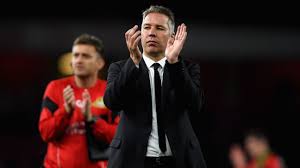
Darren Ferguson, manager Peterborough United.
  1.  Language is an agreement – This is crucial.  Right now you (the reader) and I are working under the English agreement.  We must agree in order for messages to travel freely and easily.  This is simple when we’re talking about identifying a table or a ball.  However this idea goes much deeper.  It involves vocabulary, tone, context and audience.  As a coach, when you address the team, it leaves your lips as one message but gets received eleven or more different ways.  This recognition by itself can be powerful but knowing your receivers can allow you to improve your messages.  Your business is results.  Anyone can bark orders.  Not everyone can craft a message. So learn to give the message in a way that will be received.
  1. You’re doing it to yourself – It doesn’t exist in every language but in several, there is a construction called a reflexive verb.  This is when the person doing the action is also receiving the action.  Think of washing your hair, brushing your teeth or shaving.  In Spanish there is a verb “ponerse”.  It means “to put on”.  Although it can be used for clothing, it also gets used for emotions.  You put anger onto yourself or sadness or excitement.  Even though your language may not represent it that way, it is exactly what happens.  You and your players are making yourselves feel a certain way.  Feelings don’t infect us.  We create them.  Do your players put excitement on by themselves at training or matches?  Or do they need your help? As the person who will eventually be held accountable for the results of the team, it is important to consider what emotions are continually being put onto everyone involved. Can you direct that more effectively?
  1. Permanent/Consistent or Temporary – Much like the last concept, language frames the way that we look at the world.  In Spanish, there are two words for the word “to be”: Ser and Estar.  Ser is used for things that are permanent or consistent.  Estar is used for things that are temporary.  In English it is possible for someone to say “I am depressed.”  Since there is only one word for “to be”, this could be a temporary thing or a long term.  The signal to other people and the mind can be difficult to decipher.  This overlaps with the concept above about agreement.  “John is horrible” and “John is having a horrible day” have very different meanings to both the sender and receiver.  In your team’s culture, what ideas or concepts do you want to be permanent/consistent?  What is meant to be temporary?  Listen to your players’ language patterns when they talk about themselves and others.  Are there patterns that are undermining success? Are you the one who put them there or did you allow them to stay?
  1. Slow Process vs. Fast Process – Languages are broken into four different modalities:  reading, writing, listening and speaking.  Reading and writing are slow processes that allow the person to take their time as they are doing it.  Listening and speaking are done in real time.  Therefore each can be more valuable at different times or may be used in tandem.  Consider the importance of the message that you want to send.  Is saying it enough?  Remember, you already know the message that you want them to receive.  So be sure to give them the opportunity to get it with the amount of depth that you intend for it.  Should you write it down for them to see it?  Should they write it down in their own words?  In their own language? Your players are going to be performing in a high stress environment. Make sure that the messages that matter stick.
  2. Question Words Require Extra – Who? What? ¿Dónde? Quand? Jak? And WHY?  Although there may be times when all you want is the simple yes or no, your players are complex creatures who have lives beyond the game.  Probing beyond the surface level may be the key to unlocking a level of focus and commitment that you never knew existed from an individual.  Yes men are easy to find and easy to replace.  Although all question words elicit extra information, they are not all created equal.  WHY is the eventual question that you want to find an answer for.  If you know a player’s WHY and are able to link it to the team’s goals, you’ll have a brother in arms rather than a mercenary.  One of my favorite illustrations of the concept of WHY comes from the movie Cinderella Man (2:00 minutes in).  He says what he’s fighting for but it puts his WHY on full display.           

In the world of professional soccer, everyone’s job is to prepare to the best of their ability in order to achieve a result on game day. Coaches are using words as their main tool to get the most from their players. Despite that fact, language patterns and word choice rarely get considered. The best version of you as a coach requires that you and your players understand one another. Be sure that your message is not being lost in translation.

Blogpost

Building Confidence: Exchange FEAR for MIRE

Recently I was asked by a young player to give some thoughts on building confidence on the field. Although the request was made with a very specific goal in mind, building confidence is possible for anyone. The component pieces are the same regardless of the specific pursuit.

The first step is to focus on skill acquisition. Competence leads to confidence. This should be an obvious step but it is overlooked by many. People generally do not want to take the time to become good at something. They want to believe in themselves before they have any reasons to support that belief. Take the time to develop the necessary skills. Do the work when no one is watching.

As the physical skills are building, it is also important to build a mental framework. The opposite of confidence is fear. Fear as an acronym is False Evidence that Appears Real. The reason why most people are not confident is that they have the pictures of all of the ways that it could go wrong in their heads. Combating these images takes deliberate practice. In order to get to the point where you can admire your own abilities, you must have Mental Images Rehearsed Everyday. It is important to see what you want in your mind’s eye before it happens. Before things happen in the external world, they have to happen in your internal world.

Finally there is a component of faith to any endeavor. A belief that things are going to work out. With this faith there is a certain amount of emotional equilibrium that one must possess. The ability to see setbacks and obstacles as part of the process is crucial. Ultimately humans lead with belief and the willingness to leap out into the void at some point is necessary.

The most confident people did not develop that ability in a day. Nor is it a super power that is kept from us mere mortals. It is simply a process like so many others. Follow the steps to get similar results. Unfortunately it is easier to succumb to fear than to take action. However even the most difficult things can become a habit if they are practiced enough.

So go out there today and face your fears. Build your skills and become confident based on your new abilities. Nothing is so big that it can’t be broken down into bite sized pieces. Be careful because if you picture it, you just might do it!

Go forth with confidence!

Pete

Blogpost, SoccerLifeBalance

Soccer as Religion

IMG_4372 (1)It has been said many times that soccer is a “religion”.  While this may be taken as an exaggeration or possibly a slight against religion, there is reason to take the claim with a certain amount of seriousness.  Although the sport does not call for the fealty to a superhuman controlling power, it could be considered a form of faith and worship.  Routinely throughout the year, people flock by the thousands to sport cathedrals to have their faith tested by the team of their choosing.  Much like a religion, an individual must decide to keep believing in the face of conflict.  Although the teams, managers and players are the facilitators, it is actually the mass’s belief in the sport itself that makes it most like a religion.

The belief structure of soccer is not something that is written in a holy book but there are some universals that are worth mentioning as they relate heavily to life.

You’re never fully in control.  Although the ball can be “possessed” by anyone on the field, that possession is tenuous at best.  Even the goalkeeper has a time limit on their ability to hold the ball.

Progress and protection must be balanced.  Even the most forward thinking teams recognize the need for a form of balance.  Those who do not recognize the need for balance pay the price eventually.

No one can stand alone.  Even the best players in history needed a supporting cast in order to be successful.  Much like life, the individual is part of a larger whole and therefore is dependent on others.

There are many ways to meet your aims.  Style of play, formations, personnel and other components are merely ingredients to an eventual product.  The path does not always follow the plan or the map but actually doing is the key.

The tools may be finite but the possibilities are infinite.  Each player has a finite number of tools to use but their ability to respond to the situation with those tools is what brings people back repeatedly.

These are not commandments or any form of religious doctrine but rather a few ideas that are inherent to the game.  It is because of these ideas and many more that the game of soccer is so universally beloved.  It mirrors life in so many ways that the people who love it may not even realize the overlaps.  The game encapsulates in ninety minutes (or thereabouts) the struggle of what it means to be alive.  Collectively and individually we are all caught in a struggle and the game is an available guidepost to help us along the road.

Play both games well!

Pete

[mc4wp_form id=”5149″]