Whether you were around to see bands like Green Day and the Offspring climb to the top of the charts or not, the musical landscape changed abruptly in the last decade of the century. Some people give full credit to Nirvana but that overlooks many of the ingredients that contributed to this musical upheaval. Punk was a largely underground scene during the 1980s when pop music and hair bands dominated the air waves. Despite being chided and largely non-existent in popular media outlets, it still maintained a following that was passionate about it. By the time that the 90s came around and the desire for an alternative to the very superficial was at a peak, the punk bands of the 90s gained in popularity.

Trading music for sport, the proliferation of soccer throughout the US has taken a similar trajectory. Although there is no “underground” sports scene, soccer gained its following in the youth ranks. Much like the punks of the 80s, kids playing soccer for several decades have received their ridicule for being outside of the mainstream sports. In the professional ranks, Major League Soccer was the second attempt to bring soccer to the masses. The NASL had brought some awareness to the sport but it was largely an imported spectacle. It probably helped the grassroots interest in the sport but the professional vacuum of a decade made it solely a kids game. This could be construed as a negative but it also made the participants care about the sport rather than heroes on the TV screen. The DIY mentality has been helpful in creating a supporters culture within the sport.
Punk hit a crescendo in the 90s because the masses began to see what the people from the underground always knew. They had a special thing. Even though it wasn’t popular with everyone, they loved it. That sentiment began to rub off on others. When you don’t care if the thing that you love is popular with everyone, the masses eventually take notice because organic growth happens through passion, not marketing.
Now that soccer has become relevant within the mainstream, where does it go from here? My opinion is not worth much but I believe that it goes on a thirty year run of being the most popular sport in the US. Music genres dominate for decades. Sports tend to dominate for quarter or half centuries. When the USMNT wins the World Cup in 2026, the work that the USWNT has done will be complete. The United States will truly be considered a soccer nation and the inferiority complex that we have about the sport will disappear. People who throw shade at MLS and our lack of high level talent will be silenced.
Come As You Are!
Pete
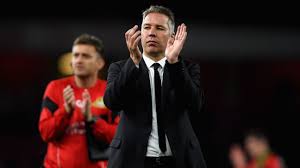

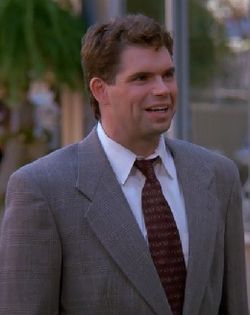 In “The Junk Mail” episode of Seinfeld, we are introduced to Frankie Merman. He is Jerry’s childhood friend who has many quirks including digging holes to sit in when he is upset. Despite his eccentricities, George is slightly jealous of Frankie because Frankie and Jerry attended camp together. George ruefully refers to Frankie as the “Summer Me”. He even goes so far as to lie to Jerry about an imaginary summer friend of his own. All of this ridiculousness is par for the course in the world of Seinfeld. As far fetched as it all may be, it got me thinking about the soccer world in which American fans live.
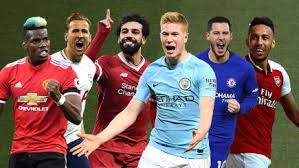 Next weekend marks the end of the Premier League. For those who religiously follow teams from England on Saturday and Sunday mornings, there is hole to be filled. Recognizing this fact, it might just be time to embrace Major League Soccer as your “Summer League”. I can hear the protests now, “MLS sucks!” “There’s no promotion or relegation!” “It’s a retirement league!” I’m well aware of this and all of the other vitriol that comes out whenever someone suggests that our domestic league should be watched by our domestic fans. I understand the thought process. My son and I just took a trip to England to see two matches. The allure of European soccer is not lost on me. The only question is do we want it to be this way? Do we truly want to be thousands of miles away from the best soccer in the world? Americans account for the largest number of ticket buyers at the World Cup, other than the host nation. Which means that we travel to far off lands at great expense to see the best in the world compete. In 2026 when the World Cup is here, will Americans not attend the games because they are here? That would be a ludicrous thought! We want the best games with the best players to be in our backyards. BUT we’re impatient, entitled and shortsighted. Let’s take a look at each.
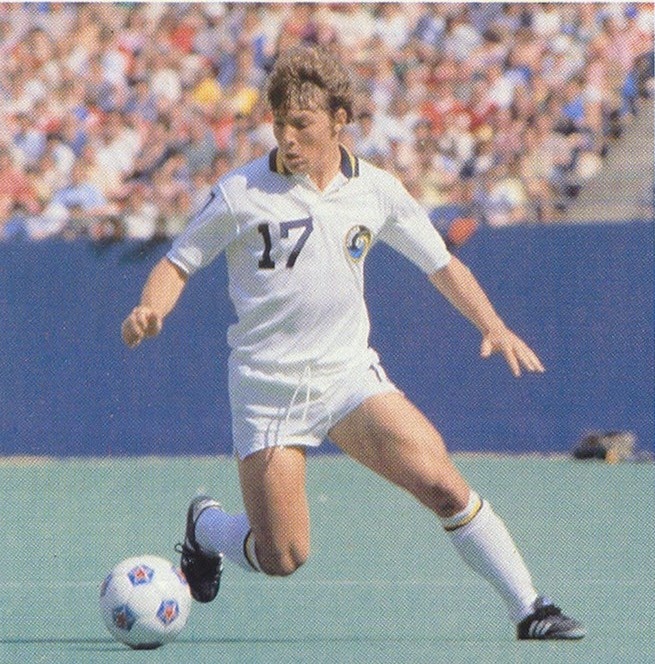 We’re impatient. Major League Soccer is barely 20 years old. Even the re-branded version of the English first division is older by around 4 years. Comparing MLS to any of the historic first divisions from Europe is at best an apples to oranges comparison. At worst, it ignores all common sense. Teams and leagues are made up by players and their endeavors are supported by fans. European fans have supported their clubs for generations. MLS clubs have not existed for a generation yet. Love for a team or club is not built overnight. It is a slow process and we’re in the thick of both the development of love for clubs and a talent pool. If the desire is that MLS should just buy the best talent in the world, do some research on the Cosmos.
 We’re entitled. Other than MLS, the other major sports leagues based in the US are arguably the best in the world. NFL, no competition. MLB, takes whatever talent is produced in other leagues. NBA, second tier talent from the US go to play in the other leagues. NHL, brings in talent from all over the world. Is it really that disheartening to have one league of the top five major sport that is not
  Huryk Unlimited