Winter has mostly descended on Virginia. So our fireplace has gotten a fair amount of use recently. Although the TV will try to sell us all on the idea that a single log can burn for hours on end with the perfect flame, it’s just not true. This type of false fire advertising leads to people buying fake logs from the store because the shame of not being able to build the perfect fire is too much too bear. Obviously I’m being ridiculous now but there is a disconnect between an effective fire and starting a fire. Big logs are not the start of a quality fire. They come later. The beginnings of any great (non cheating) fire is a bunch of twigs. Once they catch, it is relatively easy to add slightly larger pieces until the log is ablaze. The fact that we rarely have to build a fire anymore creates a disconnect with natural order of the world.
Twigs, sticks and logs were all harmed in the taking of this photo!
In our own lives with American Idol and get rich quick schemes, it is easy to forget that most things that we want to build only require twigs at first. The idea of making a million dollars should be preceded by making a dollar then another. Twigs are everywhere and we overlook them in our lives because we want the blazing fire now. Each of us needs to realize that the big logs or dreams are never going to self-combust. They each need those little twigs or actions to get things started. There is a certain amount of pride that needs to be taken in finding the twigs and small branches to add to the fire. Being smart about not adding the big log too early because the pressure will only snuff out the small flame.
Although it’s possible for a person to become obsessed with their small fire based on twigs, I’ve found that more people are sitting in the dark with their big log and magnifying glass hoping. These pieces could all work at some point but their combination just doesn’t. Knowing where you are in the process and what you need to get the next stage of the fire going is crucial. Your blaze is coming if you build it up right!
I wrote this before the announcement of the postponements but figured I’d post anyway.
With Peterborough being reclassified as a tier 3 area before this weekend’s fixture, it takes away the fans as an influence on the match. Although POSH were able to go on a long unbeaten streak without fans earlier this season, some performances lacked the energy and commitment that will be required to continue their climb up the table. There is definitely not a lack of talent within the squad. It basically comes down to the emotional/mental state of the players at game time. Ferguson and the players have proven that they can play with energy from the first whistle. Unfortunately the government has sucker punched the POSH (and all clubs) by taking away the fans that just got back to the ground. This undesired circumstance forces the POSH to find a “new drug.”
Before anyone gets their knickers in a twist, I’m not talking about any illegal substances. Everything that human beings do, we do in order to produce or reduce some form of feeling. These feelings are caused by chemicals (drugs) inside of our brains/bodies. The good feelings that are produced during a football match by players and fans are generally from four chemicals: endorphins, dopamine, serotonin and oxytocin. My post “Soccer is not a zero sum game” outlines these in greater detail.
Regarding the POSH situation, it has been suggested that the team and some players in particular thrive off of the crowd. This is most likely due to a rush of serotonin. It is the chemical that causes several feelings but in particular it is responsible for the feelings of pride and status. In normal seasons, this is a perfectly appropriate feeling to chase as a footballer. Even at away fixtures, there would normally be handful of fans who would cheer on the players giving them a quasi-hero status. In COVID times, that pursuit has been taken away and it is difficult to say when it will be back. While I recognize that this is an opportunity to get angry at an outside entity that has taken something away from the boys in blue (or pink depending on the day), it may not be the best answer on its own. A healthy dose of oxytocin is the drug that I’m suggesting.
My son and I at London Road. Oxytocin creating moment.
Oxytocin is the chemical that we would normally associate with “love.” A large amount of oxytocin is released during childbirth in order to create a connection between mother and child. This is probably a little more “touchy feely” than footballers would probably prefer to be. So the recognition that similar types of oxytocin filled bonds can be made between soldiers at war or friends with a close relationship. Due to the fact that thousands of fans will not be there to cheer on the successes of the players, they need to double or triple down on each other. The Sammie and Frankie show was born out of friendship. Those feelings need to transfer to the field and spread throughout the squad. Each member of the squad needs to celebrate the success of his teammate as a success that he takes part in. This shared feeling of accomplishment and desire for the good of everyone needs to become an “addiction.”
While I am a huge proponent of the positive, there is a power to the dark side of our emotions. The problem is that anger and other emotions like it become corrosive if they are overused. So my major suggestion is to triple down on connecting with each other but leveraging the power of the negative situation could be useful in spirts. Even though it is not fully true, taking the view that the government and EFL are both against POSH and their fans gives extra juice and unites the group even more. El Presidente named this the “Revenge” tour which goes in line with this perspective although it may lean a bit too much toward a victim’s mentality. My slant would be that this is the “Confirmation Tour.” Confirming the idea that POSH were truly on the promotion trajectory when the season was ended. Other teams are on their own journey confirming the reverse.
So if fans continue to be kept away, it is vital that the players leverage the unity within the group to confirm who they are: the best squad in the division. The obstacles that are thrown in front of all of us need to become the path that we tread. Lamenting and complaining only create an emotion barrier to overcome. Embrace the obstacles and help each other climb over them. They are not impediments to be feared. They are the staircase that leads to the top!
Having grown up in the relative infancy of soccer in the US, the information that I had about the game came directly from my coaches. Soccer was not readily available on TV like it is today. Therefore the switch from a 2-3-5 to a 4-4-2 seemed less like a change in tactics and more like a change in coaches or seasons. As the game has progressed over the past few decades, there are more formations available than ever. Players and coaches have their preferences on how to organize their teams. The function of a formation is not to directly solve problems. It is to provide a structure of standard operating procedures for a team. Therefore players can recognize patterns and hopefully create openings within their opponents defense. While this is a completely necessary portion of a team’s strategy, it does not solve all problems nor does it always represent the best use of talent.
While none of us is running a “4-4-2 life,” it is important to have some form of organization to the way that you attack your day. Leaving things up to chance is a great way to end up getting nothing meaningful done. Coaches will generally have two or possibly three formations that they will use in order to attack a particular opponent’s weaknesses. This is probably a helpful guiding principle for organizing your days. In general you want to have in mind whether you are attacking the day or defending in order to counter. If you look at each activity that you do as a player, then how have you aligned yourself. Are you completely defensive? Only doing the things that protect the status quo that you’ve set up for yourself. Or are you mainly offensive? Using all of your time to move yourself forward in some way: financially, socially, mentally, spiritually or in your career. The way that you allot your time is going to tell you something about intentions. Are you actually playing the game that you want to be? Are you trying to win it or hoping not to lose? Is your formation completely dependent upon your “opponent”?
Just like in the game, formations are necessary for organization and strategy but what happens in transition is usually the difference between winning and losing. The way that a team deals with things when their plans fall apart is crucial to their overall success. Those moments in between all of the planned activities. How are they spent? If you’ve invested time and effort into working out but then undercut that forward motion by snacking in transition, your formation becomes almost meaningless. While some people might use this as an excuse for more organization and formation, my preference is toward principles and defining goals.
In a game of soccer, the goal is always the same. However in life, our goals can cover a wide range of possibilities. At any given moment, I would try to limit yourself to three unless you have more that can truly coexist without interfering with one another. Build your principles around the goals that you have for yourself. If your major goal revolves around health and fitness, then set up principles that align with your desired outcome. Decide what you are going to do in chaotic situations before they come up. By developing principles ahead of time, it is less likely that a chaotic moment will devolve into negative consequences. Life is a game that you can win with the right formation and principles about how to deal with transition. Set yourself up and then ATTACK! Or defend, it’s really up to you!
Make a great day!
Pete
Many people refer to soccer as a “religion” and while I see where they are coming from, I use it as a metaphor for life. It can be used in a variety of ways to bring clarity to a world that can be difficult to traverse. My co-author and I are working on a book that uses soccer to explain person finance. If you’re interested in getting details as the project develops, sign up below.
My original major in college was mathematics. The intention was that I would be a high school Algebra teacher. This plan was going along fine until I hit a class called Discreet Math. If you didn’t study math intensively, the idea behind Discreet Math is to take any mathematical belief that we have and check to make sure that it works in all cases. Sexy right? I was doing horribly in Discreet Math by the time of the final. On the day of the final, our professor gave us a print out of our grades thus far. Despite my poor performance in this class, my basic math skills were still pretty good. I figured out that I needed to get a 101% on the final exam in order to pass the class. So I walked out of the final. In the end, the professor curved the final grades and I was only person who failed the class. Not my proudest moment but also a necessary part of the evolution of the version of me that exists today.
We all make them at one point or another: mistakes, mess ups, goofs, f%$# ups, etc. No matter what you call them, they are a mismatch between intention and result. While school and game shows may have taught us that mistakes should be avoided at all costs, we are all a product of more mistakes than can be counted. Even you, no matter who you are, represent a plethora of mistakes but still you persist. In fact, you probably even like the outcome of many of the errors that have formed who you are. Whether your parents intended to make you feel loved, so they showered you with praise. That in turn made you feel like a loser when the world didn’t see how great you are. No matter if the mistakes were yours or the repercussions just landed upon you, mistakes are the strings that weave us together into people. Almost nothing ever goes exactly to plan.
Since perfection is most likely off the table, maybe it’s time to go for that thing that you’ve been putting off. That project or adventure that you’ve had inside of your head for a long time. It’s never been the perfect time to start. Well maybe that’s exactly when you need to start because no matter what, it will never be perfect. Mistakes are going to line your path the entire way, so let it go. Or better yet, let yourself go and recognize that the pillow of perfection is not where you’re going to land. Even if you do end up in heap, you can pick yourself back up and go again. It. was just a mistake!
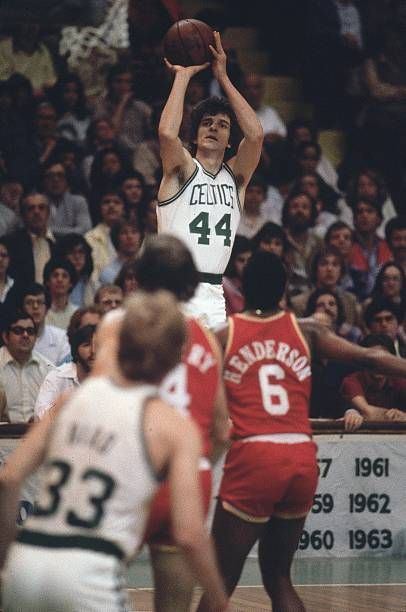
My elementary school gym teacher used to refer to me as “Pistol Pete.” “Pistol” Pete Maravich was a professional basketball player in the 1970’s. Since I only attended that school from 1980-1986, there is no way for my teacher to know the negative connotation to the moniker. Despite being one of the best ball handlers in the NBA during his career, Pistol Pete’s career only lasted ten years. In addition to having a short career, he also lived a short life. He passed away at the age of 40 from a sudden heart attack. While those two facts are disheartening enough, the most shocking thing is that he wrote that script in 1974. During an interview, he told the reporter “I don’t want to play 10 years in the NBA and die of a heart attack at age 40.” Unfortunately that’s exactly what happened.
Am I suggesting that his fears ended his career and eventually killed him? Not particularly. The comment could have been made without much thought and he didn’t ever think of it again. I don’t know the inner workings of that Pistol Pete’s mind. However I do know without a doubt the power of our brains and the importance of the stories that we tell ourselves.
Every day is another page in the script of your life. You’re writing the script and acting out the story at the same time. Often the action and the writing happen almost simultaneously. However the big decisions are truly up to you. Who is your character? How does she/he react to times of trouble, drama or adventure? What are the big story arcs? Are you the star of your own story or have you relegated yourself to a background character in someone else’s story?
No matter the answers to these questions. You are now aware that you are telling the only story that matters. The one that you have about yourself inside of your own head. That is the starting place for everything that you do in your life. Tell yourself the story of the life that you want to live and do it every day inside of your head. Then slowly but surely blur the lines between the story in your head and the story in your life. If you want a better life, give your character better lines and better actions. Eventually you’ll be the star of your own story. Don’t write the ending right now though. That will eventually take care of itself. Put some major action into the script today!
Tomorrow’s match against MK Dons represents a variety of storylines that impact the approach to the game and the eventual result. The shuffling of the squad did the trick against Rochdale. Many fans have commented that Rochdale’s poor performance was more relevant than the POSH’s youthful lineup. Nothing in life or football exists in a vacuum. Assumptions can never be made about the preparation or outcome of a match. The match is won by the stacking of moments.
My ticket from my first match at London Road. POSH dismantled MK Dons!
Having watched to both managers’ preview interviews, it is obvious that these two clubs are in a different space at the moment. There was a time when MK and POSH were competing with each other. Now each is competing with their own set of circumstances. POSH needs to live up to the expectation of promotion, while MK are looking to find the path back to their former glory. Russell Martin’s time under Darren Ferguson was short but in many ways seems to have been a springboard to a successful playing career. Regardless of the past or future of each club, team and manager, the match is the 90+ minutes between the whistles. All of these variable coalesce into thousands of individual opportunities. Last match Ferguson gave those opportunities to a handful of young players and they took them with great results. The past is now behind them. As many in the dressing room were recently reminded, if you don’t consistently make the best of your opportunities, they are taken from you.
All that either manager can give in tomorrow’s match is opportunities. Each individual has to do the best that they can with it. Russell Martin is a good example of a player who took the opportunities in front of him and ran with them. Players and people usually run into issues when they think that they deserve something. Being a language person, I love to break words apart. That word, DE-SERVE, meaning from service. Players who put an effort in for their teammates will eventually receive opportunities in turn because they are deserved. I refer to it as “soccer karma.” If you give a good ball, you’ll get a good ball. If everyone believes in that ethos, then the chances are much higher that good passes and opportunities will make their way around to everyone. The two cannot be separated though. You need to give first. Regardless of how young or experienced of a lineup Ferguson names tomorrow, those individuals need to take the opportunity that they’ve been given and give back with passion and persistence.
The match will be won by the team who effectively wins the right moments. Since it is impossible to know which moments are crucial, respecting them all is the only strategy. The opportunity is all that a manager can give. It is up to the player to take it! The past means nothing in those 90+ minutes.
When my grandfather was a young man, he got into a fight at a softball game. It wasn’t a league or anything, just a friendly game where the two teams agreed that the losers would pay for the keg of beer. The odd thing about the situation was that he didn’t get into a fight with someone from the other team. He got into a fight with someone on his own team, for not trying hard enough. A lot has changed since my grandfather was a young man and I’m not a fan of fighting but this story has always stuck with me.
The kids that I encounter today have the term “try hard” for someone who puts out excessive effort in a situation. While I understand the desire for someone not to go too far in a situation that doesn’t call for it, I feel that the term weakens the “intensity muscle.” The social stigma of caring too much may have gone too far in the wrong direction. Balance is needed of course but much like the chastising of “nerds” was stupid, this might be worse. Putting someone down for being a “nerd” was an idiotic way for less intelligent people to shame the smart. As foolish as this was, the insult of “try hard” is probably more dangerous because it can be used much more pervasively. It is not just one group who fall victim to it but anyone can.
So I beg of you! Try hard! Try the absolute best that you can! You only get one shot at each day of your life. The thought that you might come up short because you were shamed into giving half effort is a scary proposition. That shame is only coming your way because the critics are afraid to try and fail. So leave it all out there on the field or my grandfather is going to kick your ass!
My grandfather was son of Polish immigrants. Growing up in Newark, NJ, he did a variety of jobs around the area. At one point, he was working as a laborer outside of town with a group of friends. After about a week of working, the foreman on the job wanted to fire one of his friends because he was by far the laziest of the workers. My grandfather explained to him that he couldn’t fire his friend. When asked why not, he explained that his friend was the only one that owned a car. The lazy worker was the only way that the rest of them could get to work so far from home. The foreman did not heed his warning and lost four good workers with the dismissal of one.
Group dynamics in teams are often complicated. People are influential for all kinds of reasons. While coaches may want their best players to also be good teammates and hard workers, it’s not always the case. Captains should also be self-less and think of the good of the team before their personal gain. Again it doesn’t always work that way. The overlapping of personal relationships and power positions within a team can make for a convoluted mess. It is up to the coach or manager to pull the strings that get the best out of the group. This may include knowing who the Poles with the driver’s licenses are. Who are the players who can sway a large portion or the entire group?
Recognizing who these people are can avoid the loss of a locker room. These players do not particularly need to be made captain or be given some form of public power. The coach just needs to be able to read the room well enough to manage the situation. Getting commitment from the players of influence is important. With the modern athlete, this often takes more discussions than in the past. “My way or the highway” is not as effective as it used to be. The narrative inside the heads of the players needs to be similar to the one that the coach is preaching. Players need to know why they should follow the coach. Conversely the coach should not believe that his position obligates his players to follow.
The power of influence is not given out equally or fairly. As we see on social media every day, the world is filled with followers. This means that we need leaders who are willing to step in front. Not just to blindly go forward with the expectation that they will be followed but the humility to empathize. The Poles with driver’s licenses exist in every group. Be wise enough to lead beyond them rather than allowing their power to subvert your mission.
Today we have more data than we ever have before. The number of hours on your cellphone is measurable. Your number of followers on Instagram. The amount of birthday wishes that you got on Facebook. And the number of reads that I get for this blogpost. All of these things can be quantified. The question becomes whether or not it matters. Whether we want more or less of something, does the number itself matter?
The numbers only matter when they align with who you want to be as a person. So make sure that you’re measuring the right thing. If you value the impact that you have on people’s lives, don’t judge yourself by your bank statements. Set up the game in a way that you can win. No one is keeping score except for you. Your parents probably love you no matter how many followers you have. That adversary will never respect you no matter how much money you have. So set up a game that aligns with your vision for yourself. Just because likes, follows, money and stocks are common measurements, doesn’t mean that you have to use them.
There is so much more to this world! You can use laughs, thank you’s, hugs (after Covid), smiles, replies, questions or any other metric you choose. The common currency is just that, common! People who are doing exceptional things are most likely not using the common metrics.
If no one else is keeping score for you, how are you keeping score for yourself? It’s your game whether you realize it or not. So play it based on your rules, not the ones that are popular right now. Twenty years ago followers didn’t exist the way they do now and in another twenty, they’ll probably be gone. However you will persist. How will you keep score then? Maybe the time to decide that is now, so you’ll be way ahead.
It was a true pleasure to watch the US Men’s National Team dismantle El Salvador last night in their match. Although the game was a friendly and El Salvador was not at full strength, this is the type of result that one would expect from a sport obsessed nation when competing against a country one fiftieth its size. As Iceland has proven beyond the shadow of a doubt, population is not truly relevant when judging a footballing nation. However the numbers simply provide a context for the available talent pool. Even with the competition from the other major US sports, more people play soccer in the US than the entire population of El Salvador. Seeing a tangible result to all of the shifts in US soccer over the past decade was refreshing. Despite my joy in seeing the young squad of US player, it has made me think about the collateral damage of a system that needs to cast aside over 99% of individuals to find those special few.
The US soccer pyramid is not truly a pyramid as it has several dysfunctions and offshoots. However due to the lack of a better term, we’ll refer to it as a pyramid. The structure itself is not completely relevant to the discussion.
The collateral damage that I am referring to is not unique to the US, nor is it new. A youth player from the Manchester City academy committed suicide earlier this year. This is the most extreme example of the ways in which young players can be affected by their fall from the soccer pyramid. Every year young players and old are given their release from a club. Sometimes it is simply a move to a different club or different level. Unfortunately when the ultimate decision is made that a player is no longer “good enough” at their particular level of the soccer pyramid, the fall can be devastating if they are not prepared.
In the United States, the academy system is in its relative infancy compared to the rest of the world. The college system used to be the route to the professional game and with it came an education which served as a “back up plan.” Even with that “back up plan” in place, I’m not sure that it deals with the most pressing issue. A player who has devoted over a decade to the dream of “making it” in soccer (however they would define it) needs to have the psychological tools to deal with that disappointment. A parachute can be a literal lifesaver when falling from high heights but it needs to be strapped on tight before the fall.
The following items are some suggestions that can be packed into the psychological parachute for players in case they fall off the pyramid.
A diversified identity – Although we are all only one person, we tend to have different roles that we play within our lives. A person with a singular focus like professional athletics can tend to have tunnel vision on that identity. Developing other aspects of one’s life can not only help in the case of a fall but also allow for the release of pressure during their career. Although this identity includes how the individual interacts with the outside world, it is also extremely important that he/she recognize these other identities inside of his/her own mind. The trauma of losing a part of one’s life is much worse if it is the only part that mattered. That void will need to be filled with something and the easiest things to fill a void with are usually destructive.
Quality self-talk – There are many ways that this could be characterized but the heart of the issue is that there is only one person that we spend our entire life with: ourselves. Therefore it is extremely important that we make that person who is living inside of our own heads a friend. Learning how to communicate effectively with yourself is crucial to the building and maintenance of self-esteem. For some reason it seems to me that “esteem” gets overshadowed in that compound word. Esteem is a pretty lofty opinion of someone. It should be something that we can bestow onto ourselves with our words and actions.
Quality relationships – Again this is something that needs to be packed in the parachute before the fall. People are less likely to help when they feel that they are being used. Friends and family are key components to our psychological well being. The bonds that we have with the people that we value in our lives releases oxytocin which lowers stress (cortisol) and inhibits addiction. If these types of relationships are not well in place before falling from the pyramid, the stress of “not knowing who to trust” can exacerbate an already difficult situation.
Physiological hooks – The body is an amazing antidote to most things that ail the mind. While my hope would be that a player of high caliber would understand how to change her/his state for games or practices, it may be less evident to use these tools when “the walls have tumbled down.” Disappointment, embarrassment, depression and a host of other emotional states may be easier to fall into after the end of a career. Recognizing the control that each of us has over our emotional state through our posture, habitual movements, facial expressions and others is a skill that every individual should develop. This is not a sports skill. It’s a life skill! Creating our emotional state is our job because when it is left up to the world, we are bound to be disappointed by the outcome.
This list is far from exhaustive. However it does begin the conversation about the psychological tools that we all should develop. In this hyper-intense world of high level soccer, it is easy to be so focused on a singular outcome that these tools do not get developed. Unlike the college education which was viewed as a “back up plan,” psychological well being should be THE PLAN for all of us in order to make our journey through life an enjoyable one.







 Huryk Unlimited