Having grown up in the relative infancy of soccer in the US, the information that I had about the game came directly from my coaches. Soccer was not readily available on TV like it is today. Therefore the switch from a 2-3-5 to a 4-4-2 seemed less like a change in tactics and more like a change in coaches or seasons. As the game has progressed over the past few decades, there are more formations available than ever. Players and coaches have their preferences on how to organize their teams. The function of a formation is not to directly solve problems. It is to provide a structure of standard operating procedures for a team. Therefore players can recognize patterns and hopefully create openings within their opponents defense. While this is a completely necessary portion of a team’s strategy, it does not solve all problems nor does it always represent the best use of talent.
While none of us is running a “4-4-2 life,” it is important to have some form of organization to the way that you attack your day. Leaving things up to chance is a great way to end up getting nothing meaningful done. Coaches will generally have two or possibly three formations that they will use in order to attack a particular opponent’s weaknesses. This is probably a helpful guiding principle for organizing your days. In general you want to have in mind whether you are attacking the day or defending in order to counter. If you look at each activity that you do as a player, then how have you aligned yourself. Are you completely defensive? Only doing the things that protect the status quo that you’ve set up for yourself. Or are you mainly offensive? Using all of your time to move yourself forward in some way: financially, socially, mentally, spiritually or in your career. The way that you allot your time is going to tell you something about intentions. Are you actually playing the game that you want to be? Are you trying to win it or hoping not to lose? Is your formation completely dependent upon your “opponent”?

Just like in the game, formations are necessary for organization and strategy but what happens in transition is usually the difference between winning and losing. The way that a team deals with things when their plans fall apart is crucial to their overall success. Those moments in between all of the planned activities. How are they spent? If you’ve invested time and effort into working out but then undercut that forward motion by snacking in transition, your formation becomes almost meaningless. While some people might use this as an excuse for more organization and formation, my preference is toward principles and defining goals.
In a game of soccer, the goal is always the same. However in life, our goals can cover a wide range of possibilities. At any given moment, I would try to limit yourself to three unless you have more that can truly coexist without interfering with one another. Build your principles around the goals that you have for yourself. If your major goal revolves around health and fitness, then set up principles that align with your desired outcome. Decide what you are going to do in chaotic situations before they come up. By developing principles ahead of time, it is less likely that a chaotic moment will devolve into negative consequences. Life is a game that you can win with the right formation and principles about how to deal with transition. Set yourself up and then ATTACK! Or defend, it’s really up to you!
Make a great day!
Pete
Many people refer to soccer as a “religion” and while I see where they are coming from, I use it as a metaphor for life. It can be used in a variety of ways to bring clarity to a world that can be difficult to traverse. My co-author and I are working on a book that uses soccer to explain person finance. If you’re interested in getting details as the project develops, sign up below.
Send me updates!
https://sendfox.com/js/form.js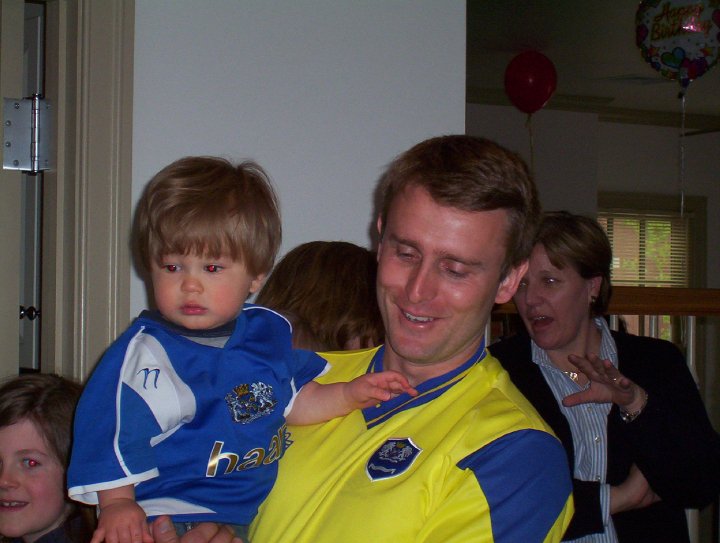 After playing the game with the POSH for a while, I decided to look into how the team was in real life. It was very casual at first but the season they got into a relegation battle really drew me in. After that I followed the team regularly online by reading the match reports and checking Skysports.com. The POSH forum at LondonRoad.net was another way that I got information relevant to the club. The slow burn of my love for POSH got a large log thrown upon it in September of 2006 when Darragh MacAnthony became chairman of the club. He stated that his ambition was to do exactly what I had done in the video game world. If I wasn’t hooked before, I was all in at that point. My newborn son had a full kit and I wore POSH blue (or bright yellow) regularly. In addition to game days, I wore the POSH colors whenever I ran long distance races.
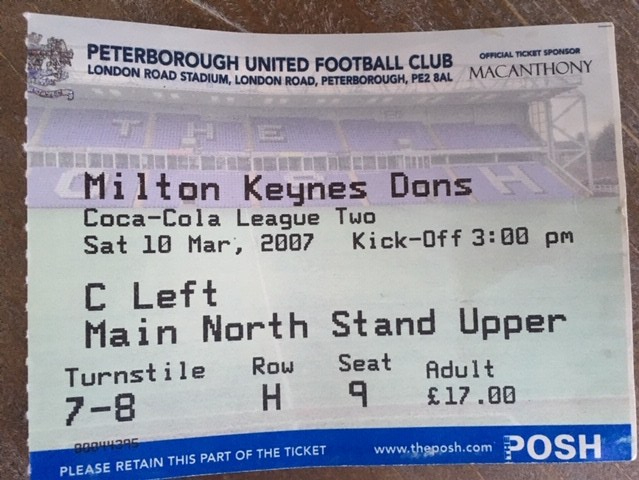 In 2007 I decided that it was time to visit London Road to attend a match. It was possibly the most frugally planned trip that I could arrange. I was in England for three nights including one in a basement room of a one star hotel in London. It was an amazing trip! The main reasons that the trip was amazing were all POSH related. The team beat MK Dons 4-0 despite Shane Blackett getting sent off in the second half. After the match, I waited around for autographs from the players and coaches. Shwan Jalal and Craig Mackail-Smith were particularly nice to me. Unfortunately I did not get to meet the new manager, Darren Ferguson. At that moment, I mainly knew him as Sir Alex’s son. Eventually he would become one of the best POSH managers by putting Darragh’s plan for promotion into effect. By signing ambitious young players and putting them into a system that created boatloads of goals, he has become my favorite manager.
 Huryk Unlimited