Notice a simple fact. Robin did not name himself Batboy nor Batman Jr. Even when Dick Grayson rebranded himself as Nightwing, it was partially to come into his own. Only when he took over the role of Batman, did he also take on the name. In a fictitious city with fictitious people, a young man understood the need for him to separate himself from him his idol, mentor and hero.
Despite the fact that I am a fan of heroes (super or otherwise), there needs to be caution used by us mere mortals who idolize them. The role of the hero can take on several possible forms. Depending on the circumstance, they can also be counted upon to save those in distress. They can also give us a model to emulate in some way. Both of these roles of the hero have their place in real and fictitious worlds. The onus needs to be on the fan to wear her/his own metaphorical cape.
Although heroes are most well known for saving people, that role creates issues. People who are unable to save themselves are victims. Relying completely upon a hero to save you continuously (Louis Lane) is a strategy that encourages weakness, inaction and dependence. Most people are smart enough to avoid this trap. The perils of the real world for most people are also less sinister than that of a superhero. The supervillains are not around every corner.
Being a model to emulate is a powerful function of the hero. The issue here is that everyone is fallible. Even the superheroes within comic worlds have their foibles. More importantly, no matter how perfect of a model any hero might be, you will never be them. Regardless of your attention to detail or persistence, transmission of consciousness into another body is even hokey in the comic world. So watch YES! Learn YES! Emulate SURE! Worship NO! Deify UH UH!
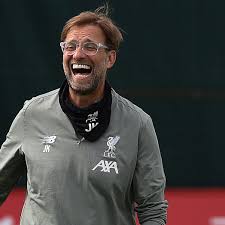
Coming back to the real world and in particular the soccer world, there are plenty of players and coaches to choose as heroes. On the coach side of things, Jüergen Klopp is the flavor of the month/year. If you chose to do so, you could study all of his interviews, strategies and possibly get into his mindset. You could even get JK screenprinted onto your jacket, hopefully for JUST KIDDING. Despite all of that effort, no matter what you cannot be him. It’s an interesting question to ask, “What would Jüergen Klopp do with my U10 girls team?” An even better question is “What are you going to do with them?” After all of mental posturing that we might do in relation to our heroes, the equation always ends with you being you. All of your thoughts and actions get syphoned through the person that you are.
So rather than spending too much time trying to be someone else, envision the best version of you in the future. Like Serpentor from GI JOE, take the best from your heroes and develop a new version of yourself. As you progress through the process of becoming a better you, remember that you cannot be Jüergen Klopp but maybe you can replace him. That’s a better goal to have because it keeps you in the picture as you. You cannot be Batman nor Jüergen Klopp but you can take pieces from either in order to be the best you.
We live in a world where duality is an everyday thing. The medicine that can be used to cure can become poison in the wrong dosage. Not caring what people think is a strength until one becomes ostracized for being outlandish. These forces that pull from opposite sides show up in many areas of our life. Much like a suspension bridge across a large chasm, the tension at each end holds up the bridge provided that the middle is not overburdened. My fear is that we’ve overburdened the middle in the soccer world.
Although the title is meant to be slightly inflammatory, the question of intent needs to be discussed for one moment. None of this is a moral judgement on the people involved at any level. I’m not a conspiracy theorist, nor someone looking to blame individuals. Generally people tend to do the best that they can with what they know. Often cultural influences are stronger than the judgement of an individual. So my hope is that the title mixed with the argument will get a few individuals to consider their personal situation.
Do the math – As a former math major in college, the first part of my discussion is about the mathematics of the situation. Whether the player is interested in eventually reaching the college or professional level, the parent and the player need to understand the low number of opportunities for both. The maximum number of scholarships that a NCAA Division I program can give is 9.9 for men and 14 for women. With the number of potential candidates and the low number of scholarships, it is a low yield proposition. Only 5.5% of high school soccer players play at the collegiate level according to the NCAA: 1.3% Div I, 1.5% Div II, 2.7% Div III. (NCAA.org) From that 1.3% playing in Division I, a much smaller percentage receive athletic scholarships. So the mathematics are against them. This information is often not known or understood by parents. The potential for making it as a professional is much lower than college. Many families pay large sums of money each year for specialized training that will have almost no “return on investment”.
The high performance side of the chasm seems to be pulling the bridge in one direction to the detriment of the players “caught in the middle.” Clubs and teams seem to be organized and run with a high performance outcome in mind. This is not a terrible thing. It will create the players that will eventually win the World Cup on the men’s side and keep the women dominant for generations. However there are many players and parents who are the collateral damage of this all out pursuit of high performance. Thousands of dollars and hundreds hours are spent on an endeavor with a relatively predictable outcome. Few players will reach the higher levels of the pyramid. The cultural ratchet has tightened on this side of the equation.
While on the other side of the chasm, recreation soccer is largely looked down upon. Unfortunately for many of the players who are caught in the middle, they are playing recreation soccer with high price tag. The “keeping up with the Joneses” mentality in the world of youth sports is troubling because the number one reason why you people say that they play is for fun. That is exactly what recreation is intended to be. Since it lacks the cache or social status, it is barely hanging onto the other side of the chasm.
This situation is untenable and unnecessary. The NFL has a draft every year that is never lacking in talent. College football teams have more scholarships to give but club football has not popped up on my radar yet. Camps and individual coaching are most likely a huge market in that sport but somehow clubs with snazzy names are not. The pipeline of talent is syphoned in a completely different way that mainly only costs the top level.
Despite all that is wrong with the youth club system, I still want every single kid in the US to play soccer. The game has so much to offer young people that the present situation is disheartening. I got truly excited when I read that the sale of chessboards had risen significantly due to the TV show “The Queen’s Gambit.” Although it is possible that expensive competitive chess clubs and trainers are going to pop up all over the country, it is more likely that mothers, fathers, sons and daughters will play each other or friends will play. The process is the outcome that people are looking for. The game gives everything that the person needs. If they want to chase more, that is on them. Thousands of young players are unlikely to feel the negative effects of being caught in the chess cultural ratchet. Unfortunately the same cannot be said for the present situation in soccer.
Playing chess is good for a soccer brain.
Since I’m not a fan having a complaint without some suggestions for improvement, here are a few thoughts:
Tryouts every other year – Players and clubs need to commit to each other. Annual tryouts sends a message to kids that they are expendable. It also leads to a lack of loyalty on both sides. Playing with the same kids for a few years allows friendships to build.
Get the words right – US Soccer or a collection of the state associations need to classify levels of play. Since MLS has taken the academy league over, this should make for a pretty simple equation. In my estimation, most leagues should be classified as recreation and a handful “competitive” or some other adjective. A club cannot claim to be “elite” if they are playing in a recreation league. Some entity needs to stop the inflation of words within the soccer world.
Incentivize unity over cannibalism – It may not be true everywhere but it seems that the ingredients for a new club are as follows: two teams worth of kids and a coach who was unhappy at another club. The pattern of clubs splitting or losing teams etc. is largely based on the adults. Clubs with teams at each age level could be given some form of incentive from the state association. How much would it cost for the adults to put their egos aside? This could be tough but not impossible.
After all of this being said, I truly believe that the club system could be an amazing opportunity for young players to gain soccer and life skills within a community environment. Unfortunately the reality looks less like that possibility due to shortsighted objectives. Around 1% of kids who start playing soccer will play in college or the pros. So shouldn’t we be giving the other 99% more than some foot skills and a warmup with a logo on it. Just something to consider.
Whether you were around to see bands like Green Day and the Offspring climb to the top of the charts or not, the musical landscape changed abruptly in the last decade of the century. Some people give full credit to Nirvana but that overlooks many of the ingredients that contributed to this musical upheaval. Punk was a largely underground scene during the 1980s when pop music and hair bands dominated the air waves. Despite being chided and largely non-existent in popular media outlets, it still maintained a following that was passionate about it. By the time that the 90s came around and the desire for an alternative to the very superficial was at a peak, the punk bands of the 90s gained in popularity.
One of the best punk bands, not just from the 90s but overall, Bad Religion.
Trading music for sport, the proliferation of soccer throughout the US has taken a similar trajectory. Although there is no “underground” sports scene, soccer gained its following in the youth ranks. Much like the punks of the 80s, kids playing soccer for several decades have received their ridicule for being outside of the mainstream sports. In the professional ranks, Major League Soccer was the second attempt to bring soccer to the masses. The NASL had brought some awareness to the sport but it was largely an imported spectacle. It probably helped the grassroots interest in the sport but the professional vacuum of a decade made it solely a kids game. This could be construed as a negative but it also made the participants care about the sport rather than heroes on the TV screen. The DIY mentality has been helpful in creating a supporters culture within the sport.
Punk hit a crescendo in the 90s because the masses began to see what the people from the underground always knew. They had a special thing. Even though it wasn’t popular with everyone, they loved it. That sentiment began to rub off on others. When you don’t care if the thing that you love is popular with everyone, the masses eventually take notice because organic growth happens through passion, not marketing.
Now that soccer has become relevant within the mainstream, where does it go from here? My opinion is not worth much but I believe that it goes on a thirty year run of being the most popular sport in the US. Music genres dominate for decades. Sports tend to dominate for quarter or half centuries. When the USMNT wins the World Cup in 2026, the work that the USWNT has done will be complete. The United States will truly be considered a soccer nation and the inferiority complex that we have about the sport will disappear. People who throw shade at MLS and our lack of high level talent will be silenced.
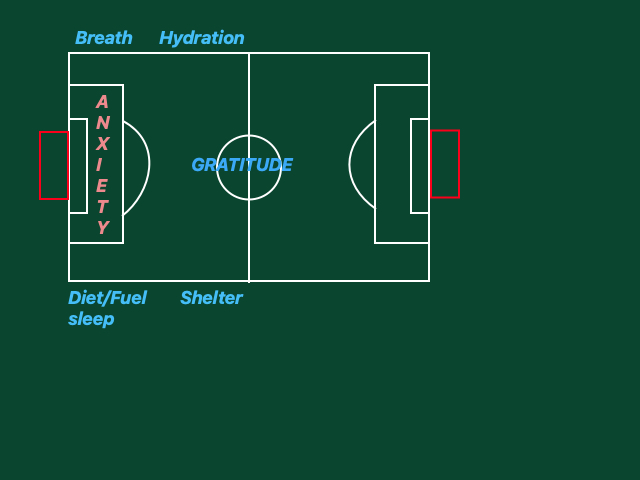
This video explains the “boundaries” of the defensive half as they relate to life. The dimensions of a soccer field matter. While there are parameters for the boundaries in soccer, the parameters in which most of us live are determined by us. Showing up to a field that was too short or too wide or too narrow would cause an uproar by players and coaches. We all set up the field that we are playing on. Many of us do so in a way that guarantees that we will struggle and/or lose. If you want to understand completely what I’m talking about, check out the video below. Or read the description. Both have their value but the video has the visual representations of the content.
The life that each of us leads has boundaries. A standard life does not exist. We all have advantages or disadvantages based upon our organization or lack in our life. There are places that some people can reach that others cannot. With that in mind, each of us can do things to make our playing area to our advantage. This particular set of boundaries deal with the “Defensive Half.” These are adjustments that can be made to your personal “field” that will help protect your goal.
The Sidelines
Breathing – It’s a concept that I cover with individuals quite often. The question “What is the most important thing that you’re going to do today?” get s a variety of answers but it is the same for all of us. Breathing is the most important part of our survival. Yet we overlook it regularly. This is not a call for people to start paying more attention to their individual breaths. It is a call for a breath practice. Most of our maintenance oriented activities are done, once, twice or thrice per day. The same should be happening for a breath practice. My personal preference is the Wim Hof technique. It’s not for everyone and NEVER DO IT AROUND WATER! But it gives you a place to start. Once or twice per day for about ten minutes is all that it takes. The benefits of a breath practice are multiple but the main component deals with your ability to bring yourself from the sympathetic to the parasympathetic nervous system. Getting from your “fight/flight/freeze” response to “rest/digest” is a skill that needs to be developed rather than hoped for.
Hydration – YES! I am aware that these first few are simply survival necessities. Unfortunately (or fortunately) due to our overwhelming success as a species, we rarely have to consider our survival. Therefore we need to consider these for their optimization. Getting more out of your body and mind is completely dependent upon the ingredients and predispositions that you give your body to work with. In the realm of hydration, you are looking to consume half your body weight in ounces. The math is not overly difficult. It is simply about finding the right container to use for measurement. The 8 glasses per day rule is a bit too arbitrary. A 12oz glass x 8 glasses would be 96 total ounces. This is fine for someone around 190 lbs but might be a bit much for a 140 lbs kid. Finding the right container in order to track your hydration is really almost half the battle.
Diet/Fuel – The word diet has been mangled for decades now. It does not mean a weight loss program. More than anything else it is the food that you habitually eat. There are so many possibilities out there that could work for you. The only suggestion that I will make on this subject is to see what actually works for you, not what you want to work. I’d love for an ice cream and pizza diet to get me into optimal shape but it’s just not going to happen. So find something that balances both your nutritional needs and the reality of your life. Choosing to be a vegetarian could be the answer but if it is only going to make you miserable, don’t do it. Fuel your body with food, don’t feed your cravings at all times. The food industry has spent decades making things delicious with barely a scrap of nutritional value. Craving those foods is not an indication that you are a bad person. Give yourself a break and take time to figure out what truly works for you.
Shelter (Mental Safety) – The list of basic human needs continues with a slight twist. Very few of us are likely to succumb to the environment because of a lack of shelter/housing. However in a modern context we live an increasingly large part of our existence in the mental space. Therefore the ability to have mental shelter from “elements” is a crucial part of our boundaries. Much like food, water and oxygen, having a daily practice within this space that sets us up for success is important. Unlike the other survival needs, this is less apparent. Many people live in an unsafe mental space due to their focus or lack of control of that focus. Journaling is just one of the many techniques that can be used in order to get the mind to focus on things that are advantageous to the individual rather than the outside world. My suggestion would be to have a practice of not using any electronics for at least 30 minutes in the morning. That time can be used to establish a focus on the things that are important to you rather than others.
Sleep – This is another area that is of supreme importance but the needs of each individual vary greatly. So I am not going to give many suggestions here other than to say that your sleep should be regular. Length may vary based on the individual but having a regular bedtime and wakeup time can be a game changer. Also try as best as you can to avoid electronics for at least 30 minutes prior to falling asleep. It can help with falling asleep and also gives you time to set your intentions for the next day.
If you didn’t watch the video first, you might be wondering, “what is the goal that I’m protecting?” You’re protecting against drops in self-esteem. Having all of these boundaries set up correctly can create a space where it is unlikely or even impossible for the world to make you feel bad about yourself. The most important relationship that you have is with yourself. All of these daily practices help to keep others away from your goal – the way you feel about yourself when you’re by yourself.
Hopefully this discussion has been helpful. Leave a comment below with any thoughts or additions. This concept is not done. There is another half of the field to go but let me know if I missed anything on this side.
I was asked about the use of certain “games” in the US with young soccer players such as Stuck in the Mud, Red Light Green Light or Shark and Minnows. The thoughts below do not represent an in depth study of the situation, these are just “thoughts.”
The Strider or Balance Bike is a product that was created to help kids learn how to balance and steer without the additional concern of using pedals. Although it is not a “real bike,” it can make the process of learning balance more joyous than the use/removal of training wheels. Despite training wheels being used for generations, it may inhibit the actual desired outcome. The learner’s reliance on the training wheels keeps them from learning how to counter steer which means they must almost “relearn” how to ride. Finally the strider bike can also be used as a learning tool largely independently from direct supervision. A child learning to balance on a standard bike requires help from someone. Children are not small adults. Their needs are quite different but in the beginning, the strider bike was derided because it wasn’t a “real bike.”
Kids need to enjoy what they are doing. As they begin playing soccer, FUN is paramount to their desire to continue playing. Most players in the US do not grow up in a house where soccer is reinforced as a “way of life.” It is an organized activity that they are introduced to as part of some programming. For their parents, it can be a form of exercise for the child or even a cheap “childcare.” Although youth programs exist throughout the world, there is also cultural norm of individual or “street play.” Games like the ones listed above are intended to create a fun environment to learn skills. Elsewhere in the world, the development of skills is part of a cultural ratchet that values skill acquisition. Often through “unorganized” play, peer groups will create an environment where fun and skill acquisition go hand in hand.
Danny Rojas from Ted Lasso loving the game for all that it is!
There is nothing inherently wrong with playing fun games like Sharks and Minnows with young players. Much like using training wheels, it is a viable strategy. It can add fun to soccer for kids who are not already invested in the game. The issue is that many kids/parents are looking for a fun activity rather than specifically soccer fun. Therefore a disconnect happens when, “it’s just not fun anymore.” This can happen at any point in a player’s development. Learning to play chess, the flute, basketball, monopoly, etc. are worthwhile pursuits for young people. Only a small number of people will make it a lifelong pursuit.
Being honest with ourselves about why we are doing something is a crucial component to any endeavor. Playing monopoly with a 6 year old in order to instill a love of real estate investment is a strategy. However at some point the real thing doesn’t match up with the game. That first encounter is most likely not going to be the crucial component to a lifelong love. There will be milestones along the way that will either add or subtract to the child’s love for the activity. Having kids dip their carrots in ranch dressing is fine but at a certain point, the carrots need to stand on their own.
For me, soccer is a lifelong passion that speaks to me on a variety of levels. For some of my childhood friends, it is a game that they used to play when they were a kid. We spent years with undereducated coaches doing many poorly thought out drills by modern pedagogical standards. They did the best that they could with what they knew and got at least one lifelong convert. The strider bike may be the best possible way to get the intended objective but the training wheels still work. Neither guarantee that a kid will grow up to love bike riding.
The game is all about people. While I’m all for best practices, curricula and methodology; they do not guarantee anything. A kid needs to enjoy what they are doing enough to continue. More than likely, they need to see others enjoying that same thing. So if you are a coach, display your joy for the game! While we all might love soccer, joy is happiness that kids can see. That’s worth more than any activity that you’ll ever run for any age group!
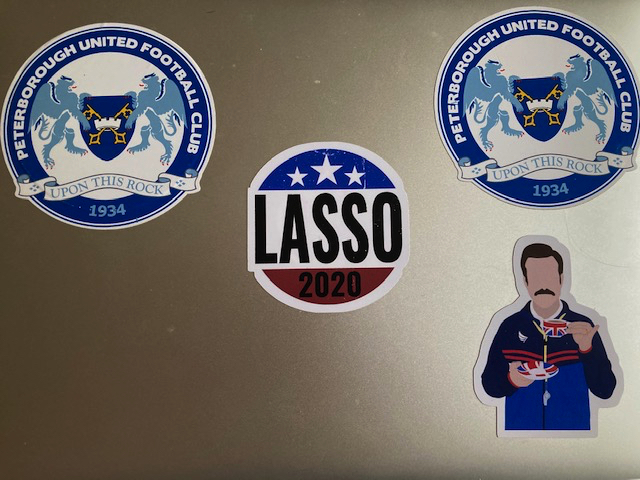
I am a Ted Lasso super fan. Anyone who has had a conversation longer than ten minutes with me over the past two months has been told to watch the show. Somehow Jason Sudeikis, Brendan Hunt and Bill Lawrence created the perfect TV show for me. At this point, I’ve watched each episode at least five times and I’m probably lowballing that number. Despite my love for the content, I’m not going to just sing the praises of the show. I’m focused on the biggest takeaway from the show.
The outside of my laptop. I’m a little obsessed.
Although it is in essence a sitcom, Ted Lasso works on a variety of levels. Laughs are intermingled with possible tears and new vocabulary. While the origins of the Ted Lasso character come from a commercial where he leads with stupidity, the show’s main character leads with caring and empathy. Despite being out of his depth in his job, he is (usually) unapologetically himself. This is a refreshing characteristic to find. In a world where so many people are in a constant state of posturing for their audience, being yourself seems to be a lost art in many ways. Accepting others seems to almost be easier.
The oddities, faults and curiosities that other people carry can be easily overlooked because “it’s not me.” Unfortunately being ourselves is often difficult because the court of public opinion is open 24/7/365 these days. It can be exhausting to maintain a public persona that is different from who you truly are. This tactic also erodes self-esteem over time because it’s hard to “esteem” someone that you’re hiding from the world.
Now this is not an excuse to have an Ally Sheedy in Breakfast Club moment and dump your metaphorical purse into the world’s lap. It is however a call to feel comfortable in your own skin. Live in at least a mental existence where who you are is OK. Then share that person that you most want to be with your world first. Your world is not the world. It’s the people that you love and trust. By doing those experiments at home first, you’ll get a sense of how you come across to other people. Again this is not a call for no filters but rather a bit more honesty. One of my favorite public figures, Tom Bilyeu, admits quite openly that he wants to be a Jedi. Not a lightsaber wielding spaceman but an influencer of people’s minds. That idea or dream of being something outside of the norm is uncomfortable for most of us. However admitting who we are, what we want and how important things are to us is a crucial piece of our development as people. Otherwise we’re a dancer in a Gap commercial. Not dancing for joy but because it’s a job. Not wearing khakis because we love them because that’s the costume.
So here is my public admission. I want to be the team psychologist for Peterborough United. The ridiculousness of this aspiration is not lost upon me. At the moment, I don’t have any of the credentials that a team might require. I’m an American who has mainly coached at the high school and college level. Much like Ted Lasso, I may be in over my head for that job. That doesn’t mean that I need to give up or apologize or lie about my desire to other people or especially myself. Perhaps I’m a fool to believe in this dream but I’d rather be the star in my own sitcom where I’m the butt of many jokes rather than a background character in a Gap commercial where I’m indistinguishable from anyone else.
So start inside your own head. Get comfortable in that skin of yours. It’s not going anywhere and neither are the basics of who you are. You’re not a background dancer. You’re a star! Shine for the people around you!
I wrote this before the announcement of the postponements but figured I’d post anyway.
With Peterborough being reclassified as a tier 3 area before this weekend’s fixture, it takes away the fans as an influence on the match. Although POSH were able to go on a long unbeaten streak without fans earlier this season, some performances lacked the energy and commitment that will be required to continue their climb up the table. There is definitely not a lack of talent within the squad. It basically comes down to the emotional/mental state of the players at game time. Ferguson and the players have proven that they can play with energy from the first whistle. Unfortunately the government has sucker punched the POSH (and all clubs) by taking away the fans that just got back to the ground. This undesired circumstance forces the POSH to find a “new drug.”
Before anyone gets their knickers in a twist, I’m not talking about any illegal substances. Everything that human beings do, we do in order to produce or reduce some form of feeling. These feelings are caused by chemicals (drugs) inside of our brains/bodies. The good feelings that are produced during a football match by players and fans are generally from four chemicals: endorphins, dopamine, serotonin and oxytocin. My post “Soccer is not a zero sum game” outlines these in greater detail.
Regarding the POSH situation, it has been suggested that the team and some players in particular thrive off of the crowd. This is most likely due to a rush of serotonin. It is the chemical that causes several feelings but in particular it is responsible for the feelings of pride and status. In normal seasons, this is a perfectly appropriate feeling to chase as a footballer. Even at away fixtures, there would normally be handful of fans who would cheer on the players giving them a quasi-hero status. In COVID times, that pursuit has been taken away and it is difficult to say when it will be back. While I recognize that this is an opportunity to get angry at an outside entity that has taken something away from the boys in blue (or pink depending on the day), it may not be the best answer on its own. A healthy dose of oxytocin is the drug that I’m suggesting.
My son and I at London Road. Oxytocin creating moment.
Oxytocin is the chemical that we would normally associate with “love.” A large amount of oxytocin is released during childbirth in order to create a connection between mother and child. This is probably a little more “touchy feely” than footballers would probably prefer to be. So the recognition that similar types of oxytocin filled bonds can be made between soldiers at war or friends with a close relationship. Due to the fact that thousands of fans will not be there to cheer on the successes of the players, they need to double or triple down on each other. The Sammie and Frankie show was born out of friendship. Those feelings need to transfer to the field and spread throughout the squad. Each member of the squad needs to celebrate the success of his teammate as a success that he takes part in. This shared feeling of accomplishment and desire for the good of everyone needs to become an “addiction.”
While I am a huge proponent of the positive, there is a power to the dark side of our emotions. The problem is that anger and other emotions like it become corrosive if they are overused. So my major suggestion is to triple down on connecting with each other but leveraging the power of the negative situation could be useful in spirts. Even though it is not fully true, taking the view that the government and EFL are both against POSH and their fans gives extra juice and unites the group even more. El Presidente named this the “Revenge” tour which goes in line with this perspective although it may lean a bit too much toward a victim’s mentality. My slant would be that this is the “Confirmation Tour.” Confirming the idea that POSH were truly on the promotion trajectory when the season was ended. Other teams are on their own journey confirming the reverse.
So if fans continue to be kept away, it is vital that the players leverage the unity within the group to confirm who they are: the best squad in the division. The obstacles that are thrown in front of all of us need to become the path that we tread. Lamenting and complaining only create an emotion barrier to overcome. Embrace the obstacles and help each other climb over them. They are not impediments to be feared. They are the staircase that leads to the top!
Having grown up in the relative infancy of soccer in the US, the information that I had about the game came directly from my coaches. Soccer was not readily available on TV like it is today. Therefore the switch from a 2-3-5 to a 4-4-2 seemed less like a change in tactics and more like a change in coaches or seasons. As the game has progressed over the past few decades, there are more formations available than ever. Players and coaches have their preferences on how to organize their teams. The function of a formation is not to directly solve problems. It is to provide a structure of standard operating procedures for a team. Therefore players can recognize patterns and hopefully create openings within their opponents defense. While this is a completely necessary portion of a team’s strategy, it does not solve all problems nor does it always represent the best use of talent.
While none of us is running a “4-4-2 life,” it is important to have some form of organization to the way that you attack your day. Leaving things up to chance is a great way to end up getting nothing meaningful done. Coaches will generally have two or possibly three formations that they will use in order to attack a particular opponent’s weaknesses. This is probably a helpful guiding principle for organizing your days. In general you want to have in mind whether you are attacking the day or defending in order to counter. If you look at each activity that you do as a player, then how have you aligned yourself. Are you completely defensive? Only doing the things that protect the status quo that you’ve set up for yourself. Or are you mainly offensive? Using all of your time to move yourself forward in some way: financially, socially, mentally, spiritually or in your career. The way that you allot your time is going to tell you something about intentions. Are you actually playing the game that you want to be? Are you trying to win it or hoping not to lose? Is your formation completely dependent upon your “opponent”?
Just like in the game, formations are necessary for organization and strategy but what happens in transition is usually the difference between winning and losing. The way that a team deals with things when their plans fall apart is crucial to their overall success. Those moments in between all of the planned activities. How are they spent? If you’ve invested time and effort into working out but then undercut that forward motion by snacking in transition, your formation becomes almost meaningless. While some people might use this as an excuse for more organization and formation, my preference is toward principles and defining goals.
In a game of soccer, the goal is always the same. However in life, our goals can cover a wide range of possibilities. At any given moment, I would try to limit yourself to three unless you have more that can truly coexist without interfering with one another. Build your principles around the goals that you have for yourself. If your major goal revolves around health and fitness, then set up principles that align with your desired outcome. Decide what you are going to do in chaotic situations before they come up. By developing principles ahead of time, it is less likely that a chaotic moment will devolve into negative consequences. Life is a game that you can win with the right formation and principles about how to deal with transition. Set yourself up and then ATTACK! Or defend, it’s really up to you!
Make a great day!
Pete
Many people refer to soccer as a “religion” and while I see where they are coming from, I use it as a metaphor for life. It can be used in a variety of ways to bring clarity to a world that can be difficult to traverse. My co-author and I are working on a book that uses soccer to explain person finance. If you’re interested in getting details as the project develops, sign up below.
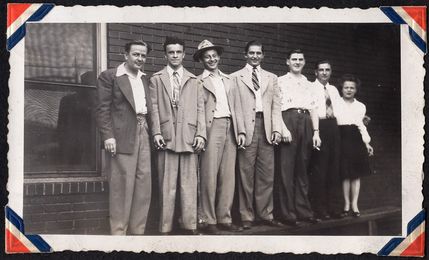
My grandfather was son of Polish immigrants. Growing up in Newark, NJ, he did a variety of jobs around the area. At one point, he was working as a laborer outside of town with a group of friends. After about a week of working, the foreman on the job wanted to fire one of his friends because he was by far the laziest of the workers. My grandfather explained to him that he couldn’t fire his friend. When asked why not, he explained that his friend was the only one that owned a car. The lazy worker was the only way that the rest of them could get to work so far from home. The foreman did not heed his warning and lost four good workers with the dismissal of one.
Group dynamics in teams are often complicated. People are influential for all kinds of reasons. While coaches may want their best players to also be good teammates and hard workers, it’s not always the case. Captains should also be self-less and think of the good of the team before their personal gain. Again it doesn’t always work that way. The overlapping of personal relationships and power positions within a team can make for a convoluted mess. It is up to the coach or manager to pull the strings that get the best out of the group. This may include knowing who the Poles with the driver’s licenses are. Who are the players who can sway a large portion or the entire group?
Recognizing who these people are can avoid the loss of a locker room. These players do not particularly need to be made captain or be given some form of public power. The coach just needs to be able to read the room well enough to manage the situation. Getting commitment from the players of influence is important. With the modern athlete, this often takes more discussions than in the past. “My way or the highway” is not as effective as it used to be. The narrative inside the heads of the players needs to be similar to the one that the coach is preaching. Players need to know why they should follow the coach. Conversely the coach should not believe that his position obligates his players to follow.
The power of influence is not given out equally or fairly. As we see on social media every day, the world is filled with followers. This means that we need leaders who are willing to step in front. Not just to blindly go forward with the expectation that they will be followed but the humility to empathize. The Poles with driver’s licenses exist in every group. Be wise enough to lead beyond them rather than allowing their power to subvert your mission.
It was a true pleasure to watch the US Men’s National Team dismantle El Salvador last night in their match. Although the game was a friendly and El Salvador was not at full strength, this is the type of result that one would expect from a sport obsessed nation when competing against a country one fiftieth its size. As Iceland has proven beyond the shadow of a doubt, population is not truly relevant when judging a footballing nation. However the numbers simply provide a context for available talent pool. Even with the competition from the other major US sports, more people play soccer in the US than the entire population of El Salvador. Seeing a tangible result to all of the shifts in US soccer over the past decade was refreshing. Despite my joy in seeing the young squad of US player, it has made me think about the collateral damage of a system that needs to cast aside over 99% of individuals to find those special few.
The US soccer pyramid is not truly a pyramid as it has several dysfunctions and offshoots. However due to the lack of a better term, we’ll refer to it as a pyramid. The structure itself is not completely relevant to the discussion.
The collateral damage that I am referring to is not unique to the US, nor is it new. A youth player from the Manchester City academy committed suicide earlier this year. This is the most extreme example of the ways in which young players can be affected by their fall from the soccer pyramid. Every year young players and old are given their release from a club. Sometimes it is simply a move to a different club or different level. Unfortunately when the ultimate decision is made that a player is no longer “good enough” at their particular level of the soccer pyramid, the fall can be devastating if they are not prepared.
In the United States, the academy system is in its relative infancy compared to the rest of the world. The college system used to be the route to the professional game and with it came an education which served as a “back up plan.” Even with that “back up plan” in place, I’m not sure that it deals with the most pressing issue. A player who has devoted over a decade to the dream of “making it” in soccer (however they would define it) needs to have the psychological tools to deal with that disappointment. A parachute can be a literal lifesaver when falling from high heights but it needs to be strapped on tight before the fall.
The following items are some suggestions that can be packed into the psychological parachute for players in case they fall off the pyramid.
A diversified identity – Although we are all only one person, we tend to have different roles that we play within our lives. A person with a singular focus like professional athletics can tend to have tunnel vision on that identity. Developing other aspects of one’s life can not only help in the case of a fall but also allow for the release of pressure during their career. Although this identity includes how the individual interacts with the outside world, it is also extremely important that he/she recognize these other identities inside of his/her own mind. The trauma of losing a part of one’s life is much worse if it is the only part that mattered. That void will need to be filled with something and the easiest things to fill a void with are usually destructive.
Quality self-talk – There are many ways that this could be characterized but the heart of the issue is that there is only one person that we spend our entire life with: ourselves. Therefore it is extremely important that we make that person who is living inside of our own heads a friend. Learning how to communicate effectively with yourself is crucial to the building and maintenance of self-esteem. For some reason it seems to me that “esteem” gets overshadowed in that compound word. Esteem is a pretty lofty opinion of someone. It should be something that we can bestow onto ourselves with our words and actions.
Quality relationships – Again this is something that needs to be packed in the parachute before the fall. People are less likely to help when they feel that they are being used. Friends and family are key components to our psychological well being. The bonds that we have with the people that we value in our lives releases oxytocin which lowers stress (cortisol) and inhibits addiction. If these types of relationships are not well in place before falling from the pyramid, the stress of “not knowing who to trust” can exacerbate an already difficult situation.
Physiological hooks – The body is an amazing antidote to most things that ail the mind. While my hope would be that a player of high caliber would understand how to change her/his state for games or practices, it may be less evident to use these tools when “the walls have tumbled down.” Disappointment, embarrassment, depression and a host of other emotional states may be easier to fall into after the end of a career. Recognizing the control that each of us has over our emotional state through our posture, habitual movements, facial expressions and others is a skill that every individual should develop. This is not a sports skill. It’s a life skill! Creating our emotional state is our job because when it is left up to the world, we are bound to be disappointed by the outcome.
This list is far from exhaustive. However it does begin the conversation about the psychological tools that we all should develop. In this hyper-intense world of high level soccer, it is easy to be so focused on a singular outcome that these tools do not get developed. Unlike the college education which was viewed as a “back up plan,” psychological well being should be THE PLAN for all of us in order to make our journey through life an enjoyable one.







 Huryk Unlimited